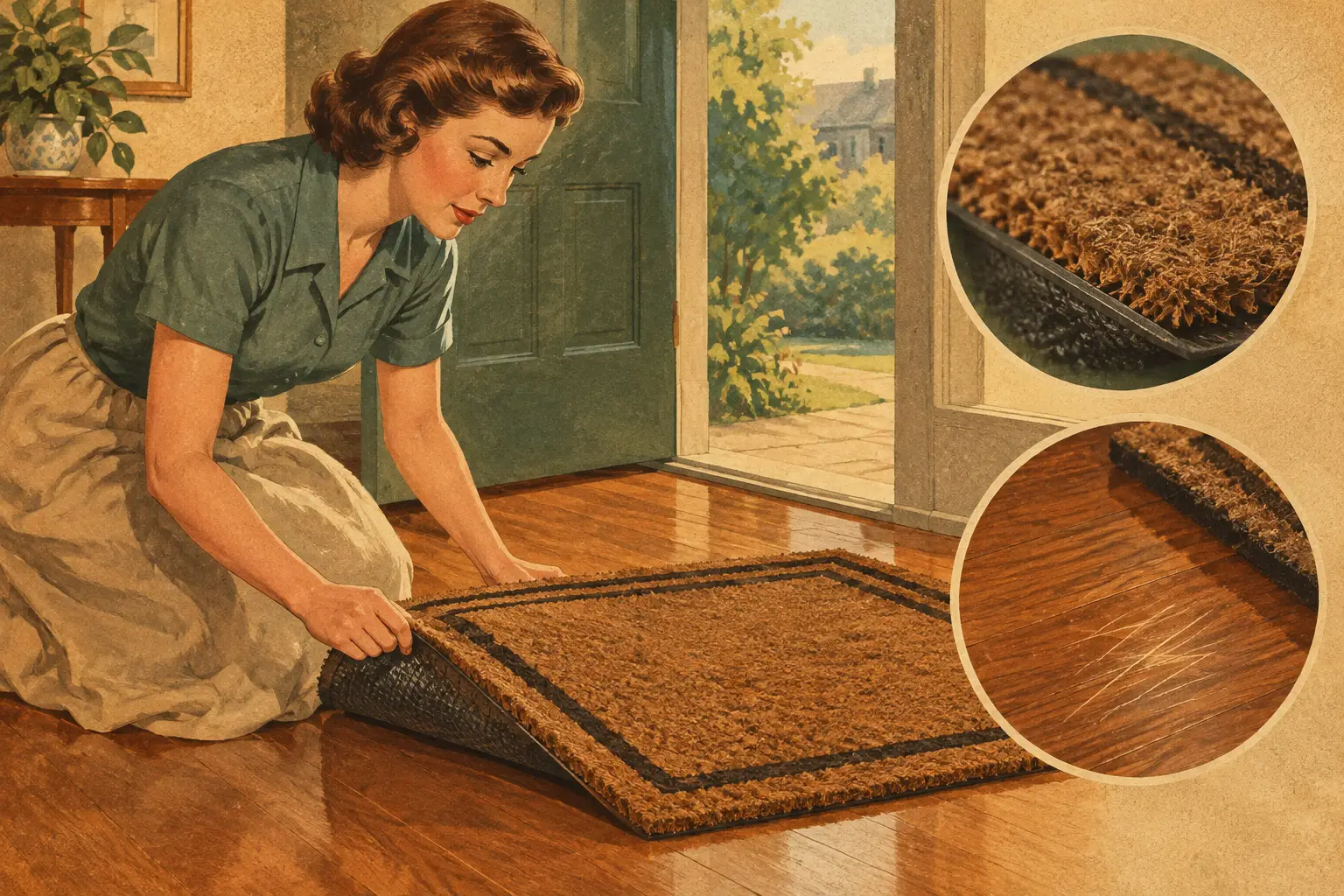
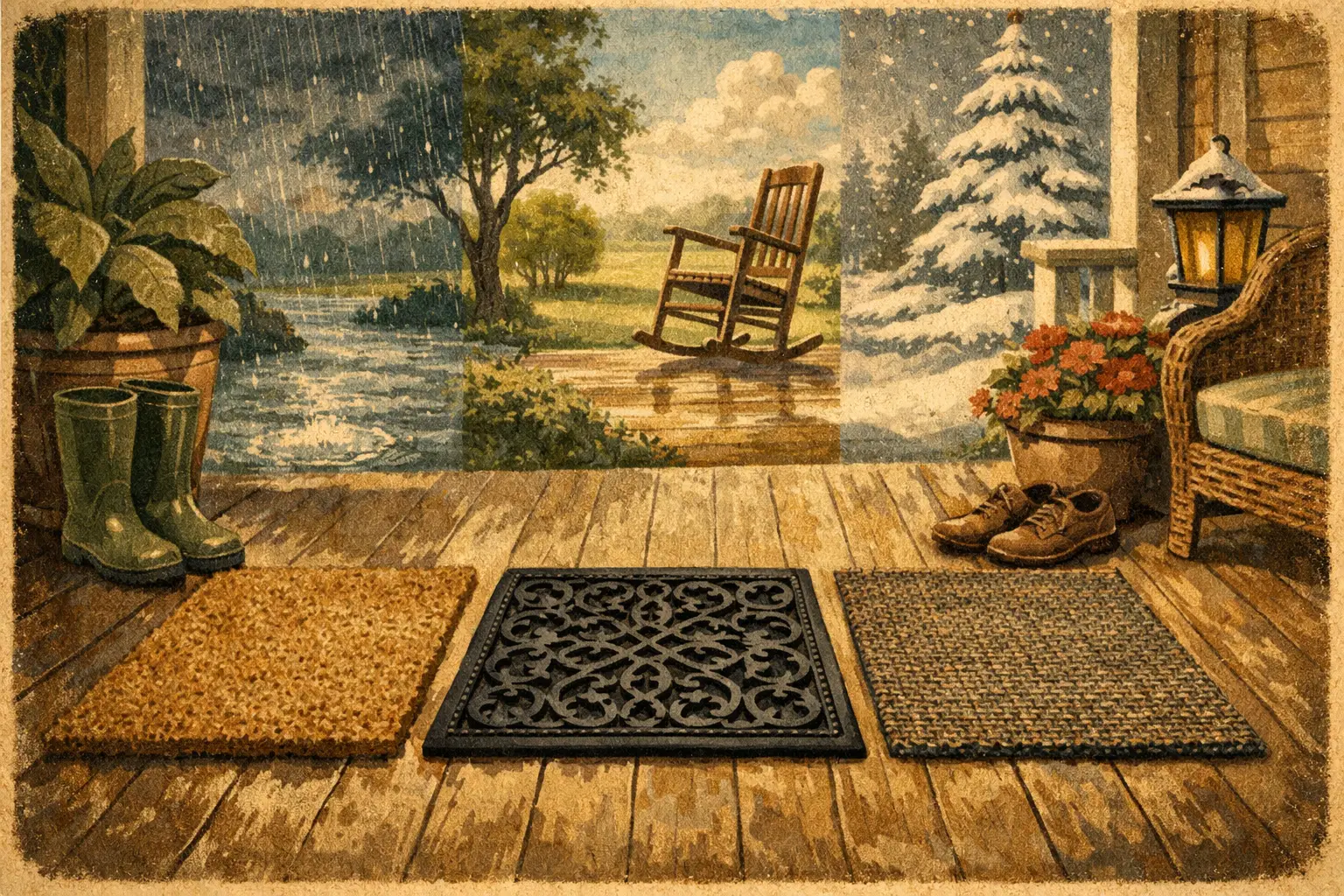
A porch mat earns its place the moment wet shoes, sandy feet, muddy paws, and grocery bags start coming through the door. This all weather porch mat review focuses on what matters after the first good-looking week: whether a mat drains, stays put, cleans easily, and still gives your entry a clean coastal look after real outdoor use.
For a front porch, patio door, deck, boat, or RV, the best choice is rarely the softest or thickest mat. It is the one built to handle the conditions where it lives without holding water, flattening under traffic, or becoming one more item to replace next season.
Outdoor mats work harder than indoor rugs. They face direct sun, sudden rain, humidity, pollen, salt air, leaf debris, and the repeated grind of dirt under shoes. A mat can look attractive in a product photo and still be a poor fit for an uncovered entryway if its fibers soak up water or its backing breaks down in heat.
A true all-weather porch mat should brush debris from shoes while allowing water and air to move through it. That combination helps keep the surface more comfortable underfoot and avoids the damp, musty feel common with mats that trap moisture against the porch.
It should also retain its shape. Thin, lightweight mats may shift when the door opens, curl at the corners, or bunch under daily traffic. Heavier construction and a stable weave make a noticeable difference at a busy family entry, especially where kids, pets, guests, and deliveries keep the doorway active.
The material is usually the best predictor of outdoor performance. Natural coir mats have a classic look and a rough texture that can scrape dirt from shoes, but they are not always ideal for exposed, wet areas. Coir can shed, remain damp after rain, and wear down quickly when used heavily in humid or coastal conditions.
Fabric and carpet-style mats can feel plush, but they often need more frequent washing and drying. If they have foam, rubber, or adhesive elements that are not designed for extended sun exposure, heat and moisture can shorten their useful life.
Handwoven lobster rope offers a different kind of outdoor performance. The rope is made to handle wet environments, and its open weave helps water drain rather than collect. It does not absorb moisture like a traditional fiber mat, making it especially practical for rainy porches, pool areas, beach houses, lake properties, boats, and RVs.
That does not mean every rope mat feels or behaves exactly the same. Construction matters. A tightly handwoven mat with substantial weight has more stability and structure than a loosely made alternative. Good finishing work also helps it lie flat and look intentional at the door rather than purely utilitarian.
For Florida homeowners and anyone living near the coast, a mat’s drying time matters as much as its appearance. Afternoon showers can soak an uncovered porch in minutes. A moisture-trapping mat may stay wet long after the weather clears, leaving a damp spot where people need to wipe their feet.
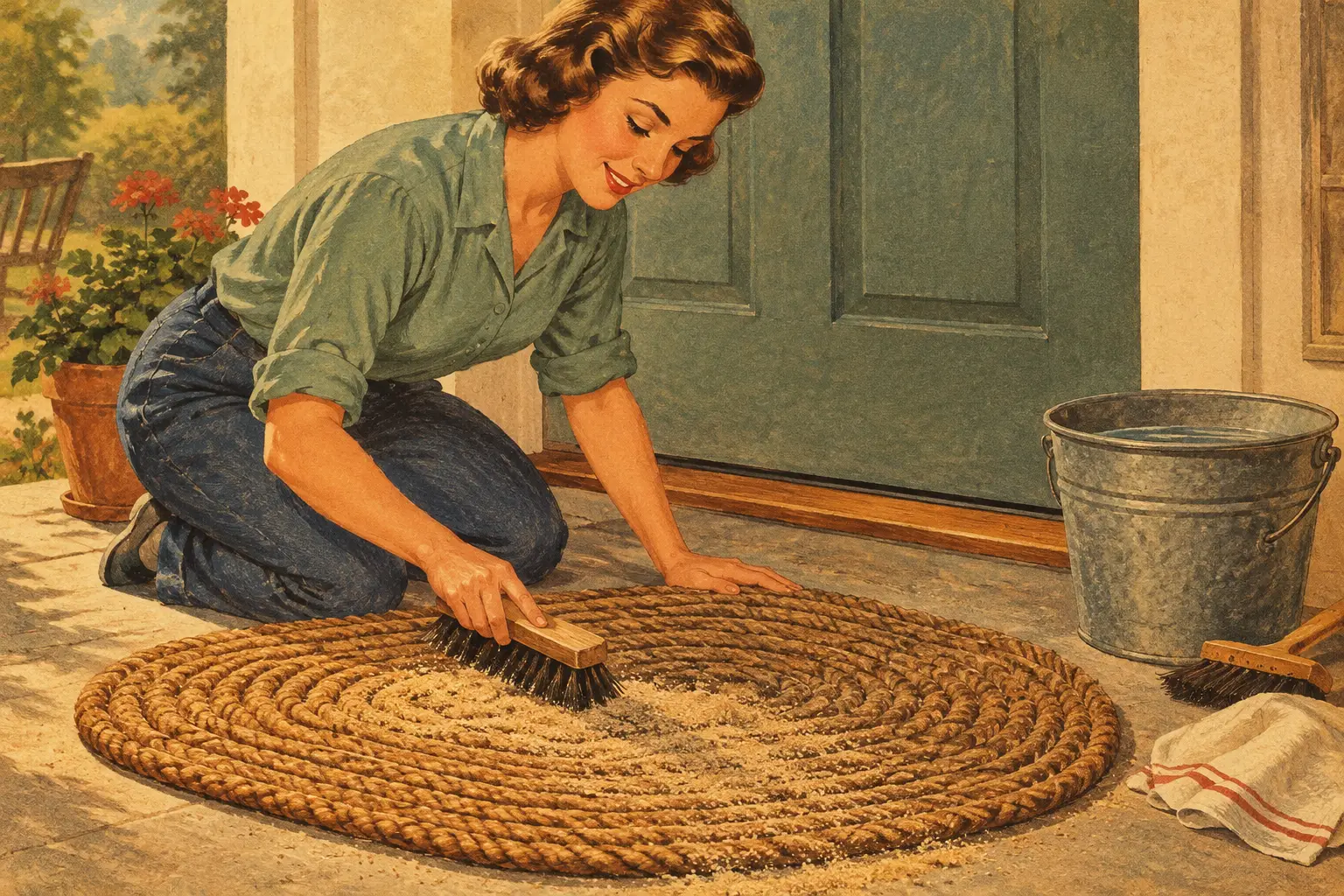
An open-weave rope mat performs well here because rain can pass through the material. A quick shake, rinse, or sweep is usually enough to remove ordinary debris. For heavier dirt, a hose-down and air dry will often restore the mat without the laundering routine required by many fabric mats.
Sun exposure is another point where trade-offs are worth considering. Any colored outdoor product can show some change over time when placed in intense, nonstop sunlight. Choosing a mat made from colorfast, durable material helps preserve its appearance, while a covered porch naturally offers the most protection. In very bright locations, darker or richly saturated colors may feel warmer under bare feet than lighter options.
Humidity can also reveal a mat’s weak points. Materials that stay damp are more likely to hold odors and develop the unpleasant feel of a soggy entry mat. A washable, non-absorbent construction is a practical advantage for homes where rain and humidity are part of everyday life.
A porch mat should do more than survive the weather. It needs to make coming home easier. That means enough texture to catch dirt before it reaches the floor, enough weight to stay where you place it, and enough durability to handle repeated stepping without looking tired.
Handwoven rope mats are particularly well suited to high-traffic spaces because the structure is designed for use, not just display. They are firm rather than cushioned, which may not be the preference for someone seeking a soft, indoor-rug feel. But that firmer feel is part of why they hold their profile at a busy threshold and are easy to rinse clean.
For doors with low clearance, measure before ordering. A thicker, structured mat can interfere with an outward-swinging door if the space is tight. The right size also matters: a mat that is too small can look lost at a wide entry, while one that is oversized may crowd steps or door hardware.
All-weather mats are a strong fit for exposed front porches, side doors, patio entrances, pool decks, screened lanais, and mudroom thresholds. They are also useful where sand and water travel together, including beach homes, docks, boats, and RVs.
The look can be practical without feeling plain. Colorful rope patterns bring a warm first impression to a neutral porch, while more understated combinations work well with traditional, coastal, and modern exteriors. Because the material is made for outdoor living, it lets homeowners add personality at the door without constantly worrying about rain or muddy paws.
Lobster Rope Doormats of Florida makes this style of mat for exactly those real-life settings, pairing handmade, made-in-the-USA construction with washable rope and a 10-year replacement guarantee. For buyers who are tired of replacing ordinary mats after a season or two, that long-term focus is part of the value.
The best mat depends on where it will live and how your household uses the entrance. A covered front door with light traffic can accommodate more materials than an uncovered patio door beside a pool. If the mat will see constant water, sand, pets, or direct sun, favor drainage, washability, and substantial construction over a softer decorative surface.
Before choosing, think through these practical details:
Price is also worth viewing through the lens of replacement cycles. An inexpensive outdoor mat may cost less at checkout, but it is not necessarily the better value if it fades, sheds, curls, or stays wet within months. A well-made all-weather mat is an investment in a tidier entry and fewer trips to replace something that should have lasted.
A porch is the first part of your home that guests see and the part your family uses without thinking twice. Choose a mat that is ready for both: the sunny mornings, the stormy afternoons, and every messy trip back inside.

Doormats designed to look better, last longer, and clean easier.
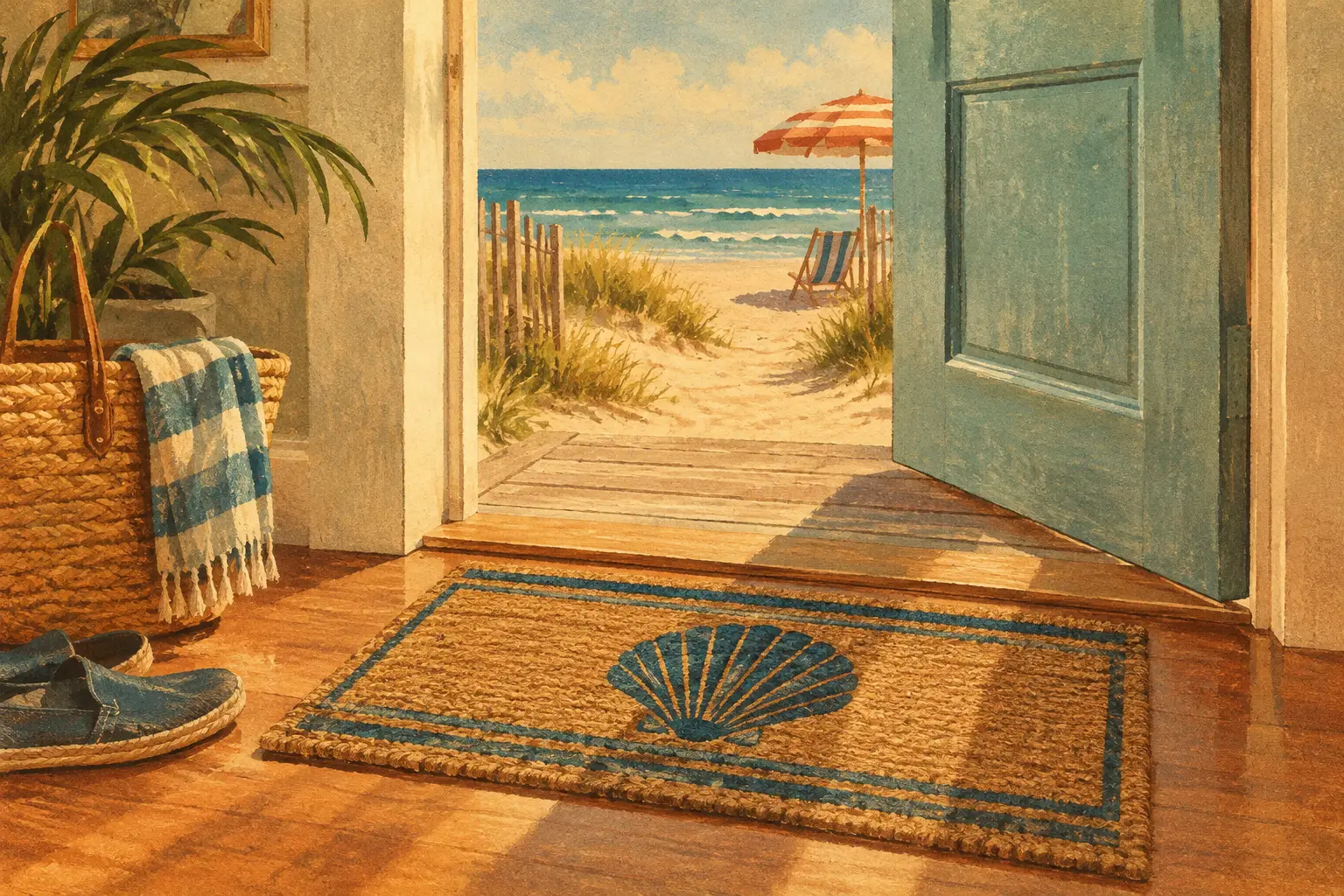

Handmade lobster rope doormats crafted for outdoor durability, easy care, and a warm first impression. Designed for porches, patios, entryways, decks, boats, and RVs across the USA
Copyright © 2026 All Rights Reserved.