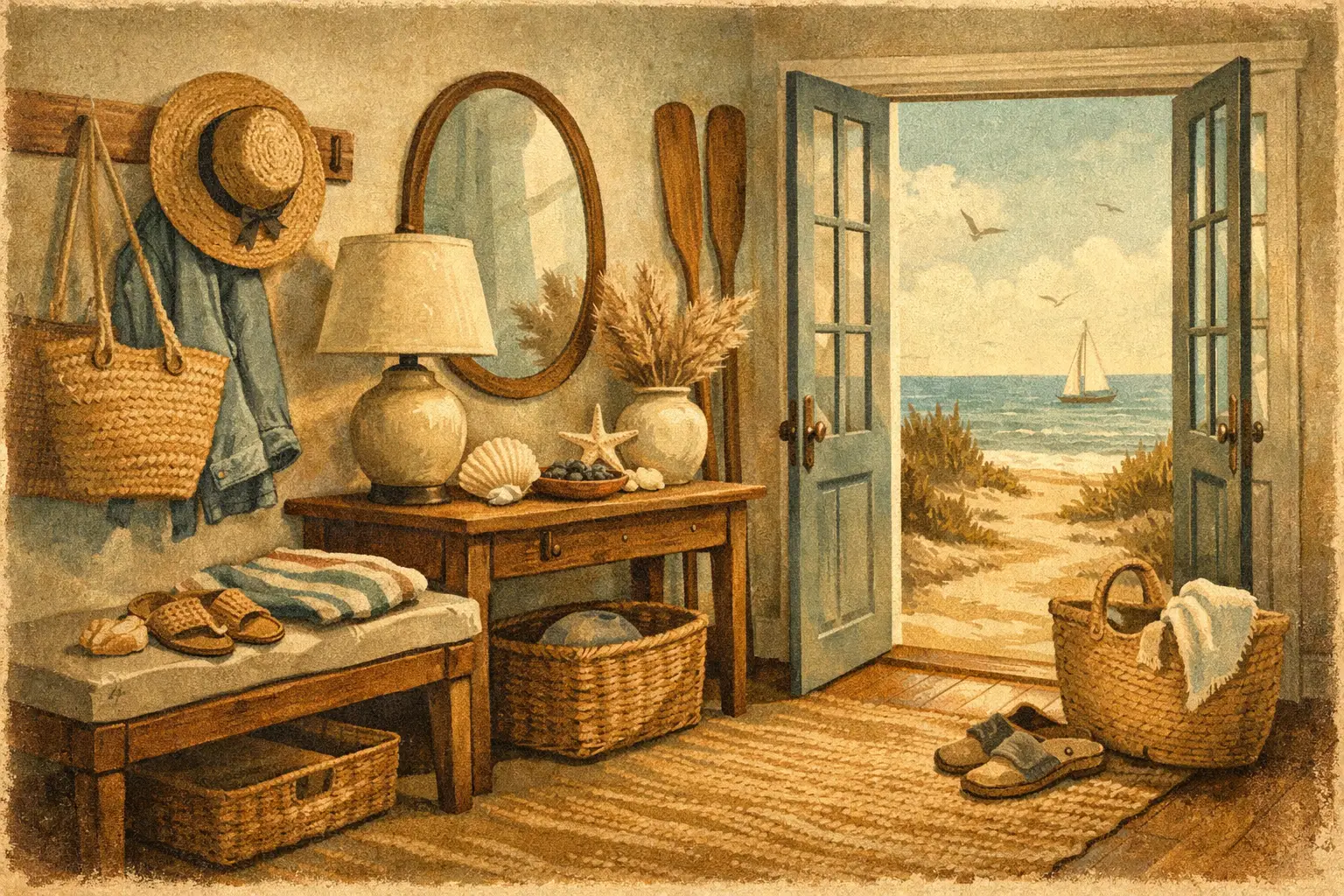
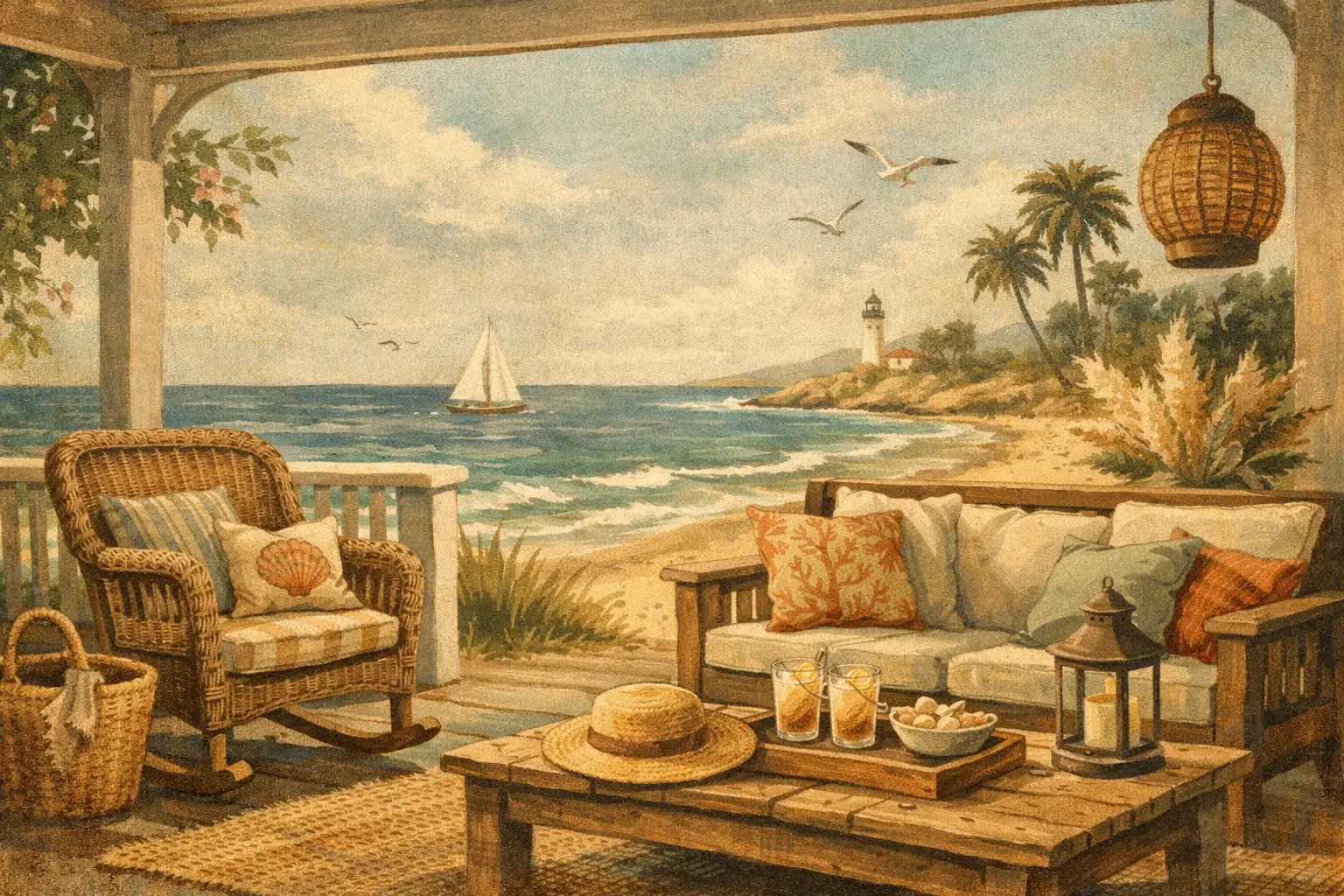
A porch can look beach-ready at 9 a.m. and feel defeated by noon when wet towels, sandy feet, dripping umbrellas, and a dog’s paws start coming through the door. The best coastal porch decor trends are moving beyond fragile, theme-heavy styling in favor of spaces that feel relaxed, polished, and ready for daily use. That means choosing materials that can handle weather, keeping color intentional, and giving the entryway the same practical attention as the seating area.
For a Florida home, a beach house, a lake cabin, or any outdoor-minded property, coastal style works best when it looks easy because it is easy to maintain. A few well-chosen pieces can create a warm first impression without turning the porch into another room that needs constant upkeep.
The coastal look is becoming less literal. Instead of filling a porch with anchors, shells, and signs, homeowners are using texture, color, and durable natural-looking materials to suggest the coast. The result feels cleaner and more timeless, whether the water is across the street or several states away.
This shift makes sense for real households. A front porch is a transition zone, not a showroom. It collects grit, moisture, pollen, leaves, and heavy foot traffic. Decor that only looks good when untouched will not hold up for long, especially at a primary residence or busy vacation property.
The strongest trend is thoughtful restraint: one or two coastal references, layered textures, and furniture or accessories built to live outdoors. Think woven rope, weather-friendly wood finishes, powder-coated metal, washable textiles, and planters that add life without requiring a perfect display.
Bright turquoise and navy will always have a place in coastal decor, but the current look is more grounded. Soft white, sand, flax, pale blue, sea glass green, driftwood gray, and muted navy create a calmer foundation. These shades also work better with the natural colors already present outside: concrete, decking, landscaping, brick, and siding.
Use darker colors where dirt and scuffs are most likely to show, such as the doormat, outdoor pillows, or a bench cushion. Save lighter tones for painted trim, planters, and accent pieces. This balance keeps the porch bright without making every bit of sand look like a problem.
If your home has a bold exterior color, do not force a separate beach palette. A navy door can pair beautifully with cream and natural rope. A pale blue door may only need charcoal, white, and green plantings to feel coastal. The goal is a coordinated entry, not a color theme competing with the house.
Texture gives a porch that relaxed coastal character, but it should also earn its place. Woven seating, teak-style tables, outdoor-rated lanterns, ceramic or composite planters, and rope details add visual depth without relying on delicate accessories.
The trade-off is that not every natural material belongs in every climate. Untreated wicker can become brittle in strong sun and humidity. Thin cotton rugs stay damp and can mildew. Painted wood can need frequent touch-ups near salt air. Choose outdoor-rated versions when possible, and reserve sensitive materials for covered porches with limited exposure.
A handcrafted rope doormat is a particularly useful way to bring in coastal texture at ground level. It delivers the look without adding another item that needs special care. At Lobster Rope Doormats of Florida, handwoven mats are made for porches, decks, boats, RVs, and other high-use spaces where a mat needs to handle moisture, dirt, and daily traffic.
A well-decorated porch starts with the pieces people use first. Before adding pillows or tabletop accessories, look at the path from driveway to door. Is there room to set down a package? Is there a comfortable place to sit? Does the entry catch dirt before it comes inside? Those practical details shape how welcoming the porch feels.
Ordinary coir mats are common, but they can shed, hold moisture, fade, and flatten under repeated use. Fabric mats may look soft at first, yet many are slow to dry after rain or pool days. For a coastal porch, choose a material that rinses clean, drains well, and remains useful after a season of sun and storms.
Scale matters, too. A small mat in front of a wide set of double doors can make the entry feel undersized. A generously sized mat gives the doorway more presence and provides a larger landing area for wet shoes, sandy flip-flops, kids’ backpacks, and pet traffic. Select a shape that follows the architecture: rectangular for most doors, oval or half-round when the entry needs a softer line.
Color can do practical work here. A multicolor weave or a deeper border helps disguise everyday debris while still supporting the porch palette. It is a smart choice for homes near the beach, pool, garden, or boat dock.
A pair of rocking chairs remains a coastal classic, but it is not the only answer. A compact bench works well near a busy front door because it offers a place to remove shoes, set bags, or wait for someone to find their keys. On a narrow porch, one chair and a small side table may feel more open than trying to fit a full conversation set.
Prioritize outdoor cushions with removable, washable covers or quick-drying fills. Decorative pillows are an easy way to refresh color seasonally, but keep the number manageable. Two or three substantial pillows look more intentional than a crowd of small ones that need to be brought in every time the forecast changes.
For uncovered areas, furniture with open frames often performs better than bulky upholstered pieces. It dries faster after rain and lets air move through the space. In shaded, covered porches, you have more flexibility, though humidity still makes easy-clean materials a wise choice.
Warm lighting is one of the simplest ways to make a porch feel finished after sunset. Wall sconces should provide safe visibility at the door, while a lantern on a side table or a strand of outdoor-rated lights can add a softer layer. Avoid cool blue-white bulbs that make natural materials look harsh.
Keep lighting proportional. Oversized lanterns can crowd a small stoop, and too many string lights can make a front entry look busy. One strong fixture paired with a small accent light is often enough. If the porch gets full sun, solar options can be convenient, but check their performance before relying on them for the main entry light.
Plants prevent a coastal porch from feeling overly staged. Their color and movement soften hard surfaces and make the home feel cared for. Large leafy plants, ornamental grasses, palms, ferns, and salt-tolerant choices can all work, depending on your location and exposure.
Match the planter to the conditions. Lightweight resin or fiberglass planters are easier to move and usually tolerate wet weather well. Heavy ceramic planters offer a more substantial look but can crack in freezing climates and may be difficult to reposition. Use planters in pairs for a formal entry or vary the height of two or three containers for a more relaxed arrangement.
Do not overfill the porch with greenery. Leave room for the door to open, guests to walk, and outdoor furniture to function. One generous planter on each side of the entry can make a bigger impact than six small containers scattered across the floor.
Coastal decor lasts when the expensive pieces stay neutral and the easy pieces bring in personality. Choose durable furniture, lighting, planters, and an entry mat first. Then change out pillow covers, small planters, door wreaths, or a simple throw as the season or your taste changes.
This approach is especially useful for second homes and rentals. You want the porch to look cared for between visits without leaving out decor that blows away, fades quickly, or requires frequent replacement. Fewer, better outdoor pieces create a cleaner view and reduce the work of opening or closing up the property.
A coastal porch does not need to be perfect to feel inviting. It needs to be ready: a clean place to step, a durable place to sit, a little shade or light, and details that still look good after a busy weekend. Start with the entryway, choose materials that can take the weather, and let the easygoing coastal feel come from how well the space works.

Doormats designed to look better, last longer, and clean easier.
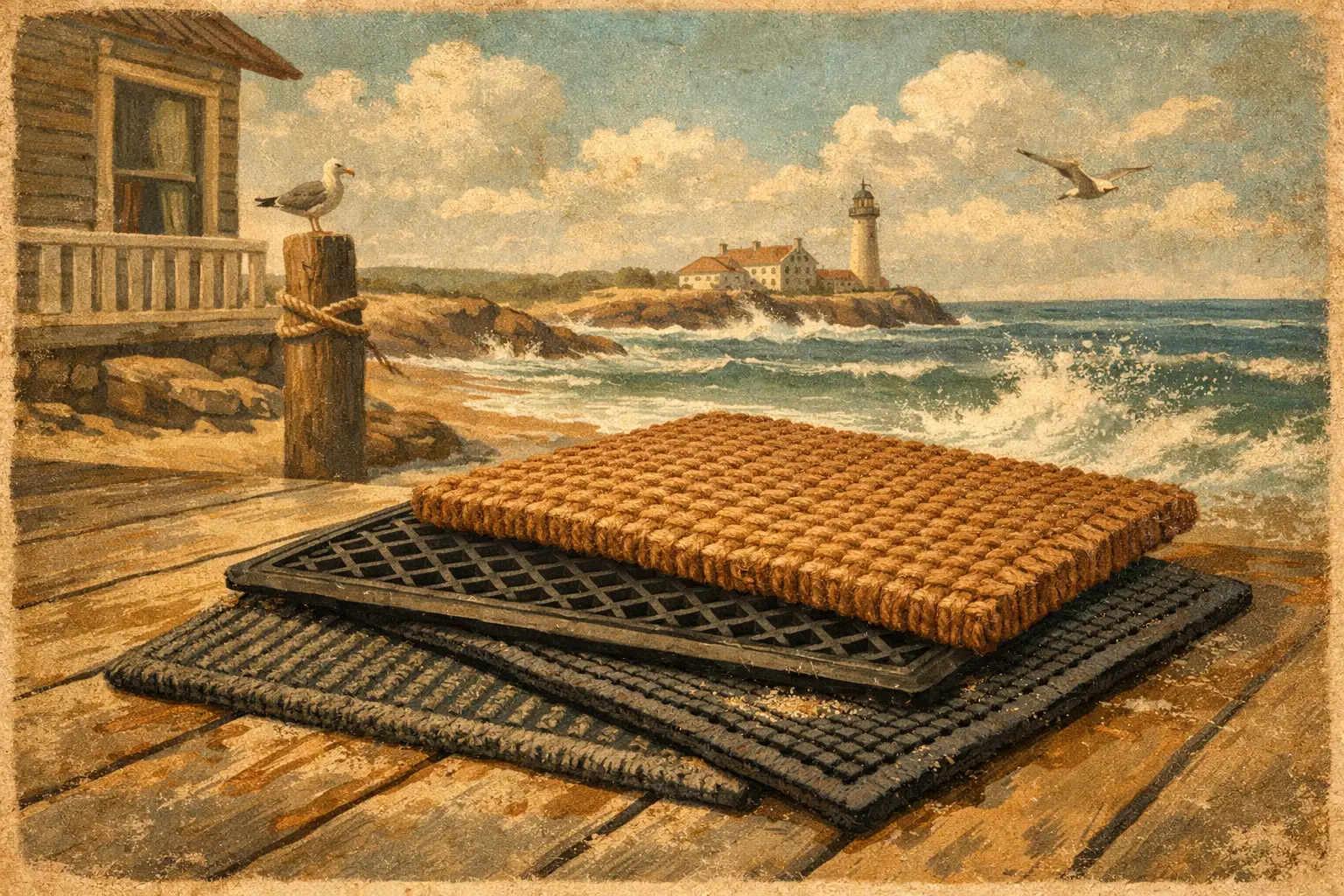
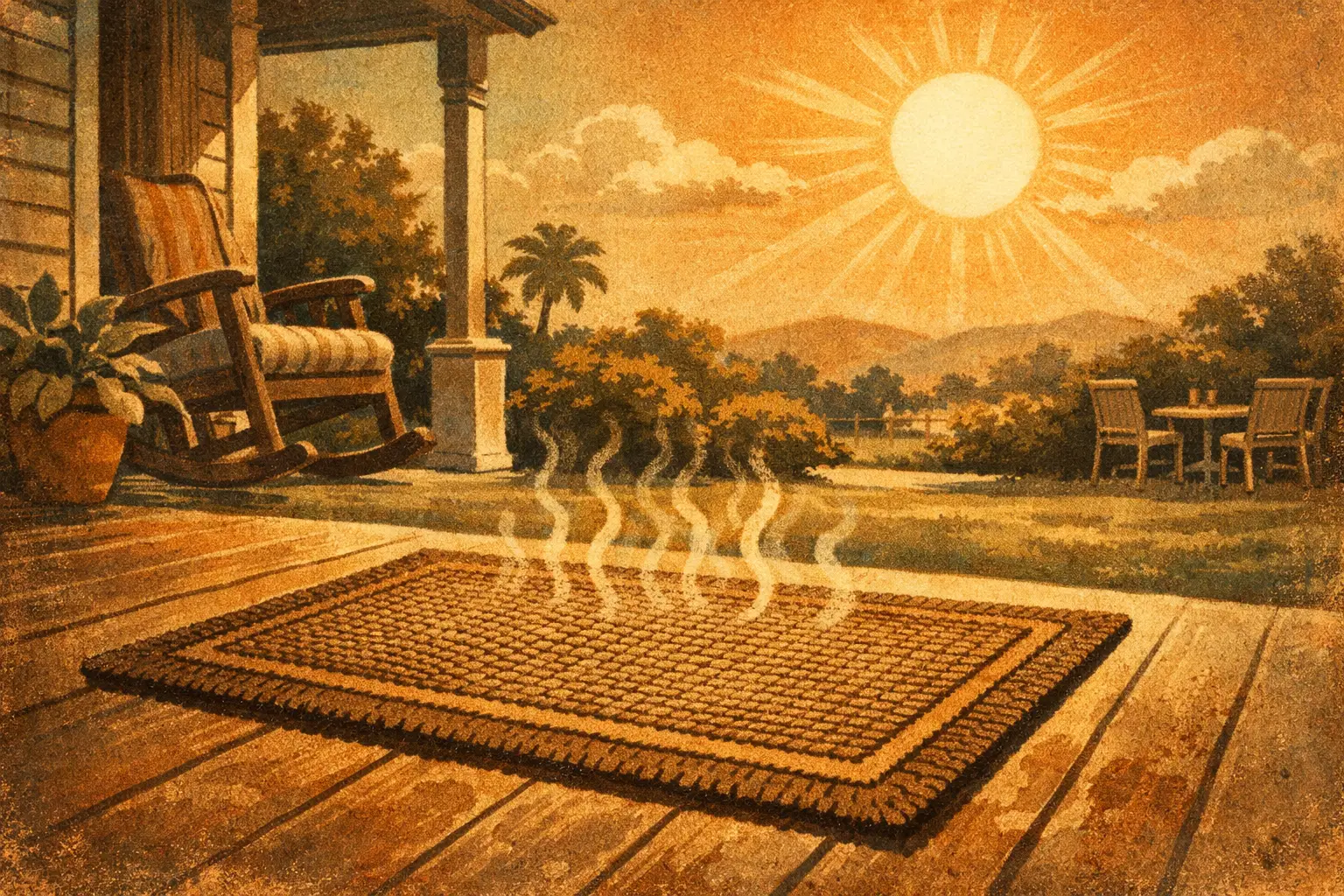

Handmade lobster rope doormats crafted for outdoor durability, easy care, and a warm first impression. Designed for porches, patios, entryways, decks, boats, and RVs across the USA
Copyright © 2026 All Rights Reserved.