A rope doormat only stops sand at the door if you pick the right weave, size it correctly, and clean it on a schedule — skip any one of those and sand still ends up on your hallway floor.
Sand is round, dry, and small enough to ride between shoe treads without you noticing. A flat woven mat or a rubber-backed mat has a shallow surface, so sand just slides across the top and follows your foot inside. Rope construction works differently: the raised, twisted strands create gaps that grab grains and knock them loose as feet flex across the surface.
That's the whole logic behind a durable doormat for sandy beach entries — the weave does mechanical work a flat mat can't. If you're still fighting sand trails in 2026 with a standard mat, the fix usually isn't more sweeping. It's swapping the mat.
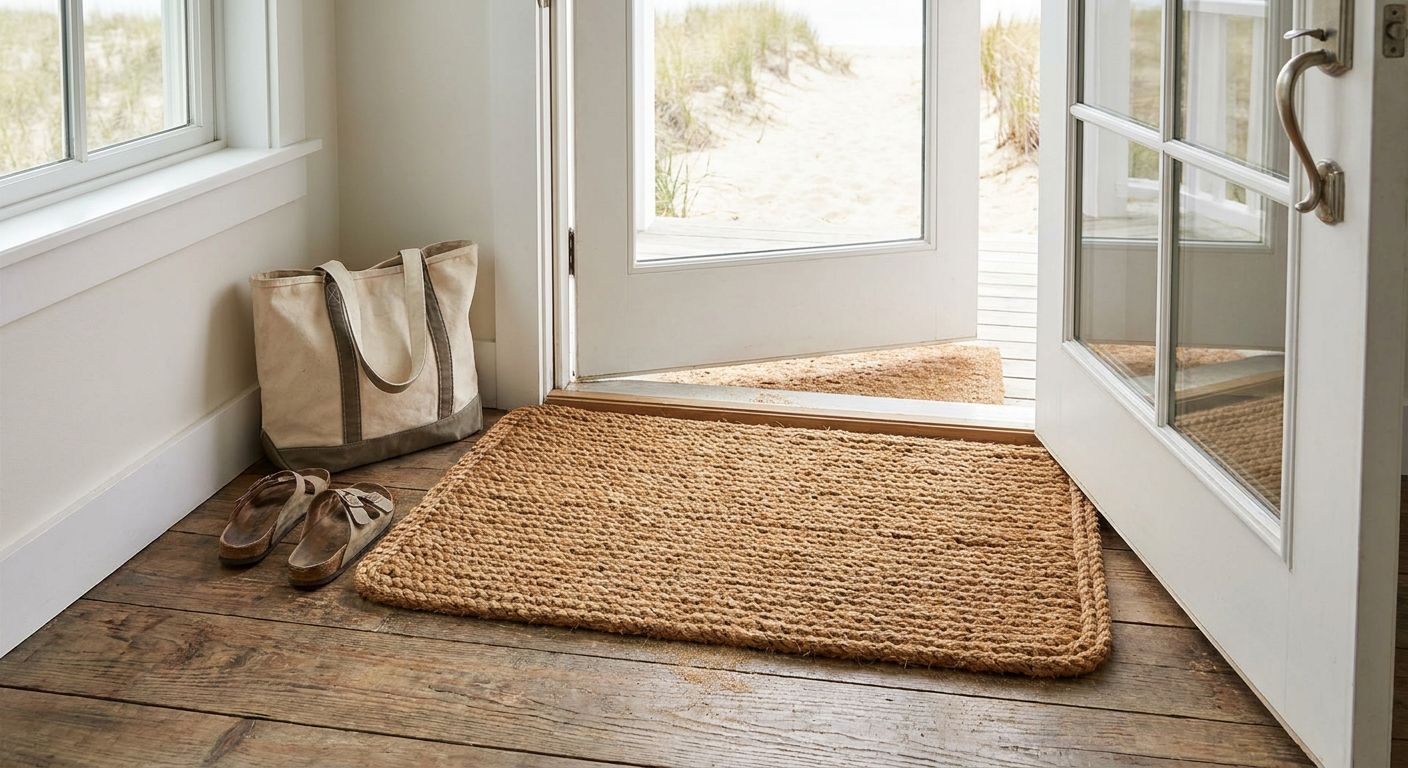
Getting the size right matters more than people expect. A mat that's too narrow leaves gaps on either side where feet step straight onto sandy concrete. Check how to size a rope doormat for your front door before you order, especially if your entry has sidelights or a wide threshold.
Measure your door frame width and add 4-6 inches on each side. This accomplishes one thing: it guarantees both feet land on rope during the natural stride of walking in, instead of one foot catching bare concrete or decking. Skipping this step is the single most common reason a rope mat "doesn't work" — it's not undersized capacity, it's undersized coverage.
Run your hand across the surface before you commit. A tight, flat weave looks tidy but performs closer to a rubber mat — sand skates across it. A rope mat with pronounced ridges and gaps between strands does the actual filtering. Common mistake: choosing a mat by color first and weave second. Color matters for the entryway, but weave depth is what handles the sand.
Most people center a mat on the door, but foot traffic rarely lands dead center — it drifts toward the hinge side or the direction people walk from (driveway, dock, pool gate). Watch where footprints actually fall for a day or two and shift the mat to match. A mat placed 3 inches off the natural stride line catches noticeably less sand than one centered on the actual path.
A brand-new rope mat is stiffer than one that's been walked on for a few weeks. Give it a week of normal traffic before judging performance — the fibers relax and the gaps open up slightly, which improves how much sand falls through versus rides on top. This isn't a defect; it's how handwoven rope settles.
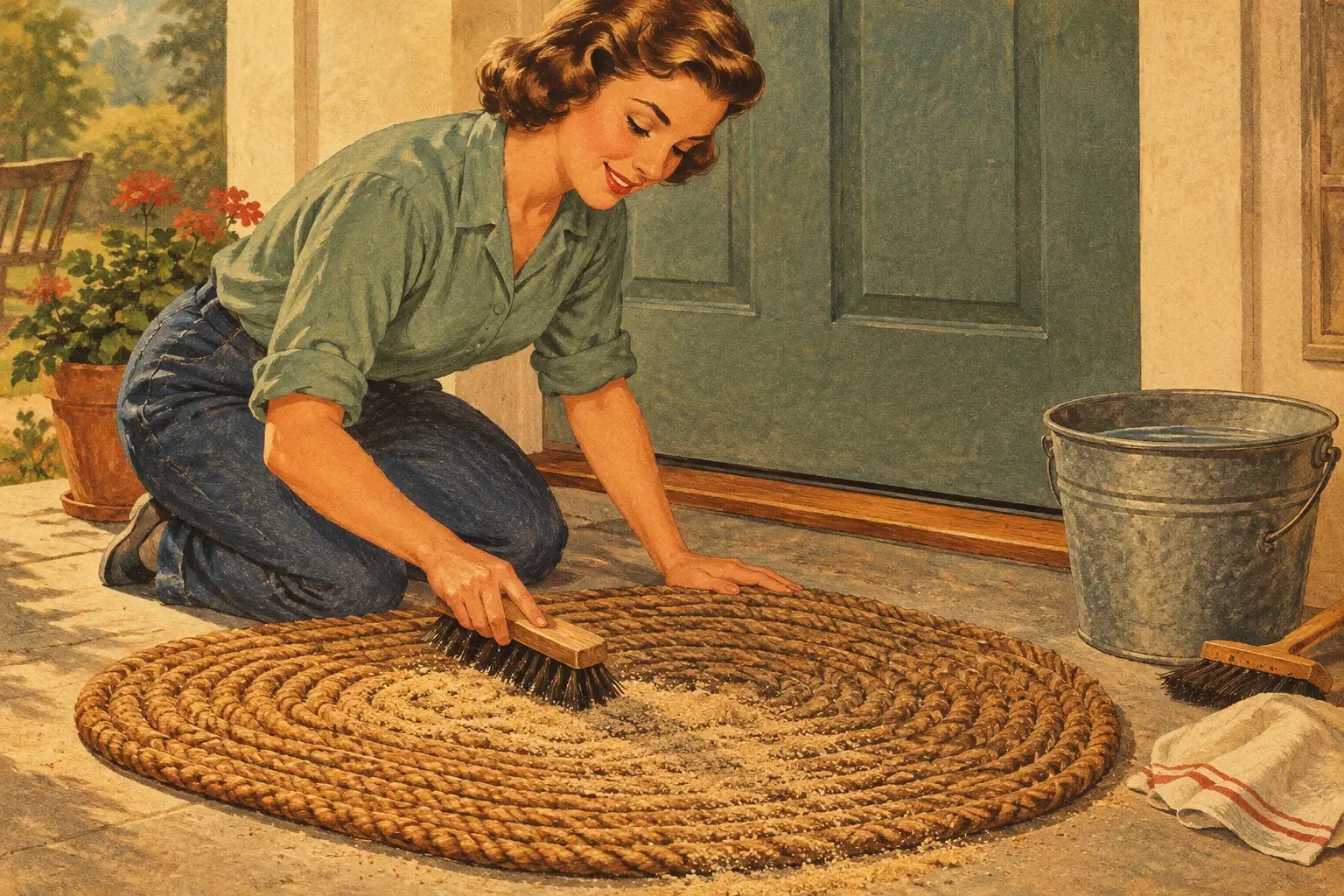
This is the step people skip until the mat looks packed with sand. Once a week during beach season, pick the mat up, shake it hard over grass or gravel, then hose it down and let it dry flat in the sun. A clogged weave stops filtering — it just holds sand at the surface where shoes pick it back up. Full cleaning steps, including what to do after storm season or heavy salt exposure, are in how to clean a lobster rope doormat.
One mat handles the bulk of the sand, but a second smaller mat just inside the door catches what the first one missed. This two-mat approach is standard on boat docks and beach house porches for a reason — it roughly doubles your catch zone without doubling maintenance, since the interior mat rarely needs more than a shake-out.
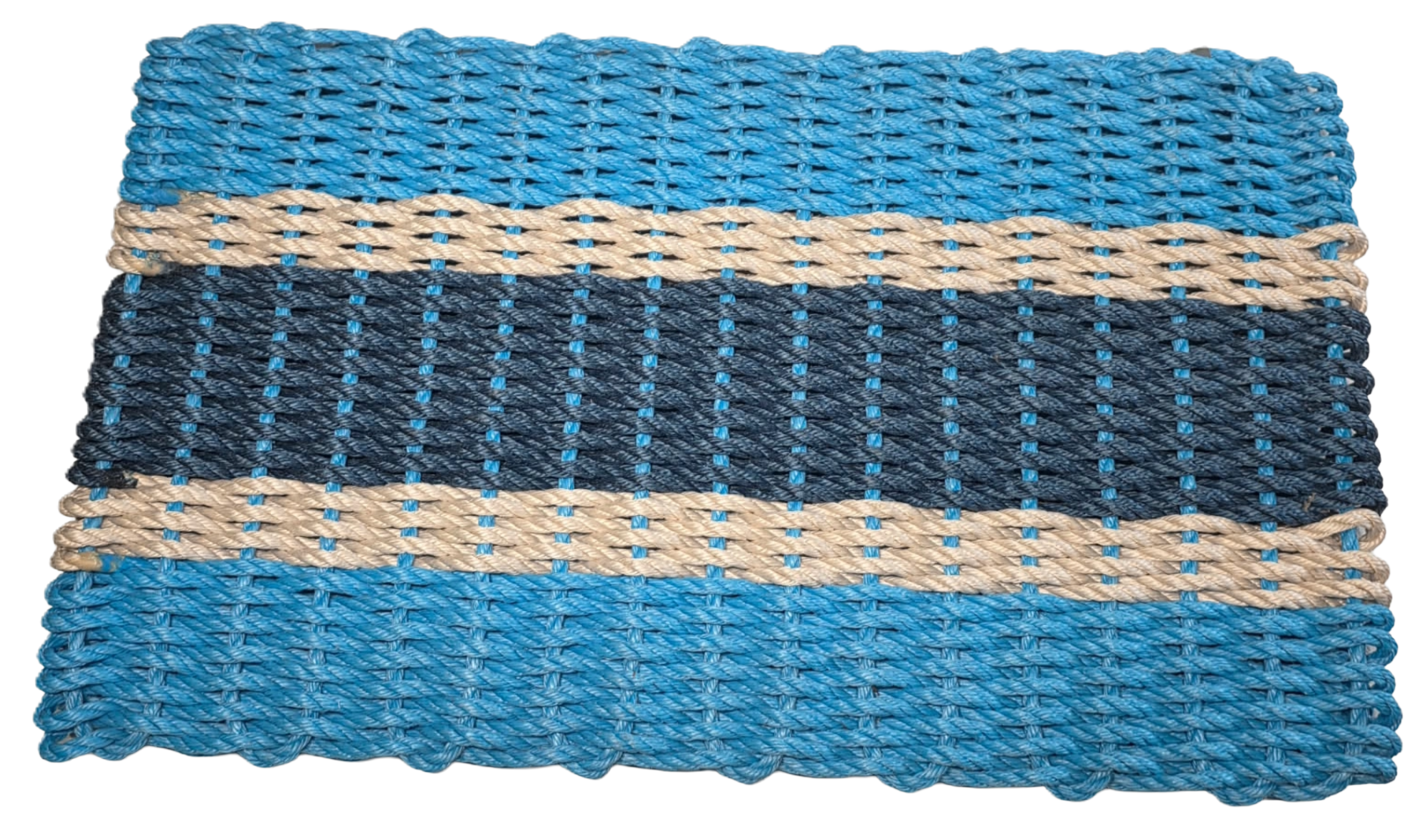
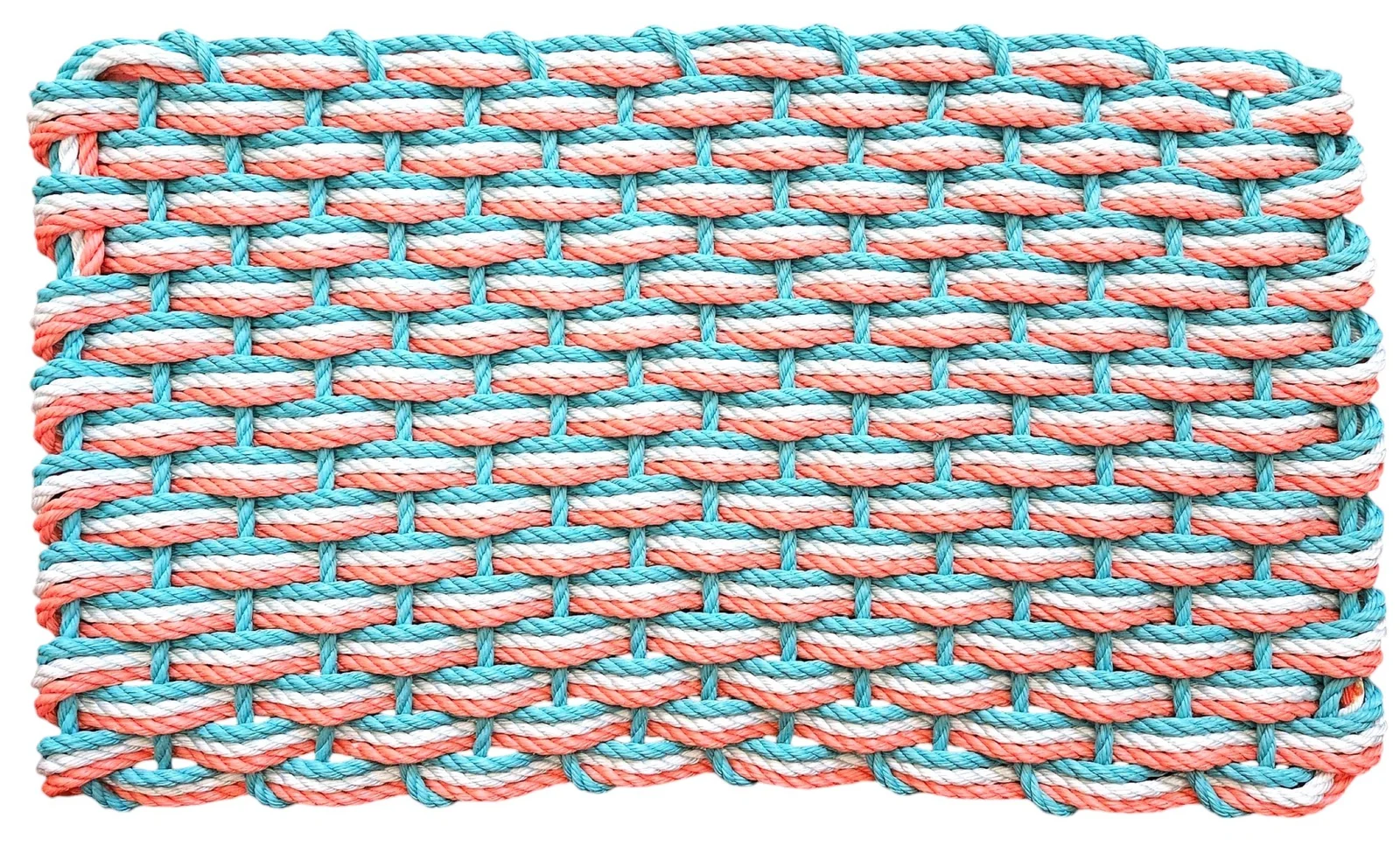
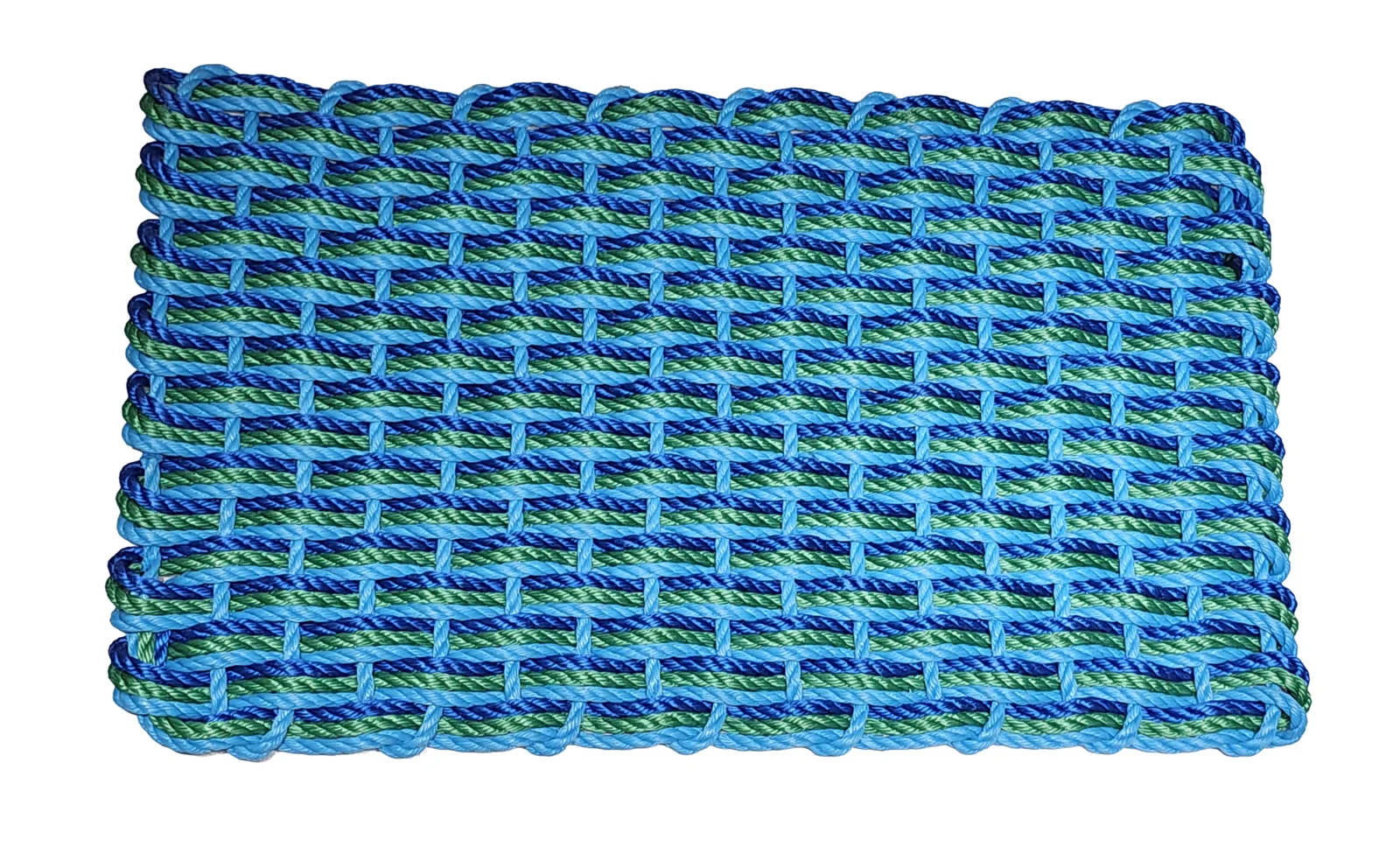
“A rope mat that lets sand fall through works better than one that traps it on top.”
Sand still tracks in after a few weeks of use. The mat is likely undersized or placed off the natural foot path — recheck placement before assuming the weave failed.
The mat feels packed and stiff instead of springy. It's overdue for a shake-out and rinse. A packed weave stops filtering sand and just holds it at the surface.
Sand builds up faster near a pool gate or dock than at a front door. Wet feet carry more sand per step than dry feet. Rinse and dry that mat twice as often, and consider a second mat right at the gate.
The mat smells musty after rain. It's drying flat against a non-draining surface. Prop one edge up on a board or lean it against a rail so air moves underneath while it dries.
Sand seems to hide in the fringe or edges. Rope mats collect grains at the border where the weave terminates. A quick shake handles this; a stiff broom pass gets what the shake misses.
Shoes still feel gritty after wiping. Two-mat systems solve this better than one large mat — an interior mat at the threshold catches the last of what the exterior mat misses.
Once the mat and placement are dialed in, maintenance is the only variable left. Set a weekly shake-and-rinse habit during beach season, and check the weave after any heavy storm or salt spray event for grit buildup deep in the fibers. A rope doormat handled this way holds its filtering performance for years, which is the entire point of buying one with a 10-Year Replacement Guarantee instead of a $15 mat you'll replace every spring.
What’s the best doormat to keep sand out of an entryway?
A rope doormat with a thick, uneven weave keeps sand out of an entryway better than flat coir or rubber mats because the raised strands trap and drop grains instead of letting them ride across a flat surface. Pairing it with a smaller interior mat catches what the first one misses.
Is a rope mat better than a coir mat for sand?
Yes, a rope mat outperforms coir for sand because the weave has deeper gaps between strands. Coir mats have a tighter, flatter surface that lets dry sand slide across rather than fall through.
How often should I clean a rope doormat used near sand?
Shake and rinse a rope doormat once a week during beach season. A mat used daily on a beach deck or dock may need it twice a week to keep the weave from clogging with sand.
What size doormat keeps the most sand out?
Size the mat 4 to 6 inches wider than your door frame on each side so both feet land on rope during a normal stride. Undersized mats leave gaps where feet step directly onto sandy concrete.
Do I need two doormats for a sandy entry?
A two-mat setup, one outside and one just inside the threshold, catches noticeably more sand than a single mat alone. This is common practice on boat docks and beach house porches in 2026.
Can a rope doormat handle wet, sandy feet from a pool or dock?
Yes, rope doormats are built for wet, sandy foot traffic and dry faster than carpet-style mats because air moves through the open weave. Wet sandy feet do require more frequent rinsing than dry sandy feet.
How much does a lobster rope doormat cost?
Pricing varies by size and weave pattern, so check current listings on the site for exact numbers. Most rope doormats are priced as a one-time purchase backed by a 10-Year Replacement Guarantee.
Will a rope doormat fade or wear out from constant sand exposure?
Rope doormats are built to hold up under sand, salt, and sun, which is why they carry a 10-Year Replacement Guarantee. Regular rinsing extends the look and function of the weave well beyond a standard fabric mat.
The detail most people miss: sand-catching performance drops the moment a rope mat sits flush against a non-draining surface, because trapped moisture packs the weave shut from underneath. Leave a sliver of airflow under the mat's edge — a thin shim, a raised threshold, anything — and the same mat filters noticeably more sand simply because the fibers stay open instead of compressing wet.