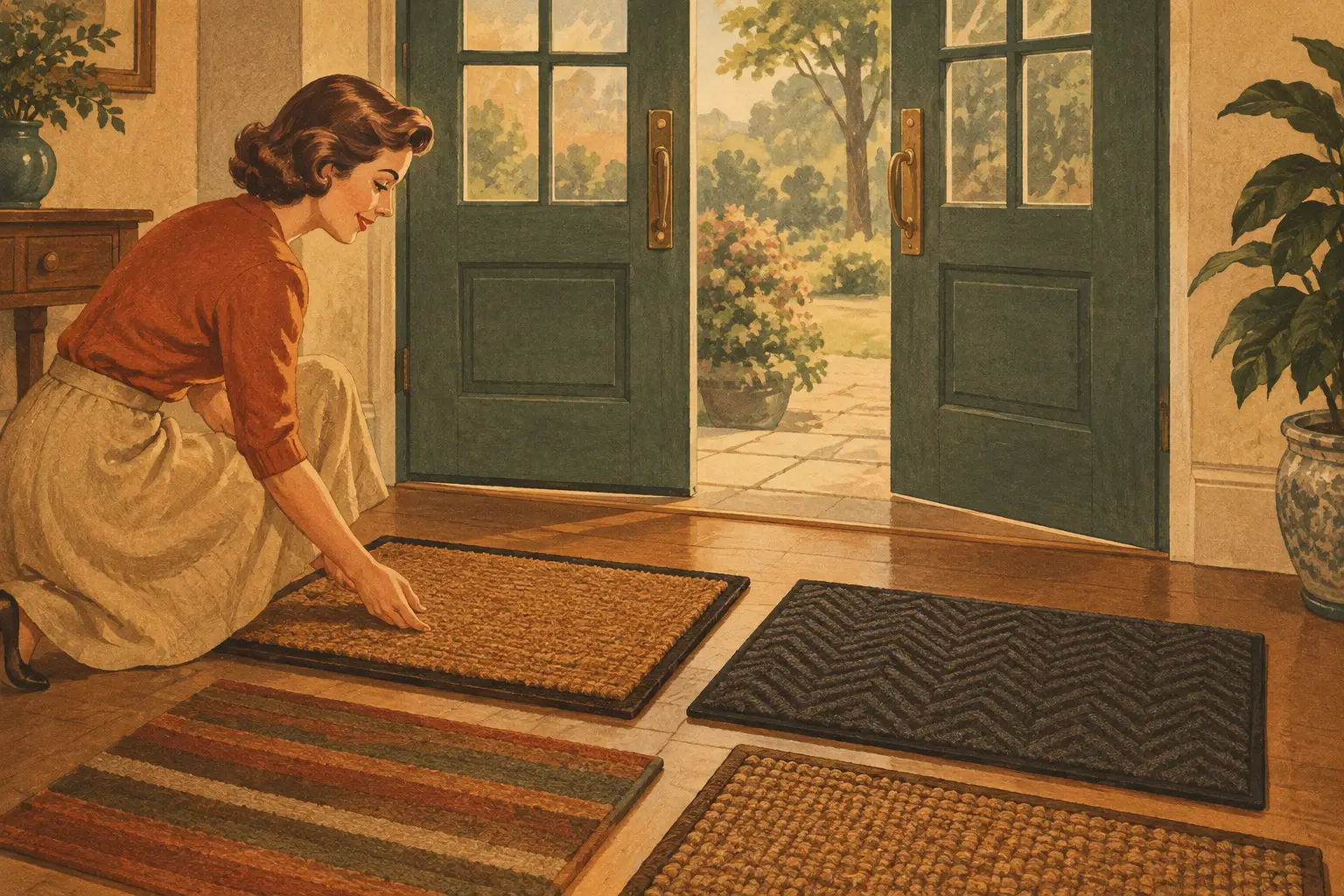

Coastal bookstores lose more shelf-browsing time to sand-tracked floors than almost any other retail category near the beach, and a rope doormat solves that at the threshold instead of at the register. A bookstore entrance in 2026 needs a mat that pulls grit off flip-flops and sandals in two or three steps, dries fast between customers, and still looks like part of the storefront instead of an industrial add-on.
Books and sand don't mix. A single gritty shoe can scuff a paperback cover or grind into carpet fibers near a display table, and coastal bookstores in beach towns and boardwalk strips deal with that traffic all day during peak season. The mat at the door is the only barrier between sandy feet and the shelves.
Unlike a restaurant or gallery entrance, a bookstore doorway often sits close to a browsing table or a spinner rack, so the mat has to do its job in a tighter footprint. That's a different constraint than narrow entryways in a residential hallway, but the sizing logic is the same: measure the gap, don't guess.
Rope doormats for bookstores also take more daily foot traffic than a home entryway ever will. A shop open seven days a week during season can see hundreds of crossings before closing, which means the weave has to hold its shape without flattening into a slick, useless mat by August.
Start with a tape measure before you look at any mat. A door that swings inward needs clearance so the mat doesn't catch the bottom edge, and a recessed storefront entry usually has more depth to work with than a flush sidewalk door.
A tight, low-pile weave sheds standing water fast but doesn't hold much sand. A deeper spiral weave captures more grit per step but needs more shaking out. Bookstores near a boardwalk or beach access point usually need the deeper option.
The rope weave guide breaks down each weave pattern in more detail if you're comparing more than one storefront.
A lot of coastal shops default to white or natural rope because it photographs well for social posts. That's fine for a low-traffic gallery, but a bookstore doing hundreds of crossings a day will show dirt fast on a pale mat.
A rope doormat only works if someone actually maintains it. During spring break and summer, plan on shaking it out at least twice a week and rinsing with a hose once a week if the entrance sees direct sand traffic.
Salt air breaks down synthetic backings faster than it breaks down natural rope fiber, which is one reason handwoven rope holds up better on a boardwalk storefront than a big-box rubber mat. Still, humidity and standing moisture need a plan.
A storefront on a windy corner or near an open boardwalk can shift a lightweight mat every time the door opens. A heavier lobster rope construction sits flatter and resists curling at the edges better than a thin coir mat.
A rope doormat at a bookstore entrance takes more daily impressions than almost any residential application. Budget for a replacement check every season instead of waiting until the weave visibly thins.
“If the mat doesn’t clear the threshold gap, sand walks around it, not over it.”
| Option | Best For | Key Limitation |
|---|---|---|
| Lobster rope doormat, spiral weave | High-traffic coastal bookstores needing deep sand capture at the door | Needs a regular shake-out schedule in peak season |
| Coir fiber mat | Low-traffic shops on a tight budget | Breaks down fast in humid coastal air, sheds fiber indoors |
| Rubber-backed synthetic mat | Chain retail entrances prioritizing low maintenance | Traps heat, looks generic against coastal storefront design |
| Flat-braid rope mat | Narrow storefront doors with limited swing clearance | Captures less sand than a deeper spiral weave |
Verdict: a spiral-weave lobster rope doormat is the strongest fit for a coastal bookstore entrance with daily foot traffic, and a flat-braid weave is the better call only when door clearance is genuinely tight.
Get a rope doormat built for your storefront
Handwoven weaves sized for bookstore entrances, backed by a 10-year replacement guarantee.
What’s the best rope doormat weave for a bookstore near the beach?
A spiral or coil weave lobster rope doormat captures the most sand and grit at the threshold, which matters most for coastal bookstores near boardwalk foot traffic in 2026.
How often should a bookstore clean its entrance rope mat?
Shake it out at least twice a week during peak season and rinse weekly if the entrance sees direct sand traffic. Off-season, a monthly check is usually enough.
Is a rope doormat better than a rubber mat for a storefront?
Rope holds up better in salt air and looks more consistent with coastal storefront design, while rubber-backed mats trap heat and often look generic against a beach-town facade.
How do I size a rope doormat for a narrow bookstore doorway?
Measure the door width, subtract 2-3 inches for swing clearance, and choose a flatter braid weave if the remaining space is tight.
Do rope doormats fade in direct coastal sun?
Bright dyed colors fade fastest under direct afternoon sun; natural, tan, and darker tones hold their color longer at a storefront entrance.
Can a rope doormat handle daily commercial foot traffic?
A handwoven lobster rope construction is built for daily crossings in the hundreds, but plan on a seasonal fiber-density check rather than waiting for visible thinning.
What color rope doormat hides dirt best at a storefront?
Navy and charcoal tones hide daily grime longer than white or natural rope, which is the better pick for a high-traffic bookstore entrance.
Should a bookstore rotate two entrance mats?
Shops open seven days a week during season benefit from rotating two mats so one can fully air-dry while the other is in use.
The detail most coastal bookstores miss is placement depth, not weave choice. A mat that only covers the first stride catches almost no sand, because most walkers take their second and third step before their shoe fully lands flat. Buy for the full stride length across the doorway in 2026, and the weave choice matters far less.

Doormats designed to look better, last longer, and clean easier.
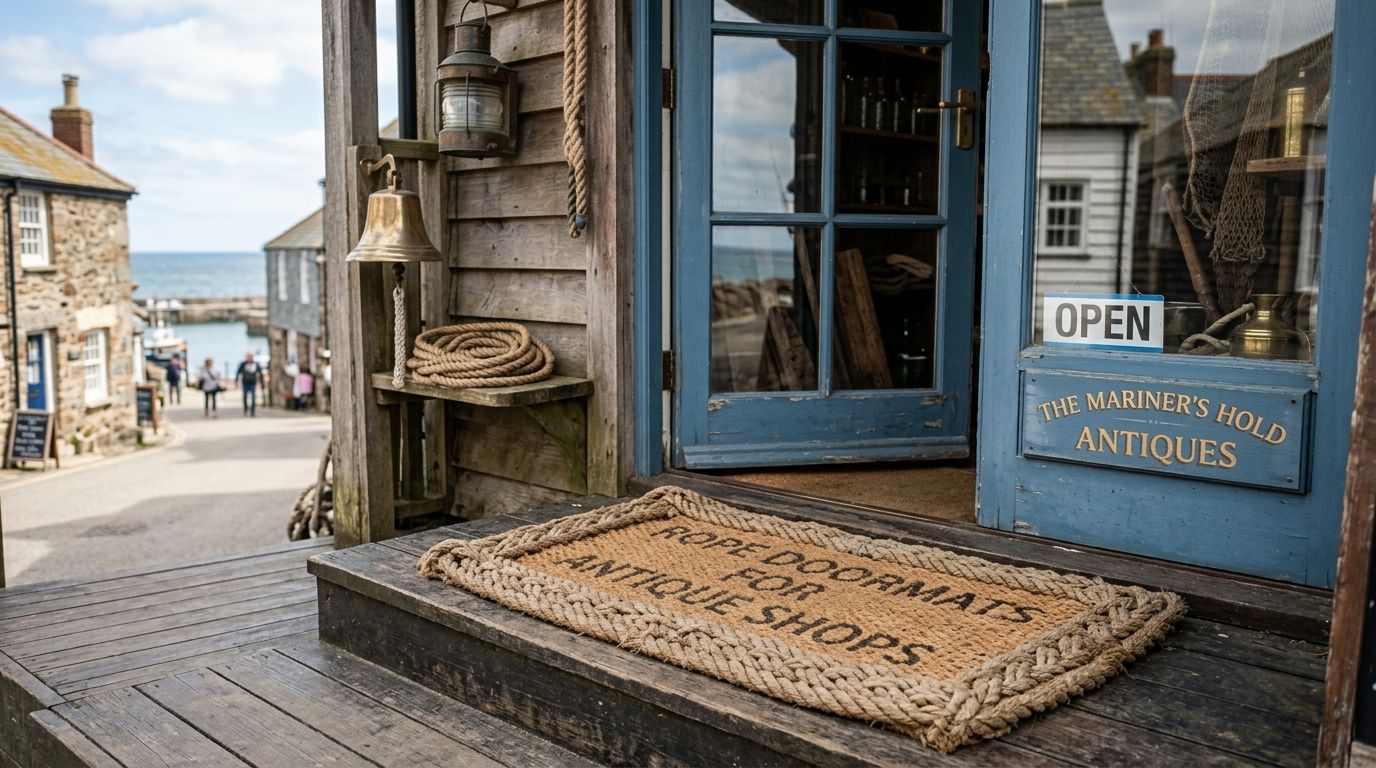

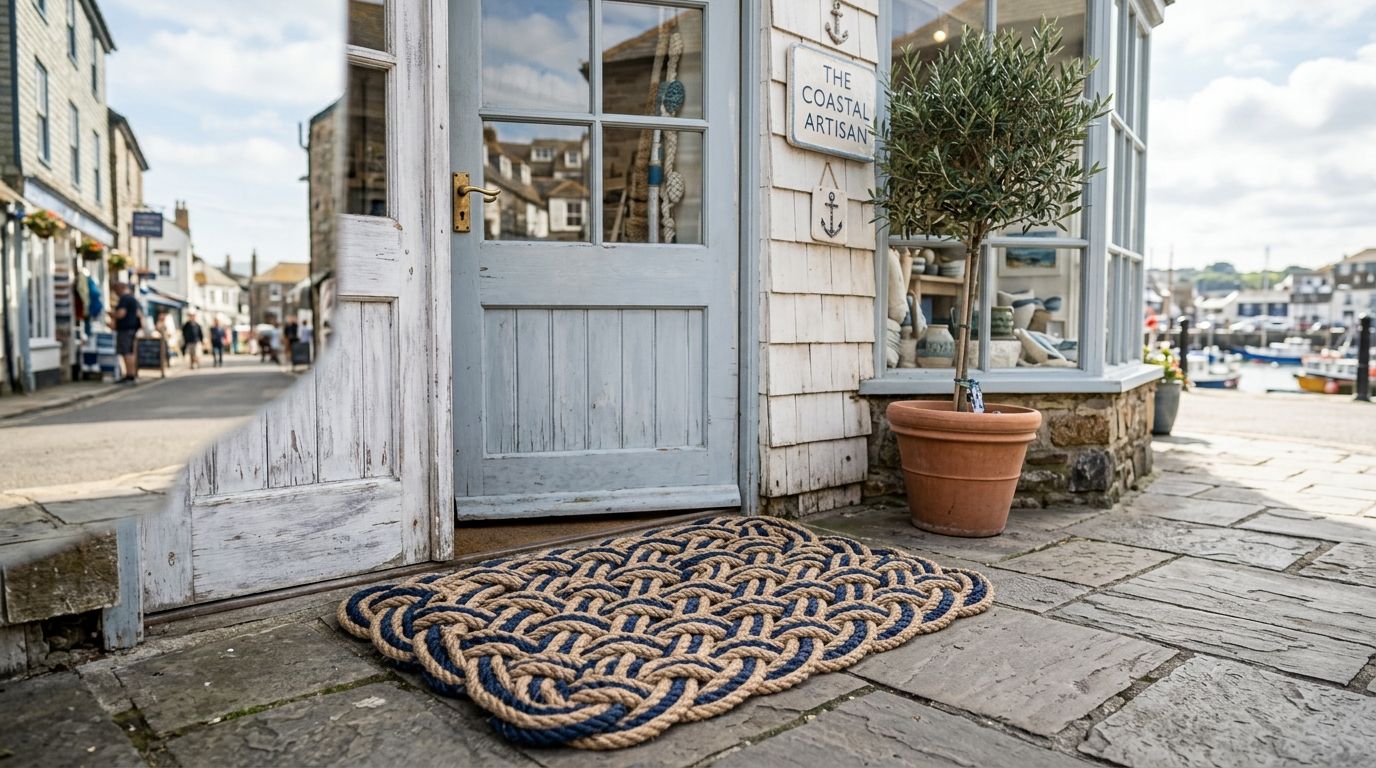
Handmade lobster rope doormats crafted for outdoor durability, easy care, and a warm first impression. Designed for porches, patios, entryways, decks, boats, and RVs across the USA
Copyright © 2026 All Rights Reserved.