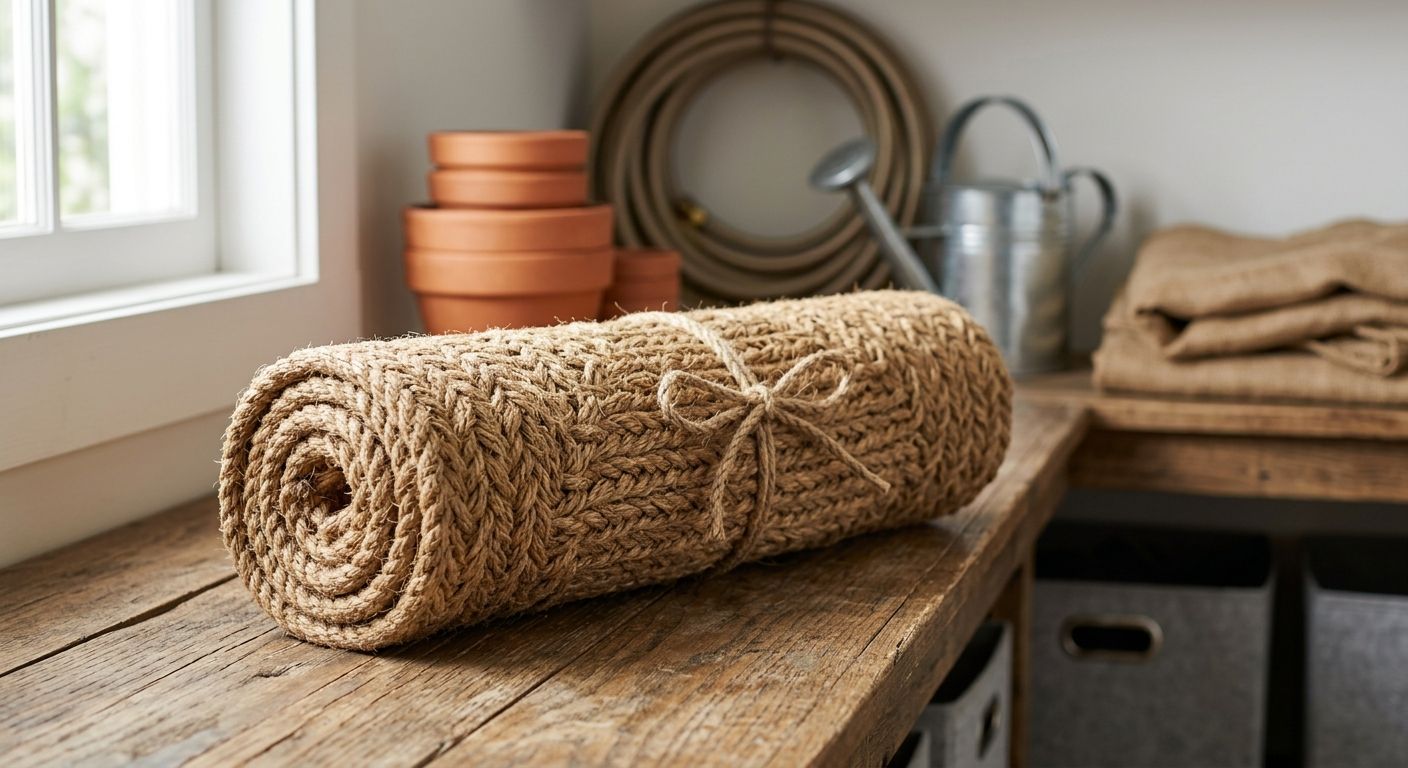
Storing a rope doormat during the off season means cleaning it, drying it completely, and coiling it loosely in a ventilated spot away from direct sun and standing moisture. Skip the drying step and you're not storing a doormat for next season — you're growing mildew on it.
A lobster rope doormat is made to sit outside through salt air, rain, and foot traffic — that's the whole point of it. But an empty entryway for four or five months, like a snowbird winter home sitting closed up from spring through fall, is a different problem than daily use.
A doormat left outdoors and unused doesn't wear from foot traffic in that stretch — it wears from moisture sitting in the fibers with nowhere to go. Storage isn't about protecting the rope from the outdoors; it's about not sealing dampness in with it. Get that one variable right in 2026 and the mat comes out of storage looking the same as it went in.
The process is short. Skipping steps is what causes the damage people blame on "cheap rope" the following spring.
| Storage method | Airflow | Moisture risk | Verdict |
|---|---|---|---|
| Sealed plastic tote | None | High | Skip |
| Open shelf, indoors | Good | Low | Buy |
| Breathable bag, garage | Good | Low | Buy |
| Rolled tight against a wall | Poor | Moderate | Hold |
| Left outside, uncovered | Good | Low, but sun fade risk | Hold |
Not every entryway closes down the same way, and the right off-season routine shifts with the setup:
Shop mats built for the coast
Handwoven rope doormats made for salt air, sun, and long off seasons.
A sealed plastic bag is the worst option for storing a rope doormat because it traps residual moisture against the fibers with no airflow. If a bag is the only option available, use one with mesh panels or leave it loosely open rather than sealed — the goal in 2026, same as any year, is airflow, not a tight seal.
A rope doormat can sit in storage for an entire off season, whether that's a few weeks or several months, as long as it went in fully dry. The damage timeline isn't about calendar time — it's about how much moisture was locked in on day one, which is why the drying step before storage matters more than how long the mat sits.
No — a lobster rope doormat is built for year-round outdoor exposure, so leaving it in place through the off season is fine for most homes. Storage becomes worthwhile mainly for properties that sit fully vacant, like a lake house or a snowbird home closed for months with nobody checking the entryway, where a clean, dry, coiled mat put away properly outlasts one left exposed with no one watching it.
Ropemats Florida builds its handmade rope doormats to handle outdoor conditions in the first place, which is why the storage routine above is mostly about moisture control rather than protecting a fragile material.
What’s the best way to store a rope doormat off season?
The best way to store a rope doormat off season is to rinse it, let it dry fully, coil it loosely, and keep it in a ventilated bin or bag away from direct sun. Skipping the full-dry step is the most common cause of musty mats the following season.
Is it bad to fold a rope doormat for storage?
Yes, folding a rope doormat flat for storage creates a permanent crease at the fold line over time. Coiling it loosely instead keeps the rope’s natural shape and prevents edge curl when it comes back out.
Can a rope doormat get moldy in storage?
A rope doormat can develop mold in storage if it’s put away damp or sealed in plastic with no airflow. A full day or more of air-drying before storage, plus a breathable container, prevents this in almost every case.
Do I need to clean a rope doormat before storing it?
Yes, cleaning a rope doormat before storing it removes sand, salt, and dirt that trap moisture inside the weave. A rinse and brush-down is usually enough before the drying step.
Where should I store a rope doormat during the off season?
Store a rope doormat somewhere dry, ventilated, and out of direct sun, such as an indoor shelf, closet, or breathable bag in a garage. Avoid sealed plastic totes and damp concrete floors.
How do snowbirds store their rope doormats when they close the house?
Snowbirds should clean and fully dry the mat before closing the house, then coil and store it in a ventilated spot rather than leaving it exposed to a vacant entry for months. A mid-season check catches any moisture problems early if a caretaker visits the property.
Will a rope doormat lose its shape if stored for months?
A rope doormat won’t lose its shape in storage as long as it’s coiled rather than folded and kept dry. Rope that goes into storage damp or folded flat is what causes curling or creasing, not the length of time in storage.
Lobster rope was designed to survive months on a trap line in open saltwater before it ever became a doormat — the material itself isn't the weak point in an off-season storage routine, moisture management is. Ropemats Florida backs every handmade rope doormat with a 10-Year Replacement Guarantee, which covers the kind of wear a mat should never see if it's been dried and stored properly between seasons.

Doormats designed to look better, last longer, and clean easier.
Handmade lobster rope doormats crafted for outdoor durability, easy care, and a warm first impression. Designed for porches, patios, entryways, decks, boats, and RVs across the USA
Copyright © 2026 All Rights Reserved.