Get the width right and the depth right, add the standard overhang, and round up to the nearest stock size — that's the whole formula for sizing a rope doormat, whether it's sitting on a Florida porch or a lake house landing in 2026.
A rope doormat that's too small leaves gaps where sand, salt, and mud slip past onto your floor — the exact problem it's supposed to solve. Too large, and it catches the door swing, bunches against a threshold, or hangs off the edge of a porch step where it becomes a trip risk.
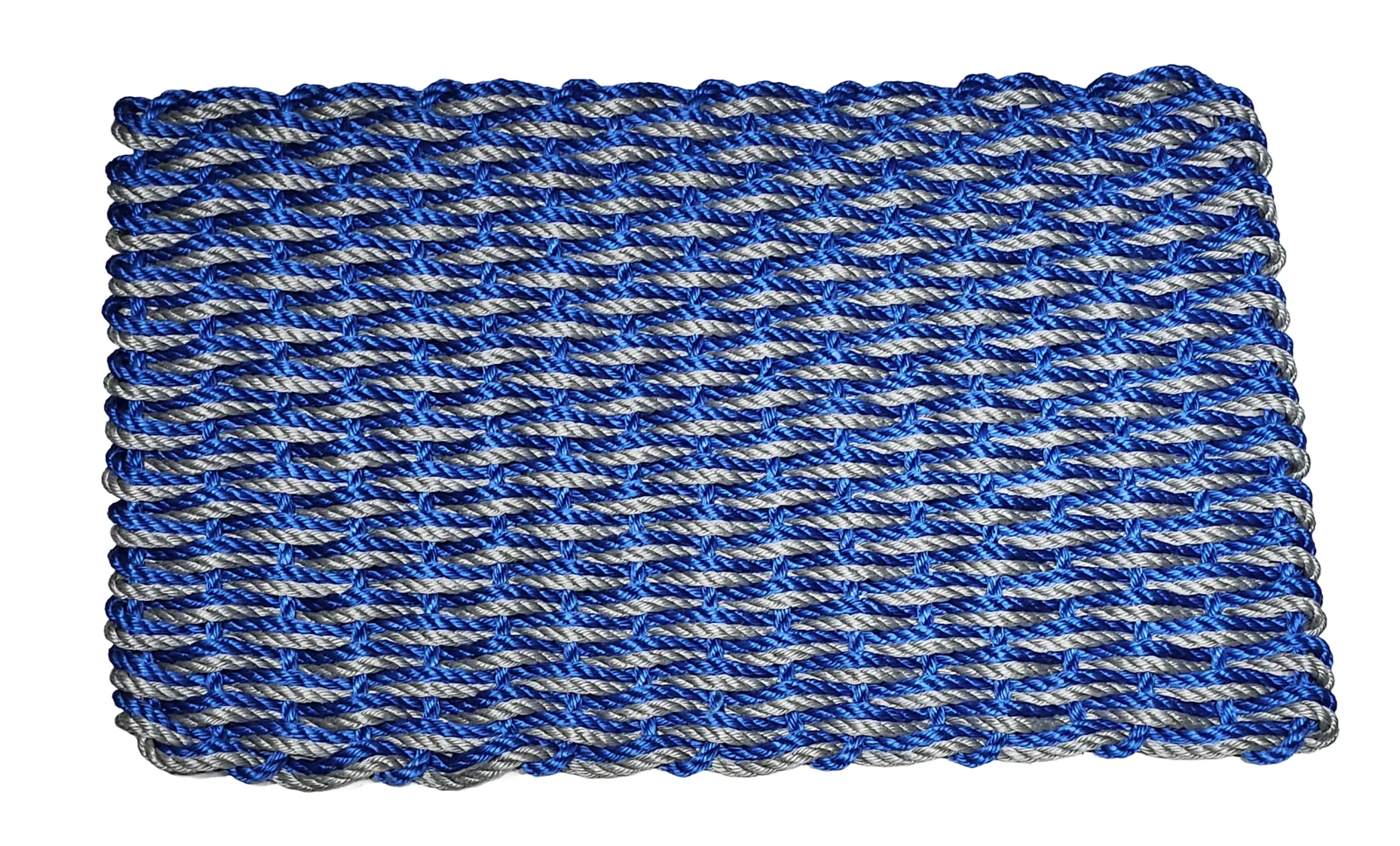
Handmade lobster rope doormats from Ropemats Florida come in a range of widths precisely because entry doors aren't standardized the way people assume. A 1970s Florida ranch house, a new-build beach house, and a pontoon boat swim platform all have different clearance needs, and getting the size wrong means re-buying — which defeats the point of a mat built with a 10-year replacement guarantee in mind.
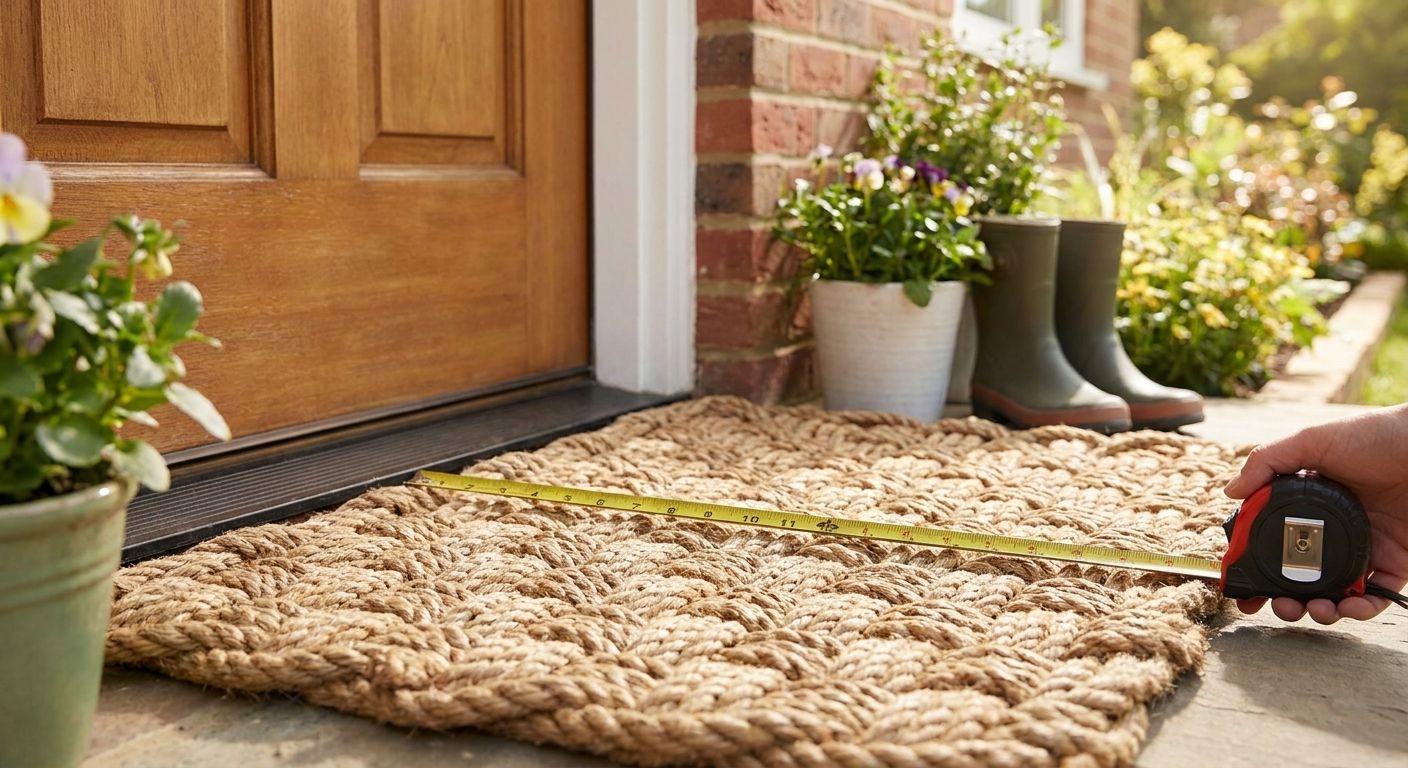
This number sets your baseline size. Measure across the full opening, including any sidelight trim or frame, not just the door slab itself.
Most single front doors measure 36 inches wide, but older homes and interior-style front doors can run as narrow as 30 to 32 inches. Write down the exact number in inches — rounding here is where sizing mistakes start.
Common mistake: measuring the door itself instead of the full frame-to-frame opening, which shorts the mat by 2-4 inches.
Stand where you'd naturally wipe your feet and measure from the threshold outward to the edge of the step, porch, or landing. This tells you how much depth you actually have to work with before the mat runs off the edge.
Most porches and landings give you 24 to 36 inches of usable depth. If your landing is under 24 inches, a deeper mat will overhang the step edge and become a hazard in wet conditions — common on beach house entries where sandy feet track water straight off the mat.
Common mistake: measuring the porch's total depth instead of the flat, walkable surface in front of the door.
A rope doormat needs to extend 2 to 3 inches beyond the door opening on each side to actually catch foot traffic, not just the center of the stride. Add 4 to 6 inches total to your width measurement from step one.
Skip this and you'll end up with a mat that looks fine standing still but misses half the steps people actually take walking in.
Open the door fully and check how close it comes to the floor at its lowest swing point. Rope doormats typically run 0.5 to 0.75 inch thick depending on the weave — thick enough to handle wet shoes, thin enough to clear most standard thresholds.
If your door has a low sweep or an inward swing over a raised threshold, measure that clearance gap directly. Common mistake: buying based on width alone and discovering the door drags across the mat every time it opens.
Rope doormats generally come in rectangular layouts, but the ratio matters. A wide, shallow entry (like a double-door front porch) needs a wider mat with less depth; a narrow entry with a deep landing (common on lake cabin steps) needs the opposite ratio.
If you're deciding on layout and shape for a specific entry style, the color and pattern guide for entryways covers how weave direction and stripe pattern read differently depending on the mat's proportions.
Once you have width plus overhang and your confirmed depth, round up rather than down. A doormat that's 1 to 2 inches larger than your minimum measurement performs better in daily use than one cut exactly to the number — rope mats don't stretch to fit the way fabric mats do.
Expected outcome: you land on a mat size that fully covers the walking path with margin on both sides, no gaps at the edges.
Lay painter's tape on the floor in the exact footprint of the size you've settled on, then open and close the door across it. This 60-second check catches sizing errors before the mat ships, not after.
Handmade lobster rope construction means each mat is woven to spec rather than mass-cut, so confirming the footprint ahead of time avoids a return down the line.
| Entry type | Typical width needed | Depth needed | Watch for |
|---|---|---|---|
| Standard single front door | 30-36 in | 24-30 in | Sidelight trim adds width |
| Double front door | 42-48 in | 24-30 in | Center seam alignment |
| Beach house porch step | 30-36 in | 18-24 in | Step edge overhang |
| Dock or pontoon landing | 24-30 in | 18-24 in | Low clearance, wet swelling |
| RV entry step | 18-24 in | 14-18 in | Narrow footprint, storage fit |
Once sizing is settled, the next decision is weave and color for your specific climate — salt air, dock spray, and direct sun all wear differently. If your entry sits near open water, read how to size and protect a mat against salt exposure before finalizing your order.
What size doormat fits a standard front door?
A standard 36-inch front door needs a doormat around 30 to 34 inches wide with 2-3 inches of overhang built in. Measure the full frame opening, not just the door slab, before ordering in 2026.
How do I measure for a rope doormat?
Measure the width of your entry frame and the depth of your porch or landing separately, then add 4-6 inches total width for overhang. Round up to the nearest available size rather than sizing exactly to the minimum.
Is bigger always better for a doormat?
No — oversized mats that hang off a step edge or drag under the door swing cause more problems than they solve. Size to your actual landing depth, then round up only within that usable space.
What size doormat works for double front doors?
Double doors typically need 42 to 48 inches of total width to cover both leaves plus the center meeting point. Measure across both doors together, not each one individually.
How thick should a rope doormat be for a front door?
Most handmade rope doormats run 0.5 to 0.75 inch thick, which clears standard thresholds without dragging. Check your door’s lowest swing point before choosing a thicker weave.
Do RV and boat entries need a different size than a house?
Yes — RV steps and boat swim platforms usually need mats between 18 and 24 inches wide since the footprint is narrower and there’s no landing depth to spare. Measure the exact step width rather than rounding up.
Can a rope doormat be trimmed to fit?
Rope doormats are handwoven as a single unit and aren’t designed to be cut down after the fact. Always size down to the next smaller stock option instead of trying to trim one to fit.
How much overhang does a doormat need on each side of the door?
Plan for 2 to 3 inches of overhang beyond the door opening on each side so the mat catches full foot strides, not just the center. That adds up to 4-6 inches of total extra width beyond your raw door measurement.
The most overlooked measurement isn't width or depth — it's the door swing arc, and it's the one that gets skipped most often in 2026 because it feels like an extra step. A mat sized perfectly to the entry width can still catch on a low door sweep if nobody checks clearance before ordering, so do the 60-second painter's-tape test in step seven even when the width and depth math looks obvious.