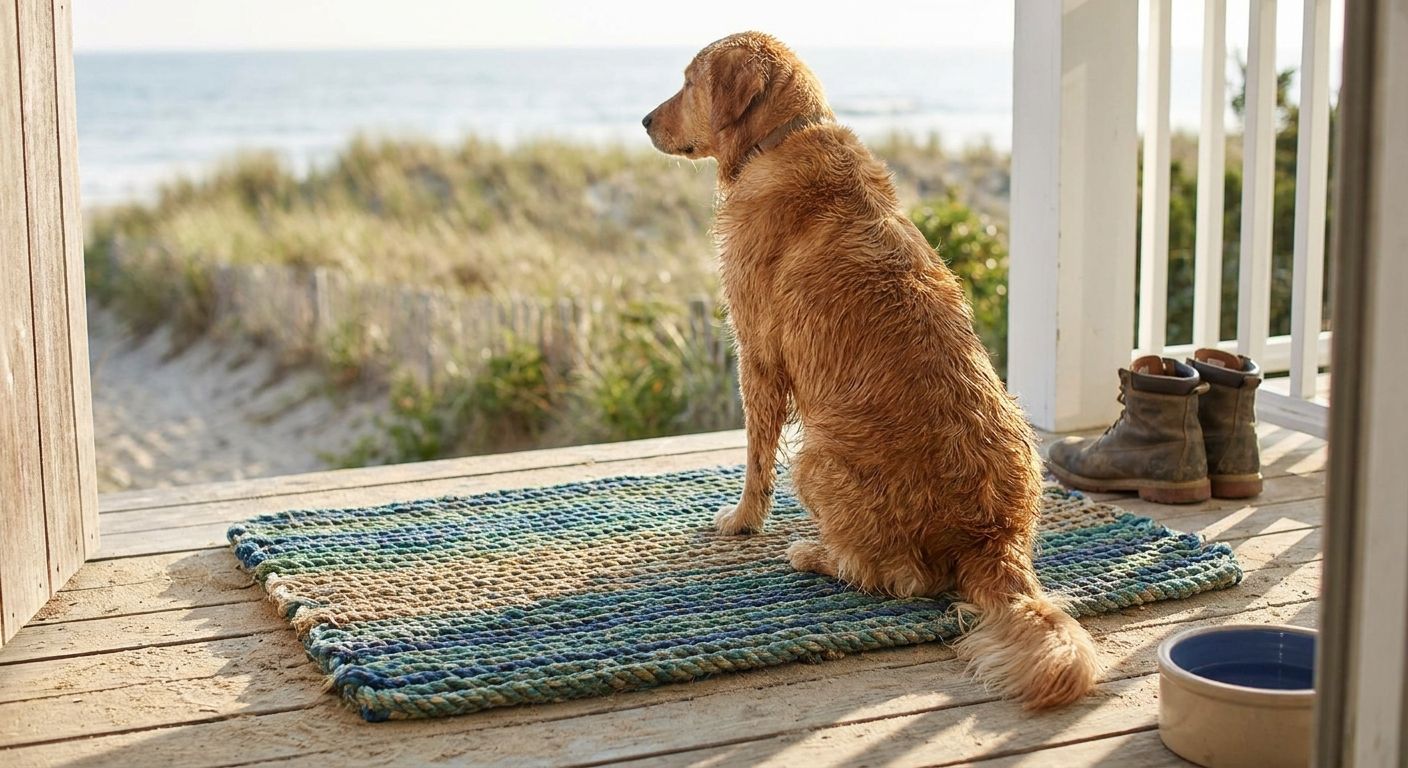
Dog owners near the beach fight sand, wet paws, and loose fur at the front door every single day, and picking the right lobster rope doormat for dog owners is what decides whether that fight ends at the mat or tracks straight across your floor.
A regular front door mat is built for dry commuters wiping city grime off dress shoes. A beach house entry with a dog sees wet fur, sand grit, and salt spray multiple times a day, and that changes what "durable" actually means. Ropemats Florida builds every mat from twisted rope originally rated for lobster trap lines, which is the same reason it holds up against paws, sand, and repeated hose-downs better than a woven coir mat that breaks down within a season or two. If you're shopping for a lobster rope doormat for a dog-friendly beach entry in 2026, the weave and color choices below matter more than any marketing claim about "outdoor grade."
This guide is for homeowners with at least one dog who lives within walking distance of sand, whether that's a beach house, a coastal cottage, or a condo with a boardwalk out front. If your dog comes inside with wet paws, sandy fur, or salt residue more than once a week, the mat at your door is doing real work, not decorative work. Renters and vacation-rental hosts managing pet-friendly stays fall into this category too, since a mat that fails fast means more cleanup between guests.
A tighter double-braided weave stops sand and small debris from working down between the ropes, which matters when a dog is shaking off after a beach walk. Looser three-strand weaves let more grit through to the porch floor, but they're also easier to hose out completely once a season. For daily dog traffic, tighter weaves win on day-to-day cleanliness even if they need a firmer shake to clear.
Thicker rope holds its shape under repeated paw pressure and doesn't flatten the way thin synthetic fiber mats do within a year. A mat that's gone flat stops scraping paws clean and just becomes a wet surface dogs track sand across. Look for rope diameter that feels substantial in hand, not a thin cord wound tight to look thicker than it is.
Light tan and white-based weaves show every strand of shed fur and every grain of dry sand within hours. Darker combinations — navy, black, deep green — hide both far longer between cleanings, which is the single biggest quality-of-life difference for dog owners. If you want light coastal tones for the porch, pick a multi-color weave that breaks up the surface instead of a solid pale one.
Rope built for marine use resists salt buildup that stiffens or rots weaker fibers, and a mat sitting near a beach entry gets salt spray even without direct dog contact. Salt residue left on a low-grade mat over a full Florida summer will crack synthetic backing faster than it wears the rope itself, so backing quality matters as much as the rope.
A single medium dog needs roughly 24×36 inches of mat to fully shake off before stepping onto flooring; two dogs or a large breed need closer to 24×48 or a two-mat setup at the door. Undersized mats push the mess just past the edge of the mat instead of catching it, which defeats the purpose entirely.
A mat you can pick up, shake hard, and hose down in under a minute gets cleaned far more often than one that needs to be hauled to a hose bib or left to air out for a day. For dog owners, cleaning frequency matters more than any single durability spec, because a dirty mat just becomes a second sand trap.
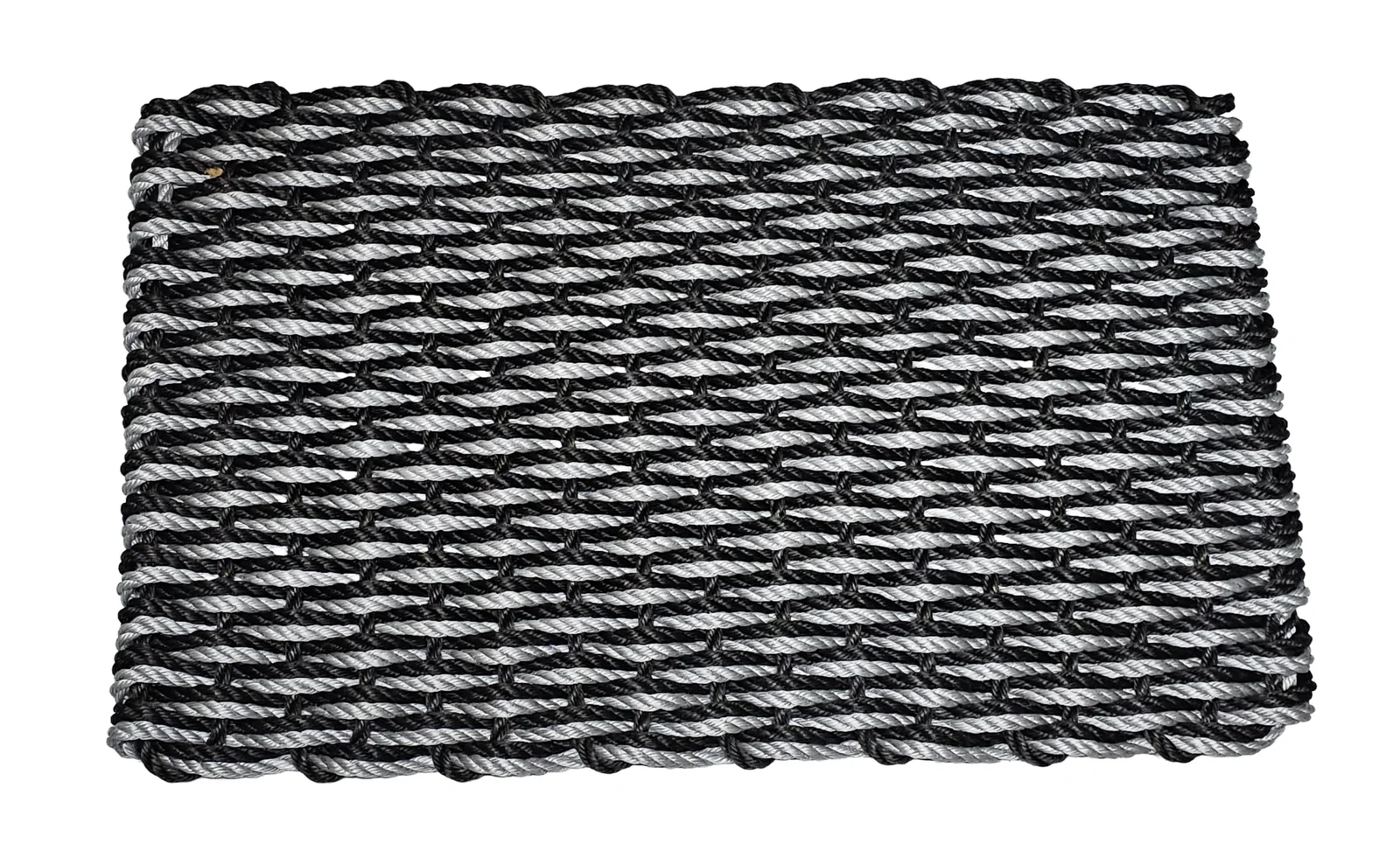
The safe pick: dark, tight double-braid weaves. Navy and black-mix rope combinations hide dog hair and dry sand for days between shakes, and the tighter weave keeps sand from working through to the porch floor. This is the pick for owners who want the mat to look clean between cleanings, not just after them. Buy.
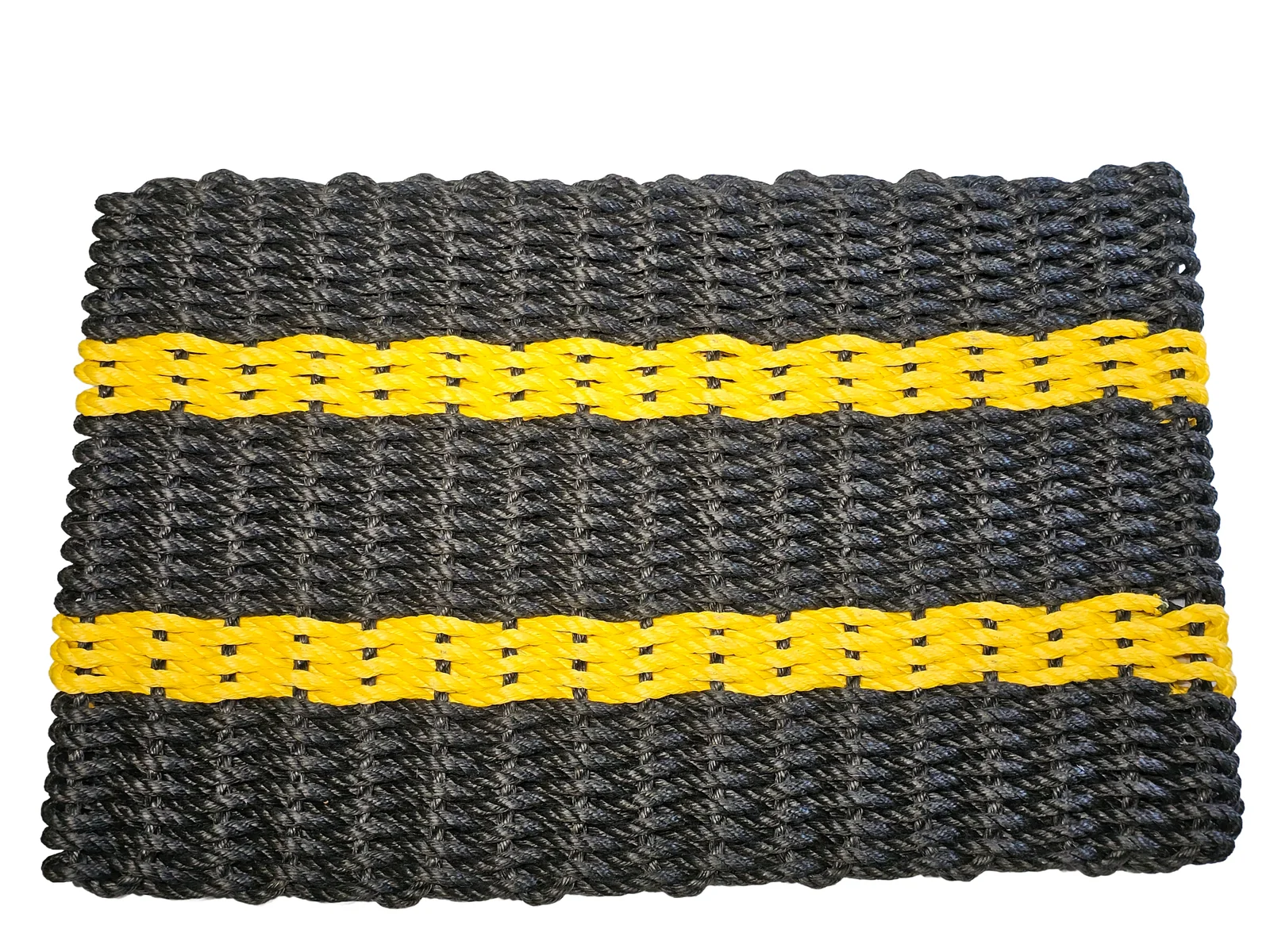
The wildcard: bold multi-color combinations. A three-color mix like black paired with yellow or orange breaks up visual clutter from fur and sand better than any solid color, dark or light, and it adds a coastal punch of color at the door. It's a slightly bolder look for a porch than navy or black alone, but it hides mess just as well. Buy.
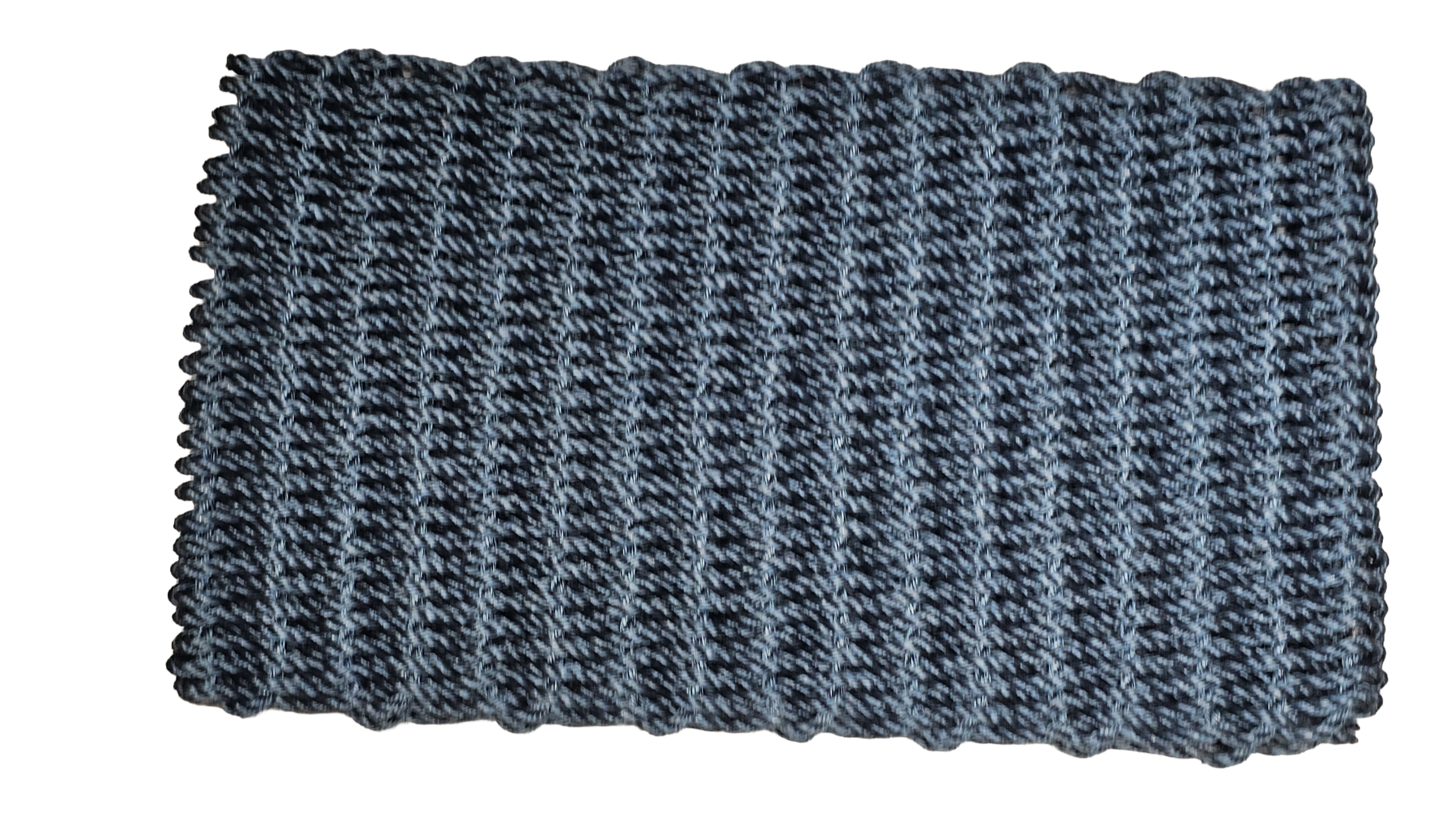
The everyday workhorse: mid-tone blue and tan blends. These combinations sit between the safe pick and the wildcard — good sand-hiding without going fully dark, and a color palette that matches most beach house trim. Good for owners who want the mat to blend into a lighter coastal entryway. Consider.
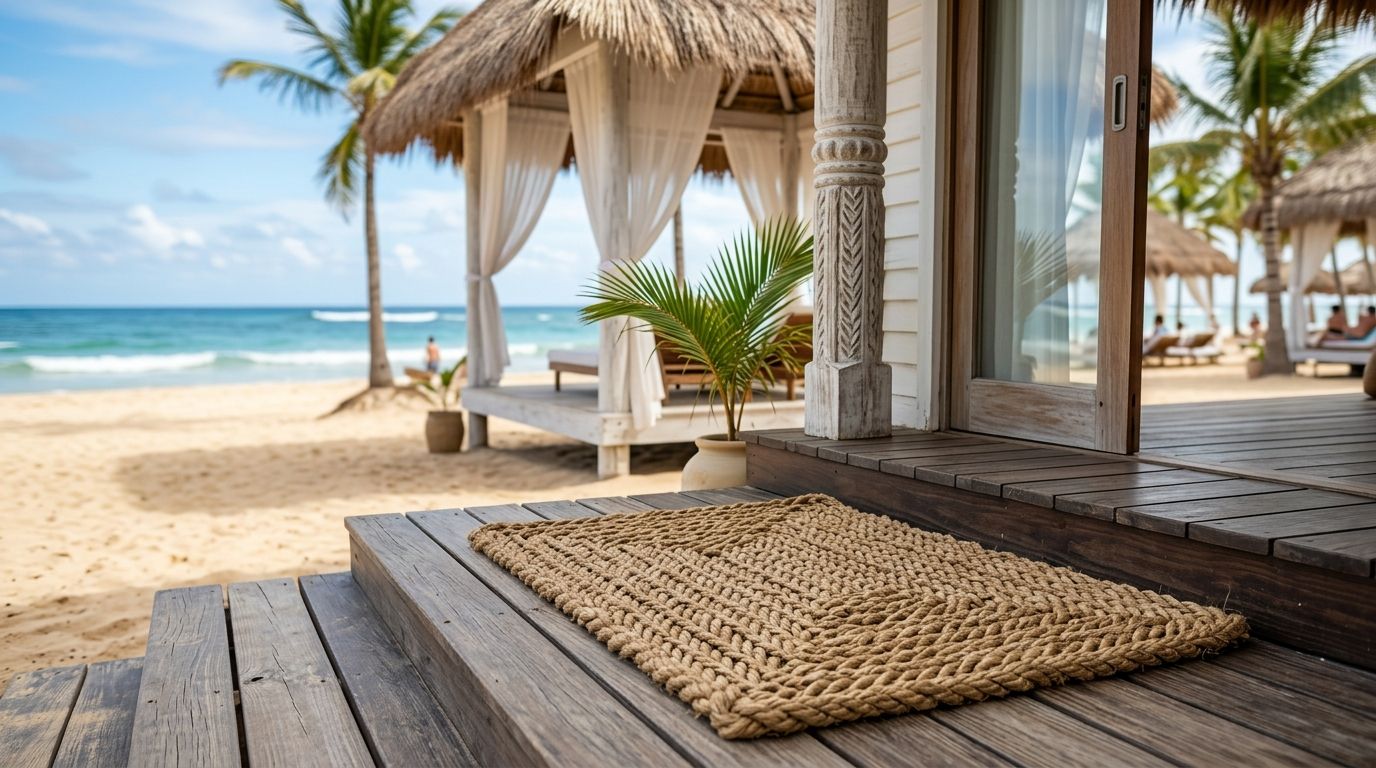
The one to skip: single light tan or white-dominant weaves. These show fur, sand, and salt stains within a day or two of dog traffic, which means you're cleaning it constantly just to keep it presentable. Fine for a low-traffic side door with no pets; wrong choice for a main dog entry. Skip.

“A mat you have to think twice about hosing down is a mat that stops getting cleaned within a month.”
| Pick | Weave | Best for | Verdict |
|---|---|---|---|
| Safe pick (navy/black-mix) | Tight double-braid | Daily heavy sand and fur | Buy |
| Wildcard (black + bright accent) | Tight double-braid | Bold porch color, same durability | Buy |
| Everyday workhorse (blue/tan blend) | Medium weave | Lighter coastal entryways | Consider |
| Light tan/white solid | Loose or tight | Low-traffic, no-pet doors only | Skip |
For sizing multiple dogs or larger breeds, check how to size a rope doormat for your front door before ordering — undersizing is the most common mistake dog owners make on this purchase.
What’s the best lobster rope doormat for dog owners near the beach?
A tightly woven, dark-toned lobster rope doormat — navy, black, or a black-and-color mix — is the best choice for dog owners in 2026 because it hides sand and shed fur longest between cleanings. Lighter solid colors show mess within a day or two of beach traffic.
Is a dark or light colored rope doormat better for hiding dog hair and sand?
Dark colors hide dog hair and dry sand far better than light tan or white weaves. Multi-color combinations that mix a dark base with a bright accent color also mask mess well while adding porch color.
How often should you rinse a rope doormat if you have a dog?
Rinse a rope doormat weekly during heavy beach season and shake it out daily if your dog tracks sand every day. Rope resists saltwater and repeated hosing far better than coir or fiber mats built for dry entries.
Can lobster rope doormats handle wet, sandy paws every day?
Yes, rope originally rated for marine lobster trap lines is built to handle daily saltwater and moisture exposure, which makes it a better fit for wet dog paws than standard fiber doormats. Tighter weaves handle daily sand best.
Do rope doormats work for multiple dogs or bigger breeds?
They work for multiple dogs and larger breeds if you size up — a single medium dog needs about 24×36 inches, while two dogs or a large breed need closer to 24×48 or a two-mat setup at the entry.
How much does a lobster rope doormat cost in 2026?
Lobster rope doormats from Ropemats Florida run roughly $49.99 to $69.99 depending on weave and color combination as of 2026. Multi-color weaves and solid colors are priced similarly within that range.
Are lobster rope doormats safe for dogs to walk on barefoot paw pads?
Yes, the rope surface is textured enough to scrape sand and grit off paws without being sharp or abrasive to pads. It’s a similar texture to the dock rope many dogs already walk across at marinas.
How long do lobster rope doormats last with daily dog traffic?
Ropemats Florida backs its lobster rope doormats with a 10-Year Replacement Guarantee, which reflects how much daily wear the rope construction is built to handle, including regular dog and sand traffic.
The tightest weave isn't always the cleanest choice long-term. A very tight double-braid resists sand getting through, but that same tightness means grit that does work its way in gets locked between the ropes until you hose it down hard — a slightly looser three-strand weave actually releases sand faster on a simple shake. If your dog is at the beach daily and you're not committed to a weekly hose-down, factor that trade-off in before you pick tight over medium.