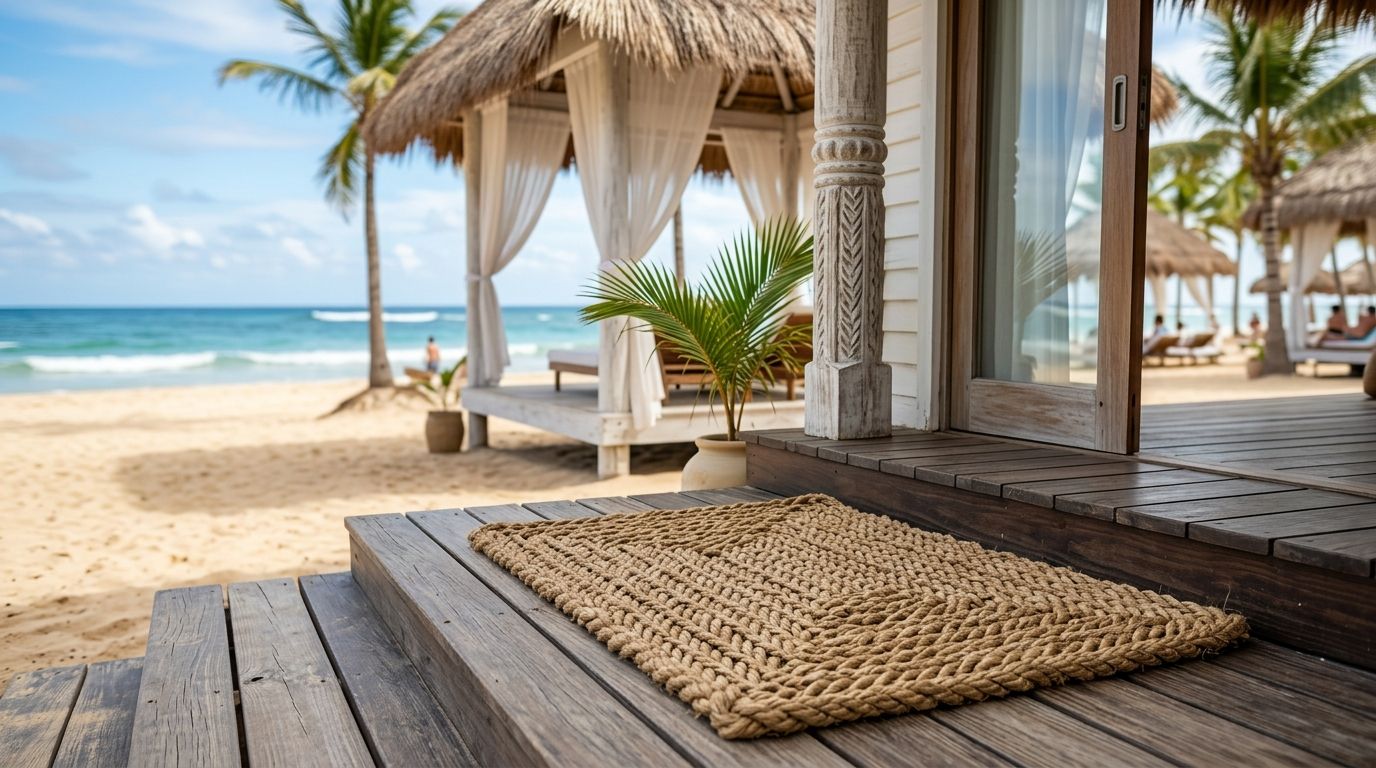
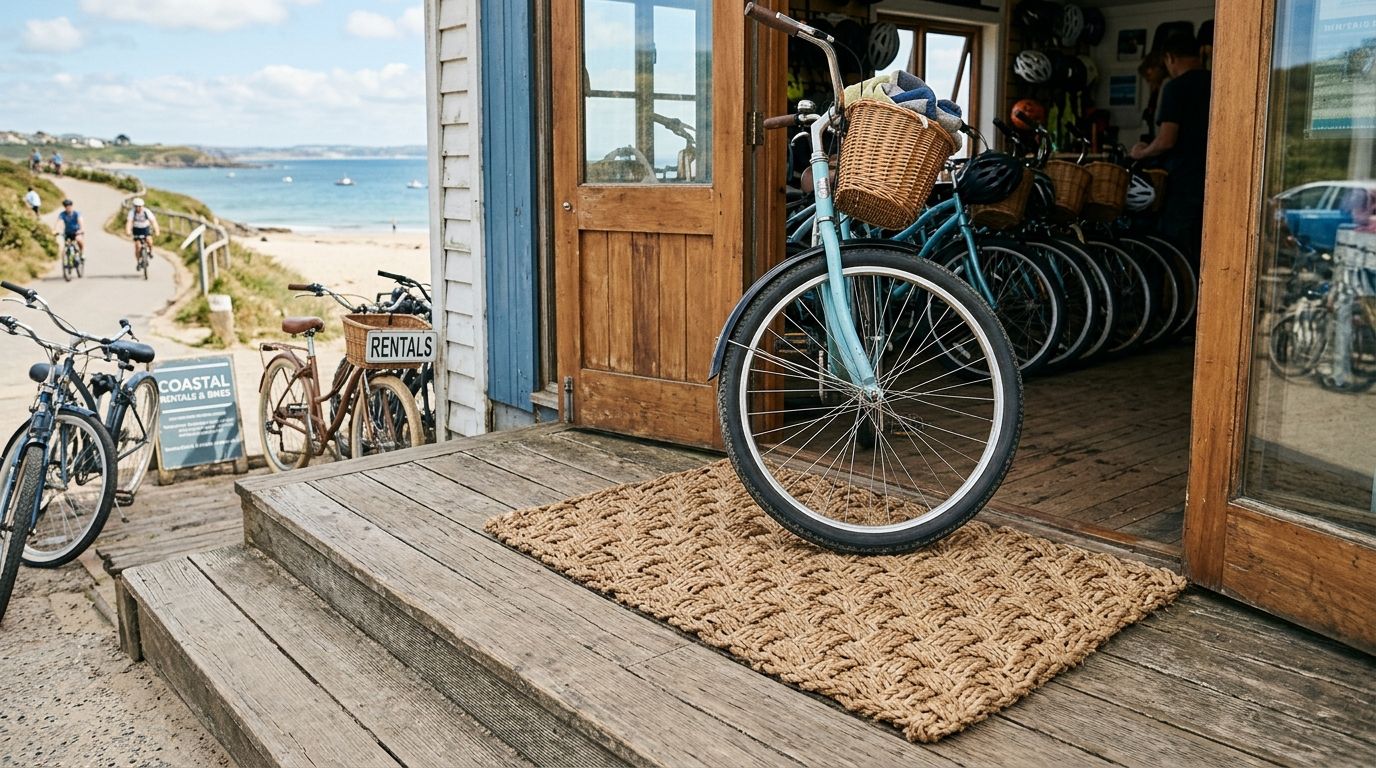
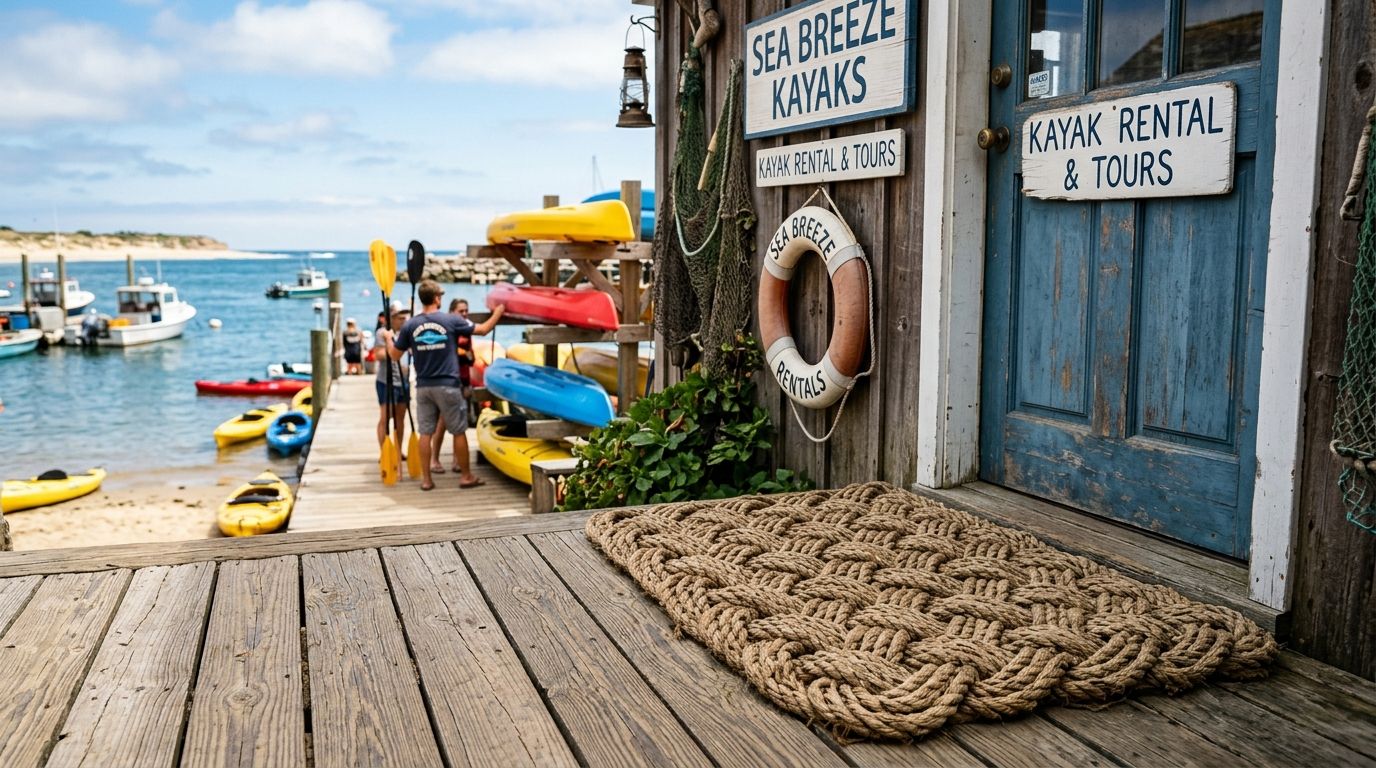
Rope doormats for bike rental shops are heavy-duty entryway mats built to handle sandy shoes, wet swimsuits, and dozens of daily foot-traffic cycles without falling apart by mid-season. A coastal bike rental counter sees a different kind of abuse than a residential porch — customers track in sand, sunscreen, and saltwater spray dozens of times a day, and the mat has to survive it on repeat.
A bike rental counter isn't a quiet residential entry — it's a revolving door of barefoot tourists, flip-flops full of sand, and customers coming straight off the beach or boardwalk. Standard coir or rubber mats mat down fast under that kind of volume and start looking ragged within a season.
Rope doormats hold up differently. The same lobster rope construction that Ropemats Florida uses on marina docks and boat rental counters is built for exactly this kind of repeat abuse — heavy grit, standing water, and constant shoe traffic. For a shop trying to keep its storefront looking sharp through peak season, that durability difference shows up in fewer replacement orders and a cleaner-looking entry all summer.
Most retail shops default to whatever mat came with the storefront lease. A bike rental counter with 100+ daily transactions in July needs something sized and woven for that volume, not a generic welcome mat.
A beachfront rental shop deals with sand more than rain most days. The weave pattern matters more than the material here.
An undersized mat is the single most common mistake at retail entries. Customers step past a mat that's too narrow, and all that sand ends up on the shop floor instead of the mat.
Coastal storefronts get wind gusts that residential porches rarely see, and rental shops often roll bikes or beach carts across the entry all day.
A mat that only gets attention at closing looks tired by lunchtime during peak season. Rental shops need a faster mid-day reset.
A shop's entry is the first thing a customer sees before they hand over a deposit or a credit card. A flattened, faded mat undercuts that first impression fast.
Get a mat backed for the long haul
See the lobster rope doormats built with a 10-year replacement guarantee.
| Option | Best for | Key limitation |
|---|---|---|
| Lobster rope doormat (tight weave) | High-sand, high-traffic storefronts | Needs regular rinsing to stay grit-free |
| Standard coir mat | Low-budget, low-traffic entries | Mats down and sheds fiber within a season |
| Rubber-backed indoor/outdoor mat | Wet-weather entries without sand | Traps sand underneath rather than releasing it |
| Open-weave rope mat | Light foot traffic, occasional beach use | Sand packs into gaps at high volume |
For a shop that sees dozens of sandy, wet-footed customers a day, the tight-weave lobster rope mat wins on durability and cleanup time — it's the option built for repeat daily abuse rather than occasional residential use.
A related pattern shows up at rope doormats for boat rental companies, where the same daily-volume, sand-and-saltwater problem drives the weave choice.
What’s the best doormat for a bike rental shop on the beach?
A tight-weave lobster rope doormat sized to the full doorway width handles sand and daily foot traffic better than coir or open-weave mats. Rinse it between shifts to keep it looking sharp through peak season.
Is a rope doormat better than a rubber mat for a rental shop entry?
Rope doormats release sand and grit more easily than rubber-backed mats, which trap debris underneath. For sandy, high-traffic entries, rope wins on cleanup time.
How often should a bike rental shop replace its entry mat?
Most shops running daily through peak season replace or rotate mats once a year. A mat backed by a 10-year replacement guarantee removes the budgeting guesswork on that schedule.
How do you clean a rope doormat at a busy retail entry?
Shake out loose sand a few times during the day and rinse with a hose at closing to clear salt and sunscreen residue. Let it air-dry flat rather than folding it wet.
What size doormat works best for a double-door storefront?
A 3×5 or larger mat catches more foot traffic at a double-door entry than a standard 2×3. Measure the doorway and add several inches on each side so customers step on the mat, not around it.
Do rope doormats hold up in wind near open water?
A low-profile weave resists lifting better than a thick or raised-border mat in coastal wind. Anchoring or weighting the corners adds extra hold on exposed storefronts.
Can a rope doormat handle bike tires and rolling carts?
A flush, low-profile rope mat handles rolling bike tires and beach carts without catching an edge. Raised borders or thick pile mats are more likely to trip up rolling equipment.
The center strip of a doormat wears out long before the edges do — that's the tell that a shop's mat needs rotating before it looks obviously flattened to walk-in customers. Catching that wear early, rather than waiting for a faded, matted-down mat, is the cheapest way to keep a coastal storefront's first impression intact through a full season of daily bike rentals.

Doormats designed to look better, last longer, and clean easier.
Handmade lobster rope doormats crafted for outdoor durability, easy care, and a warm first impression. Designed for porches, patios, entryways, decks, boats, and RVs across the USA
Copyright © 2026 All Rights Reserved.