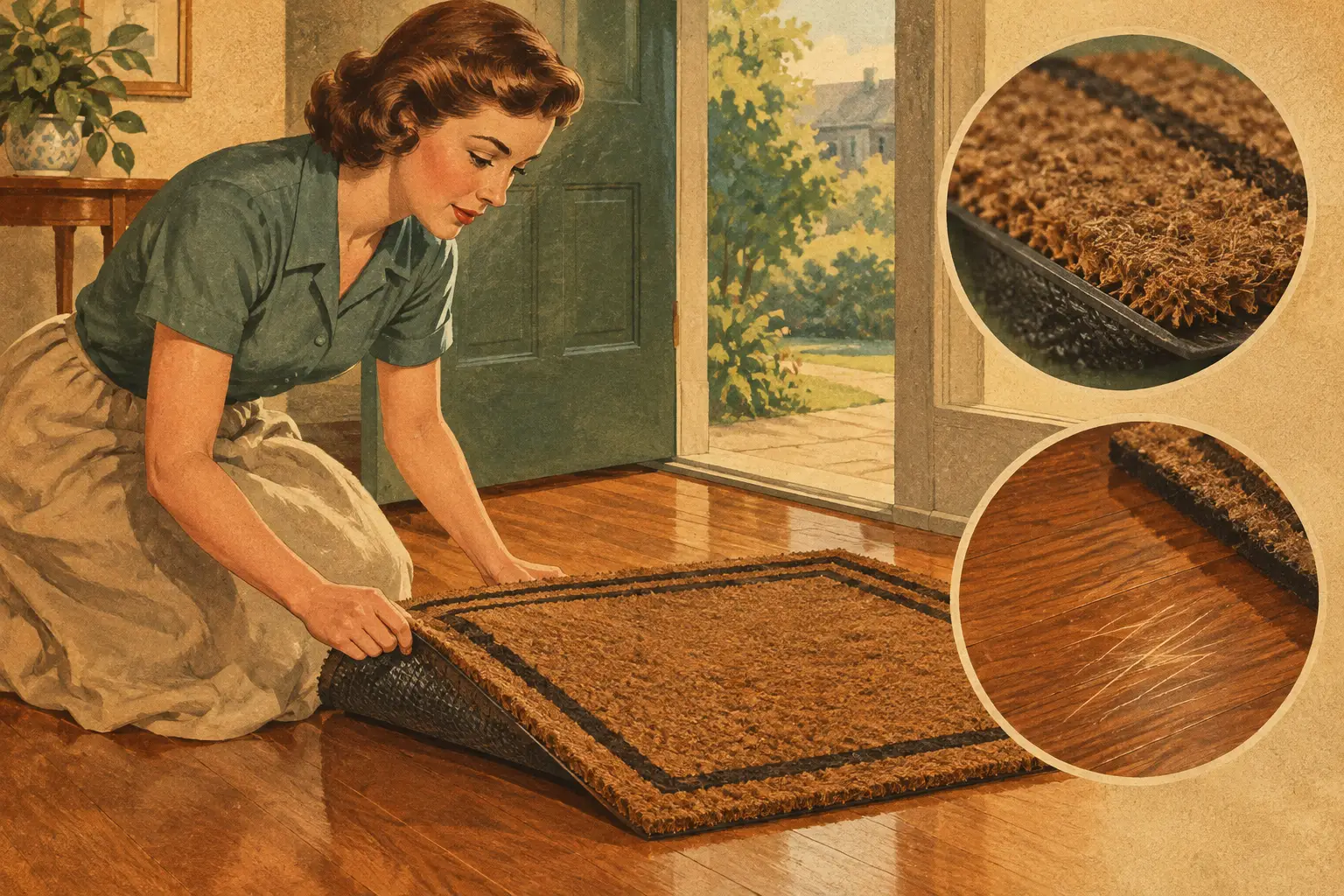
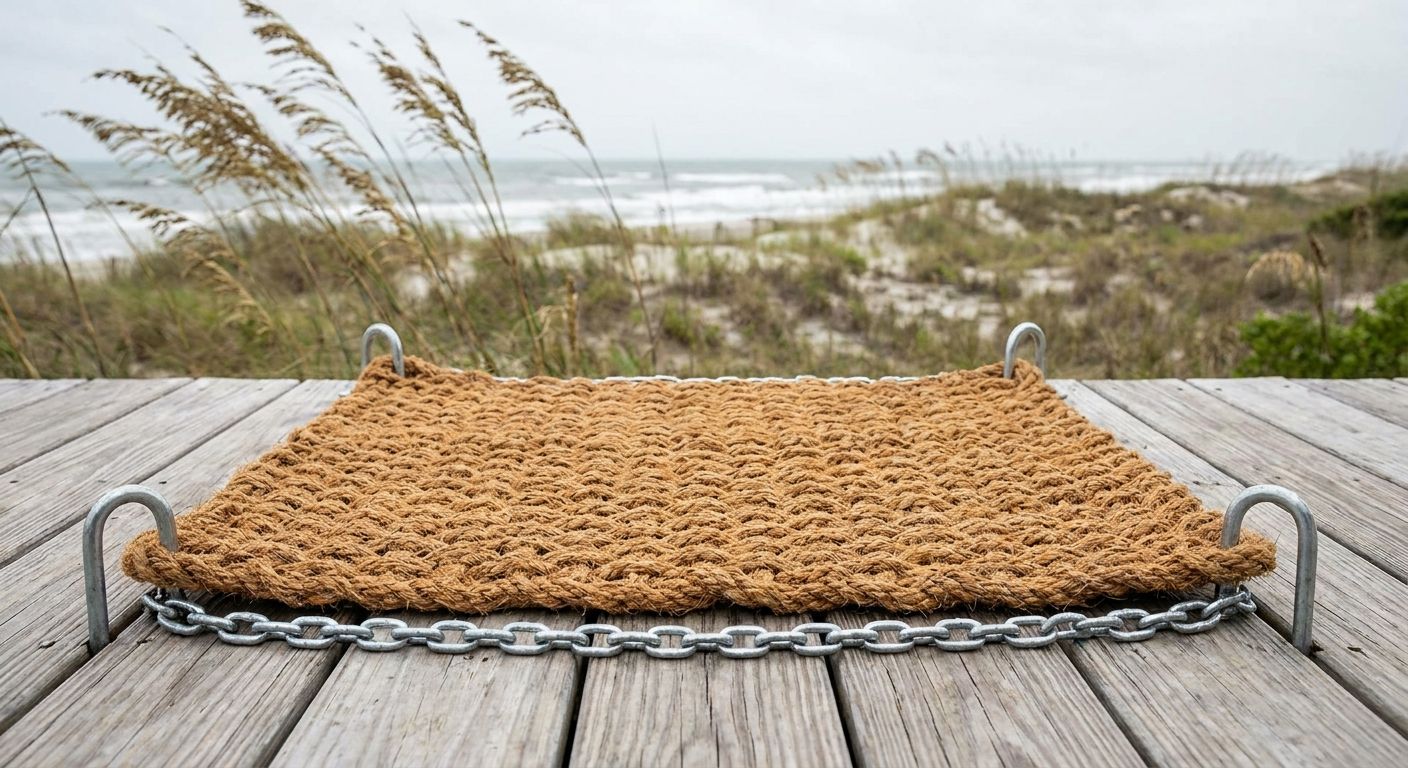
High wind doesn't care how nice your entryway looks — it cares about weight, weave, and what's holding the mat down. Anchor an outdoor rope mat by picking a heavy, tightly woven design, adding grip underneath, and securing the edges with hidden tie-downs or stakes once sustained winds pass the 20-25 mph range.
Coastal porches, docks, and RV pads catch wind that a suburban front step never sees. A doormat that stays flat in a backyard can end up in the neighbor's yard on a beach walkway or a lake house deck exposed on three sides.
The fix isn't complicated, but it's specific: match the anchoring method to the wind exposure, not the other way around. A porch under an eave needs less than an open dock in 2026's storm season, and treating them the same wastes money on hardware you don't need — or leaves a mat unsecured where it matters most.
Follow these steps in order. Each one adds a layer of hold, so start at the top and stop once the mat stays put through a normal gust.
Docks get the worst of both worlds: open wind and constant moisture. A non-slip pad alone won't hold on wet decking, so pair it with corner stakes or a low-profile bungee run through the mat's edge rope. If you're setting one up fresh, the steps to install a rope mat on a boat dock cover the hardware spacing that works on most dock boards.
A screened porch mostly needs weight and a grip pad — the screen itself cuts wind speed before it hits the mat. An open porch facing the water needs the same corner-stake approach as a dock, since gusts off open water hit harder than land-side wind.
RV pads and garage side doors often sit in a wind tunnel created by the structure itself — wind speeds up between buildings. Recessing the mat against the doorframe and adding a non-slip pad handles most of it; stakes are rarely needed since these entries are usually smaller mats set closer to the ground.
Find the right weave for your entry
Browse handmade rope doormat styles built for coastal wind and salt exposure.
A handful of factors decide whether a mat stays flat or ends up airborne. Only some of these are fixable after the fact — the rest come down to what you bought in the first place.
Yes — a heavier mat resists wind lift better than a lightweight one at the same wind speed, since more mass means more force is needed to move it. This is why a dense lobster rope doormat holds a porch through a gust that would flip a thin coir mat.
A heavy, tightly woven rope mat set on a non-slip pad works best for windy beach entries, especially when paired with a recessed threshold instead of open decking. Mats built for salt air exposure hold up longer under repeated wind and moisture than standard indoor-outdoor mats.
Tape and Velcro are a short-term fix, not a real anchor — both lose grip fast once salt air, moisture, or heat break down the adhesive. Corner stakes, eye-hooks, or a proper non-slip pad hold up through 2026's full storm season; adhesive strips typically don't last one.
How do I anchor an outdoor rope mat in high wind?
Anchor an outdoor rope mat in high wind by choosing a heavy, tightly woven design, adding a non-slip pad underneath, and using corner stakes or eye-hooks on open porches and docks. Recessing the mat under an overhang or into a doorway threshold cuts wind exposure before any hardware is needed.
What wind speed lifts a doormat?
Wind around 25 mph, the ‘strong breeze’ range on the Beaufort scale, starts lifting light or loosely woven mats. Heavier rope mats resist lift well past that point due to their weight and tighter weave.
Do rope doormats blow away in coastal wind?
A lightweight or loosely woven mat can blow away in open coastal wind, but a dense, handwoven lobster rope mat is heavy enough to stay put through most gusts. Open docks and unshielded porches still benefit from corner anchors.
Is a heavier doormat better for a beach house porch?
Yes, a heavier doormat holds better on a beach house porch since porches near open water see steadier wind than inland entries. Pairing the weight with a non-slip pad covers most porch conditions without drilling into decking.
How often should I check doormat anchors on a dock?
Check dock mat anchors at the start of each storm season and after any major wind event, since salt air and constant flex wear hardware faster than dry-land use. A quick tug on each corner tells you if a stake or hook has loosened.
Can I anchor a rope mat without drilling into decking?
Yes, a non-slip grip pad under the mat plus recessed placement handles most porch and entry wind without any drilling. Only fully open docks or unshielded pads typically need stakes or eye-hooks through the mat’s edge rope.
What’s the difference between anchoring for wind and anchoring for foot traffic?
Anchoring for wind focuses on the mat’s edges and corners to stop lift, while anchoring for foot traffic focuses on the center to stop sliding. A dense rope mat with a non-slip pad usually covers both needs at once.
The single biggest anchor upgrade most people skip isn't hardware — it's placement. Moving a mat six inches back under an overhang or into a recessed threshold does more to stop wind lift than any stake, because it removes the wind before it ever reaches the rope. Check that first before buying anything.

Doormats designed to look better, last longer, and clean easier.

Handmade lobster rope doormats crafted for outdoor durability, easy care, and a warm first impression. Designed for porches, patios, entryways, decks, boats, and RVs across the USA
Copyright © 2026 All Rights Reserved.