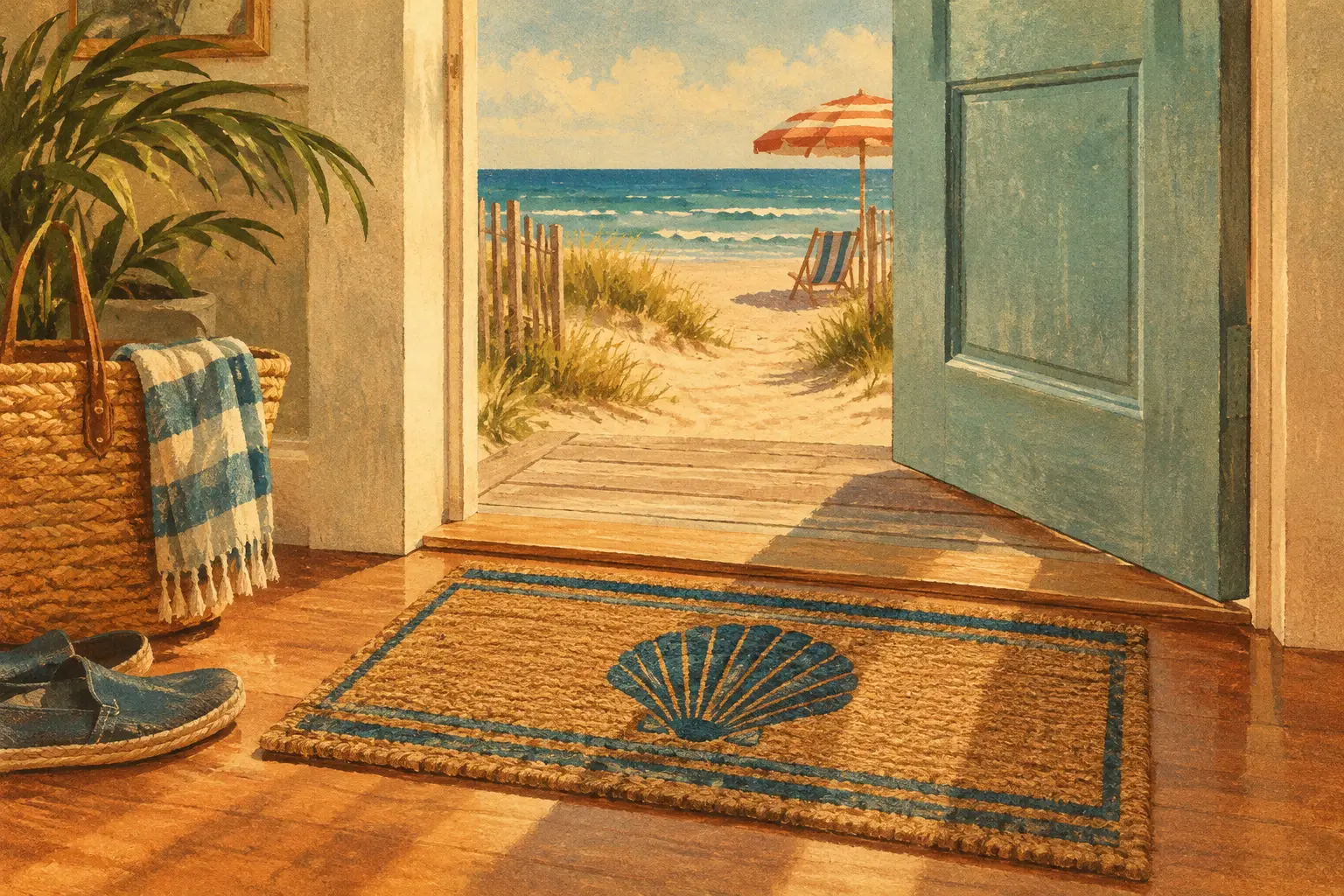
Matching a rope doormat to your coastal decor comes down to three things: the fixed colors you already have outside, the weave that fits your entry style, and a color combination pulled from your rope mat's actual palette options rather than guesswork.
A doormat is the first texture and color a visitor sees before they reach your door. Get the palette wrong and even a well-built entryway looks unfinished. Get it right and the mat reads like it was designed with the house, not bolted on afterward.
Lobster rope doormats hold their color longer than printed coir or synthetic fiber mats because the rope itself is dyed, not surface-printed. That matters for a coastal decor match specifically — your Navy or Seafoam won't fade to a mismatched gray after one Florida summer. Beach house porches tend to bleach fabric and painted surfaces fast, so the mat needs to hold its own for years, not months.
This stops you from picking a mat color in isolation and regretting it once it's on the porch. Walk your entry and write down every color you can't change easily: siding, door paint, trim, house numbers, porch light finish.
Most coastal homes land on two or three anchor colors — often navy, white, and a wood or tan tone. Your rope mat should pull from that same short list, not introduce a fourth competing color. Skip any rope combination that doesn't appear somewhere else on your exterior.
Common mistake: choosing a mat color you love in isolation (like a bright orange) without checking it against your actual door paint in daylight.
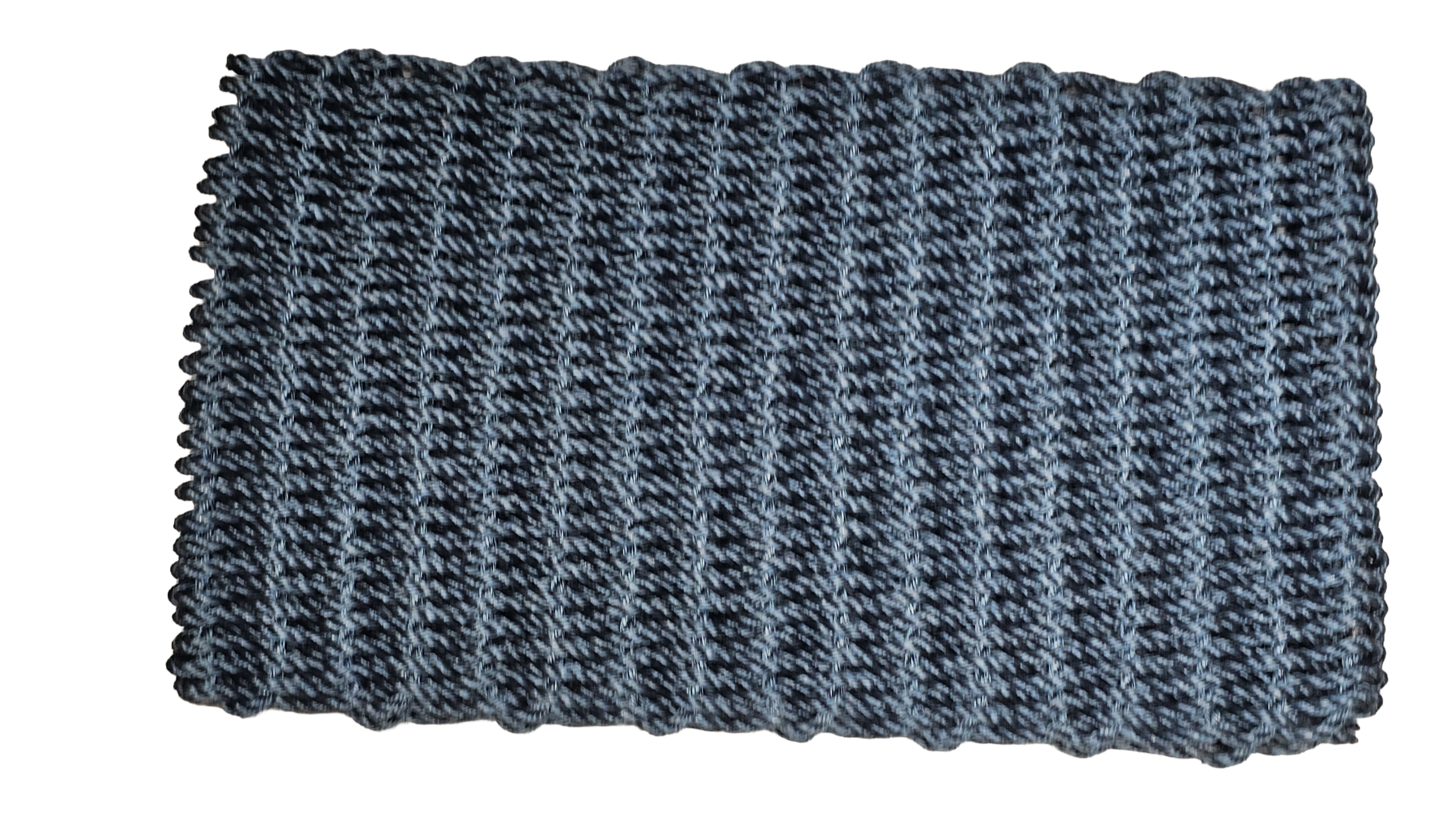
Weave pattern reads before color does, especially from a distance. A tight, uniform weave looks more polished and fits condo entries or gated coastal communities. A looser, chunkier weave reads more like a working dock and fits lake houses, RV steps, and screened porches.
Decide this before color, because weave sets the overall mood the color palette then supports. A tightly woven navy-and-white mat looks nautical-formal; the same colors in a looser weave look more relaxed dockside.
This is the step people rush, and it's the one that makes or breaks the match. Picking the right rope doormat color for your entryway means working from the fixed colors in Step 1, not from what's trending.
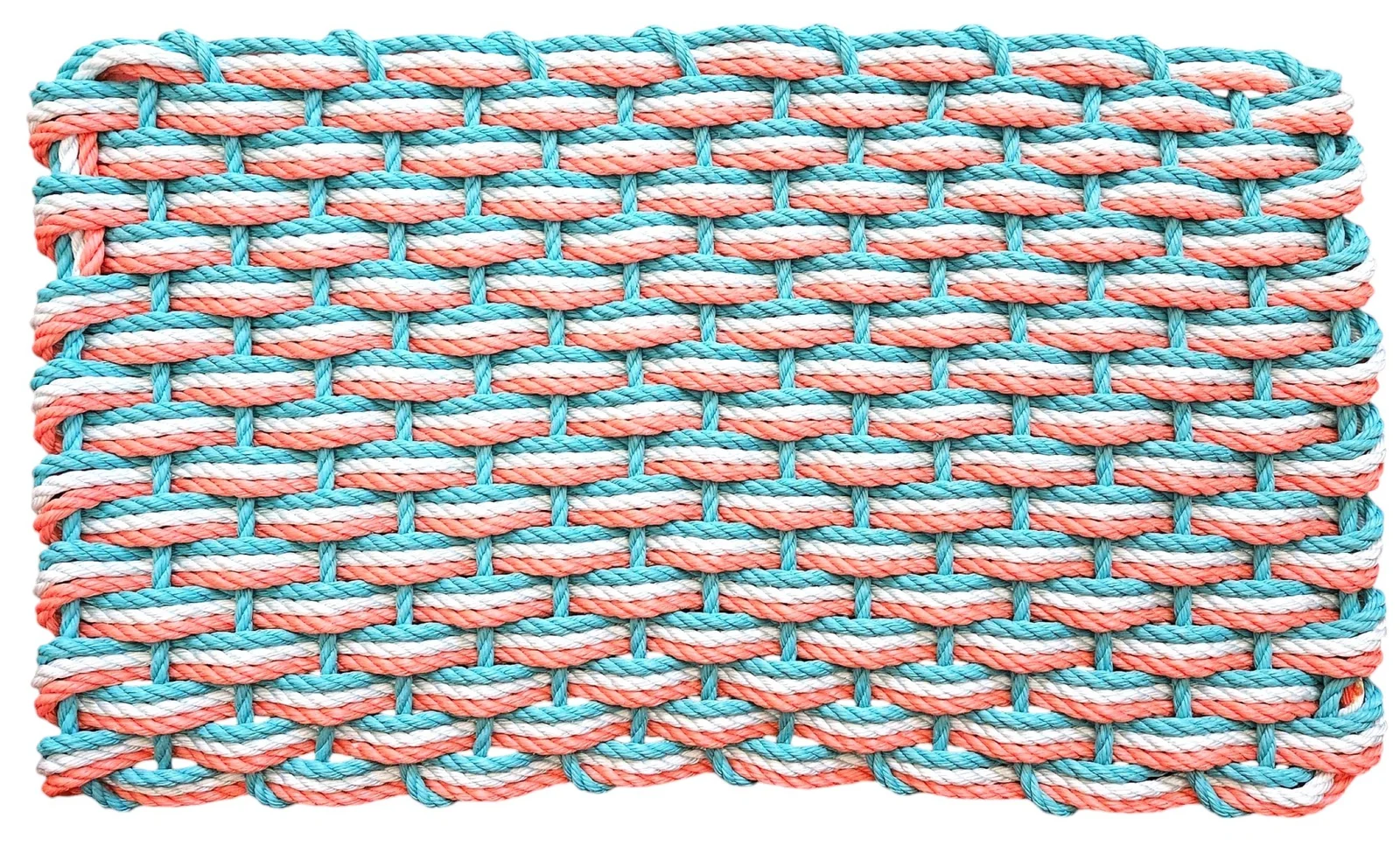
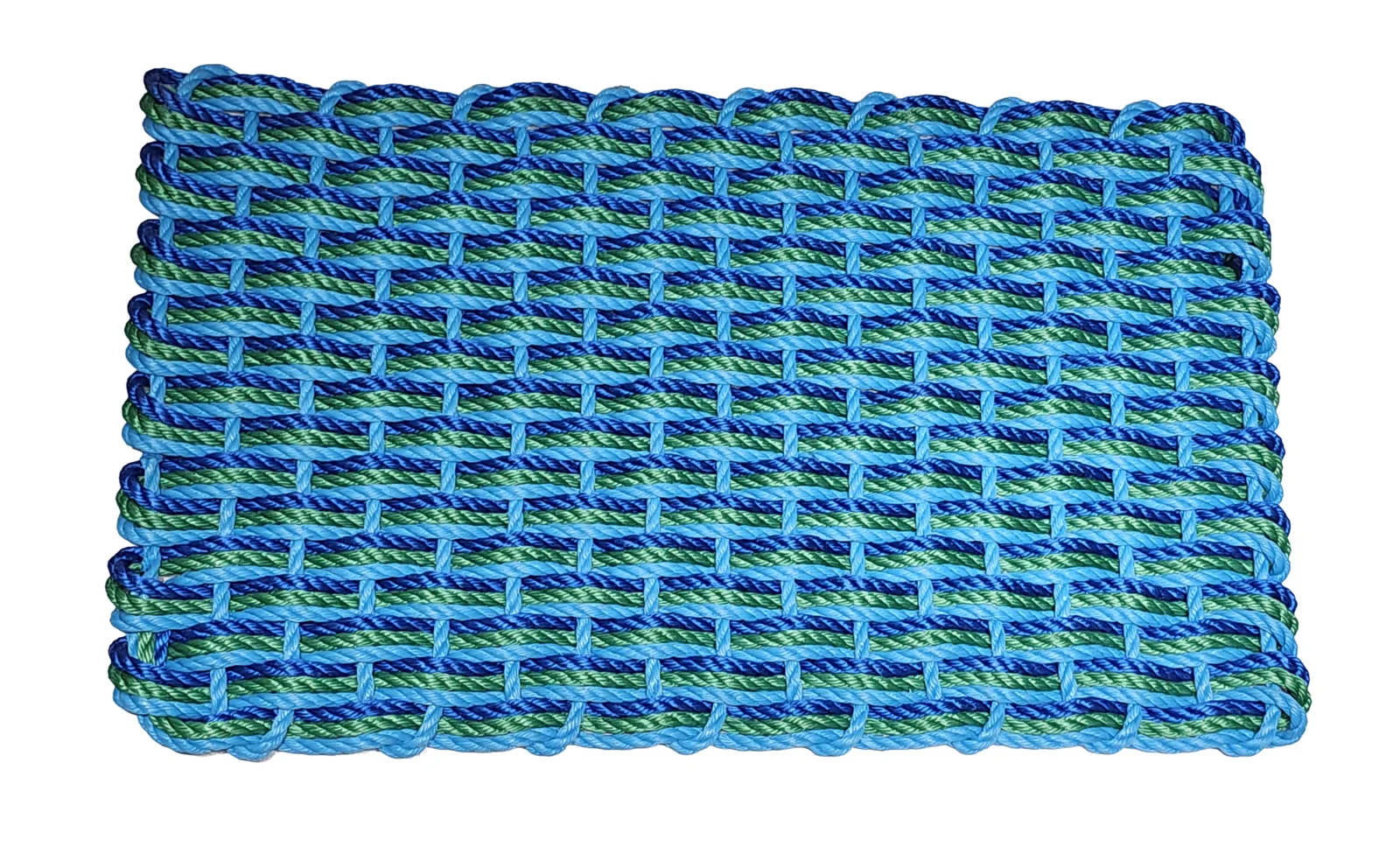
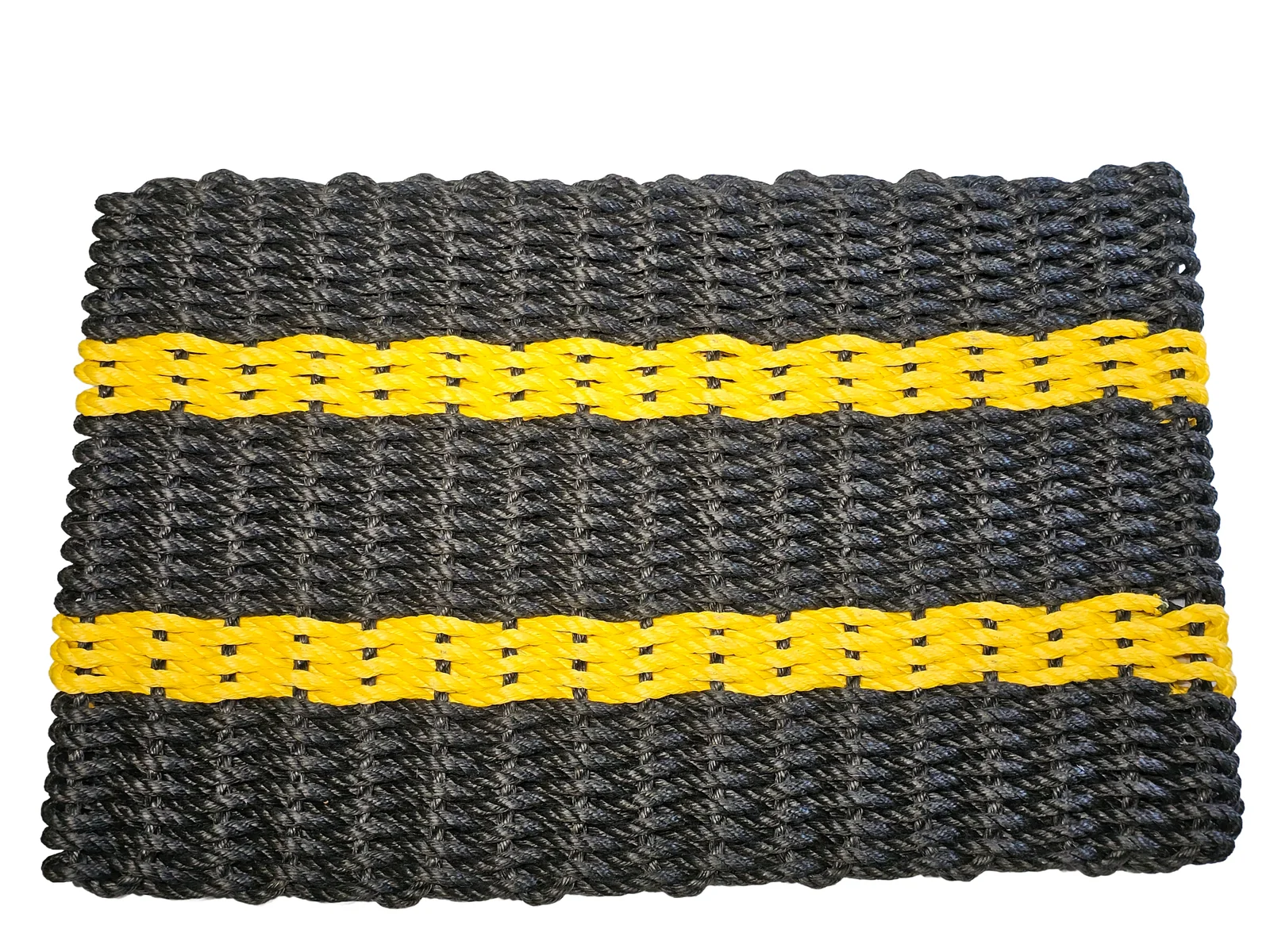
A good rule for 2026 entryways: two dominant colors plus one accent stripe. Navy and light tan with a seafoam accent works for classic coastal. Black and gray with a single bright stripe (yellow, orange, or purple) works for a more modern beach-house look. Buy the combination that repeats somewhere else on your porch — a cushion, a planter, a shutter — so the mat doesn't look like an afterthought.
Expected outcome: you should be able to name the exact two or three colors before you shop, not browse and hope one jumps out.
Color match falls apart visually if the mat is too small for the door it sits in front of. Sizing a rope doormat correctly for your front door means measuring the door width and adding clearance on both sides, not eyeballing it from a photo online.
A mat that's undersized reads as cheap regardless of how well the colors match your trim. Oversized isn't much better — it can block a screen door swing or hang off a porch step edge.
Common mistake: measuring the doorway itself instead of the landing or porch space where the mat actually sits.
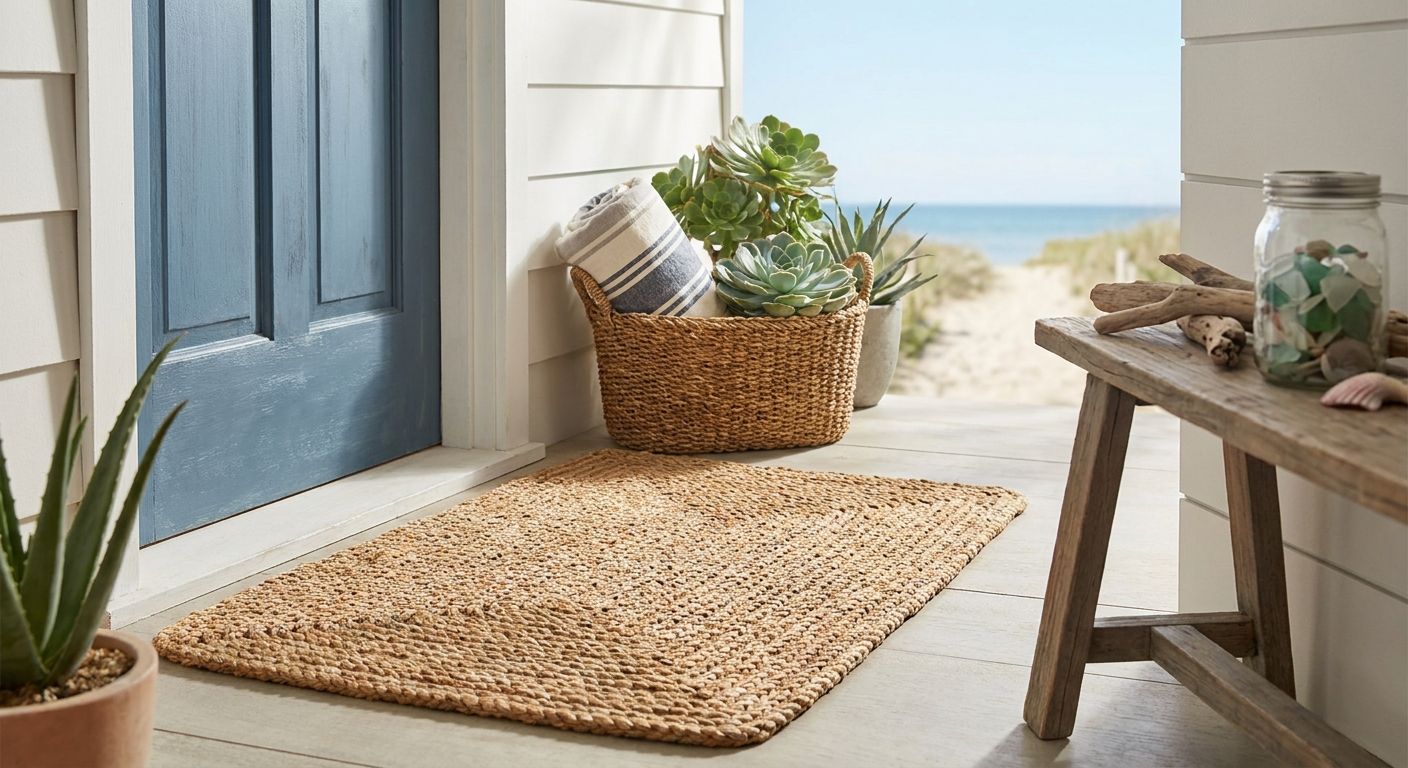
Rope texture against a wood porch, painted concrete, or composite decking each reads differently. Against gray composite decking, warmer rope tones (tan, burgundy, seafoam) create contrast that photographs and shows well. Against white or light stone, darker rope (navy, black) does the same job in reverse.
If your entry is mostly neutral tones already, a two-tone rope mat carries more visual weight than a five-color combination, which can look busy on a small landing.
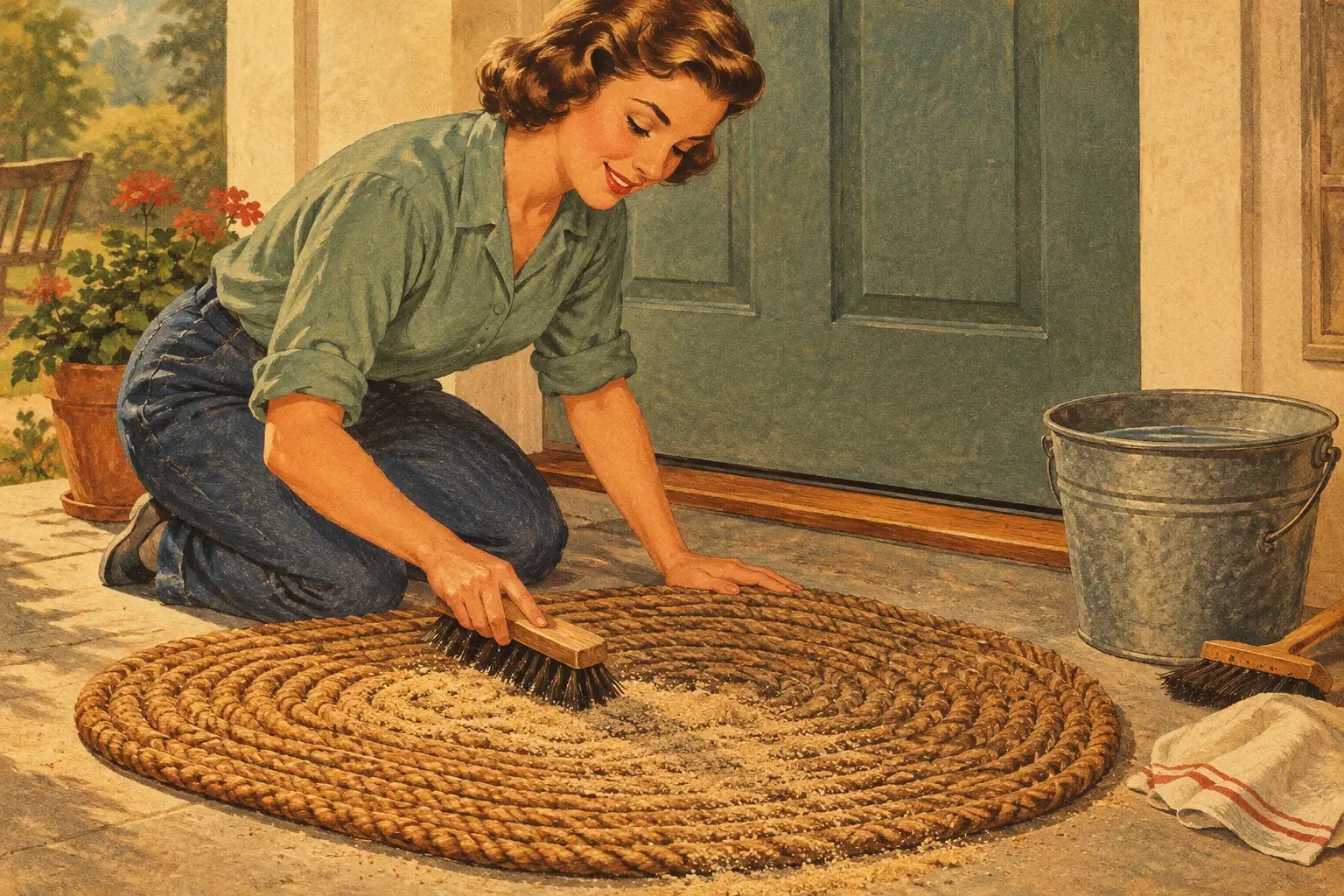
A color-matched mat only stays matched if it's cared for. Cleaning a lobster rope doormat regularly — shake it out weekly, rinse with a hose monthly — keeps sand, salt, and dirt from dulling the rope color over a full 2026 season.
Salt air and direct sun both work against color retention faster than inland use. Skipping rinse-downs is the single biggest reason a matched mat starts to look off after a few months near the coast.
Colors shift under porch shade, direct sun, and artificial light in a way monitors never show accurately. Before committing, look at your top color choice against your actual door and trim at two different times of day — morning shade and afternoon sun.
Expected outcome: the mat should still look intentional under both lighting conditions, not just the one you photographed for comparison.
Once the color and weave are settled, plan for the climate your entry actually faces. A porch mat near open water needs a different weatherproofing routine than one under a covered entry, and getting that step wrong undoes the color work fast.
How do I match a rope doormat to coastal decor?
Match rope doormat to coastal decor by pulling 2-3 colors directly from your siding, trim, or door paint before browsing mat options. Weave style should match your entry’s formality, and the mat should be sized to your actual landing, not just your door width.
What colors work best for a coastal-style doormat?
Navy, light tan, and seafoam are the most common base combination for classic coastal entries in 2026. Brighter combinations like teal-seafoam-orange or black-yellow suit modern or tropical-leaning entries.
Is a lobster rope doormat better than a printed coir mat for color matching?
Yes, because lobster rope is dyed through the rope itself rather than printed on the surface, so the color holds up under sun and salt air longer than a printed coir mat.
How often should I clean a rope doormat to keep the color looking right?
Shake it out weekly and rinse it with a hose monthly, more often near open water. Salt and sand buildup dulls rope color faster than normal foot traffic does.
What size rope doormat should I get for a coastal entryway?
Measure your door width and add clearance on both sides rather than measuring the door frame alone. An undersized mat undercuts any color match, no matter how well the palette fits your decor.
Do rope doormats work for condos and gated coastal communities?
Yes, a tighter weave pattern in a two-color combination like navy and gray reads more formal and fits condo or gated-community entries better than a loose, chunky weave.
Will a rope doormat fade in direct Florida sun?
Rope doormats hold color better than printed mats, but any mat fades faster with skipped maintenance. Regular rinsing and rotating the mat out of constant direct sun extends the color match.
The combination people underuse is a neutral two-color base with one bright accent stripe — it matches almost any coastal exterior built between now and a decade from now, and it doesn't lock you into a decor scheme you'll want to change in a year. Save the boldest three-color combinations for entries with a stable, already-colorful exterior to play off of.