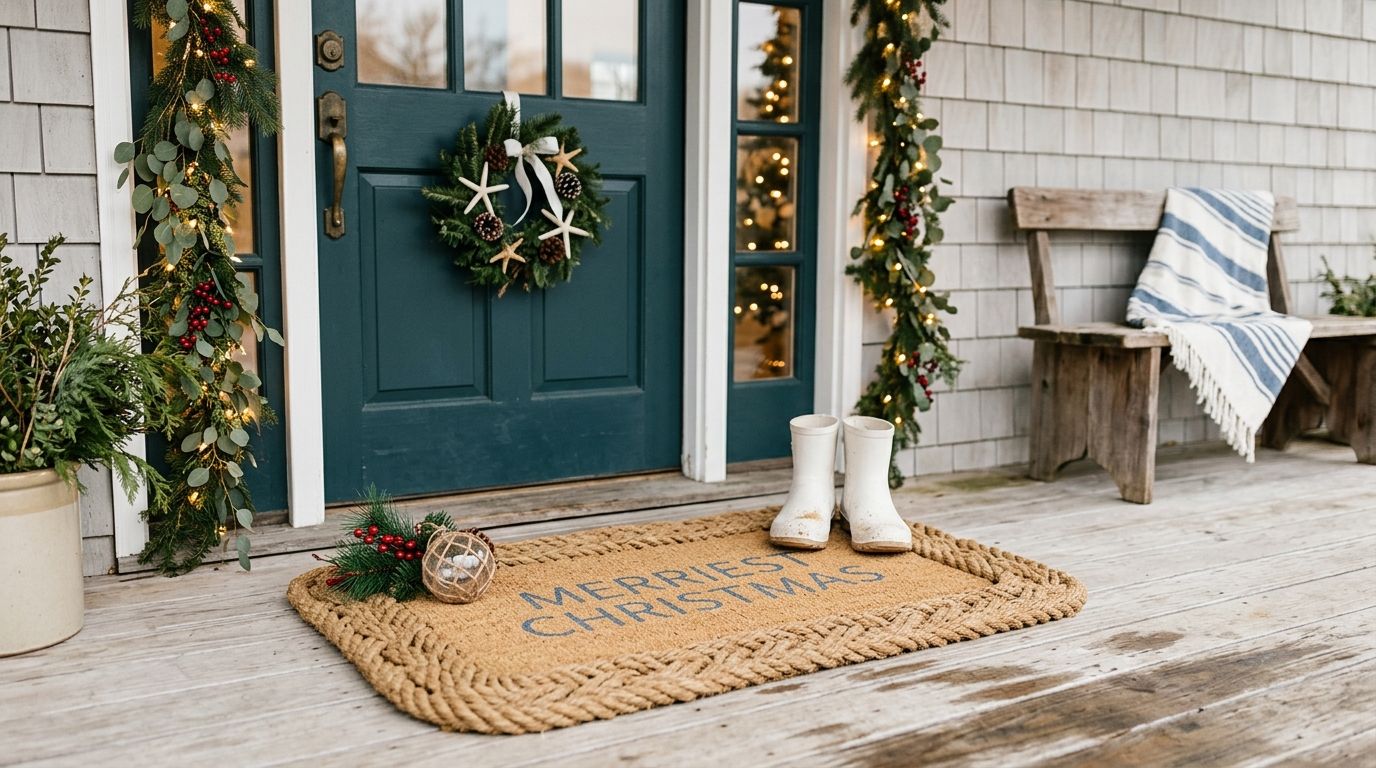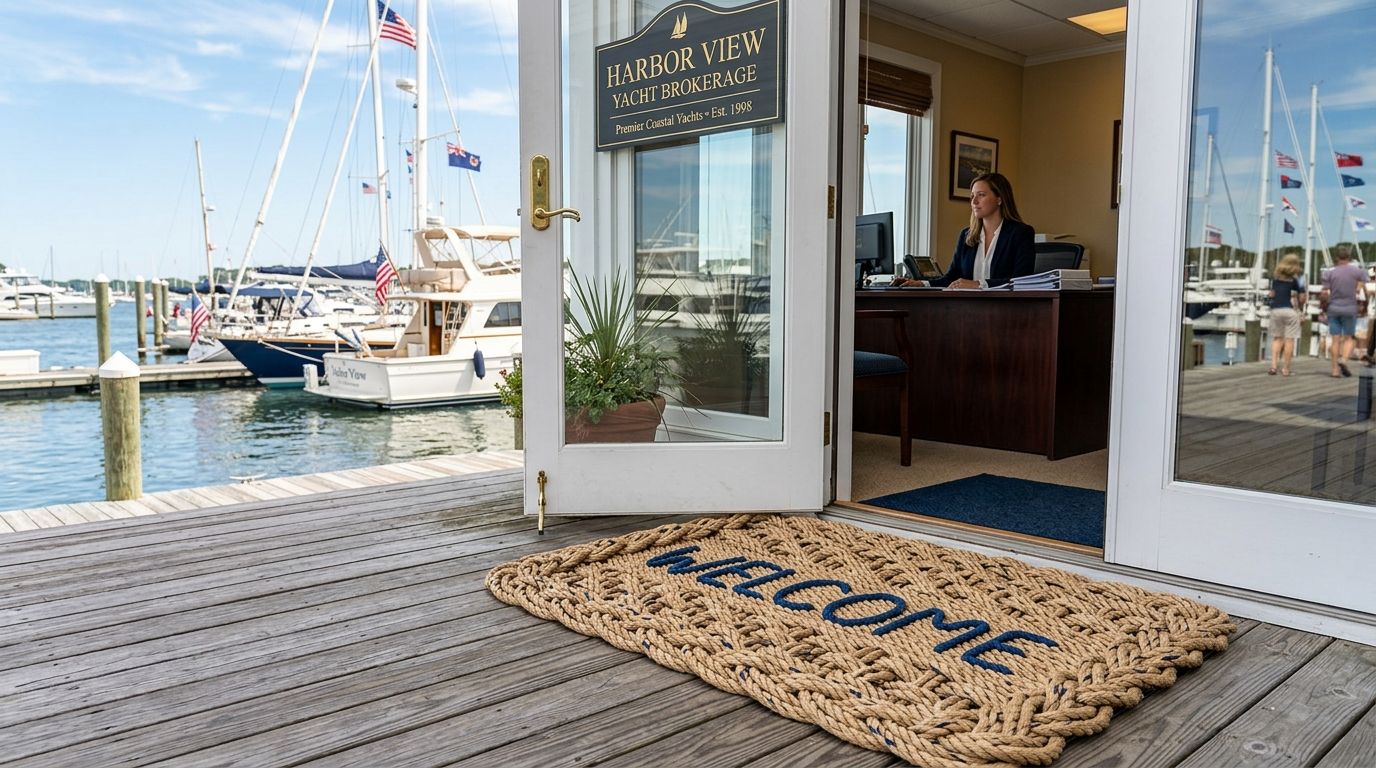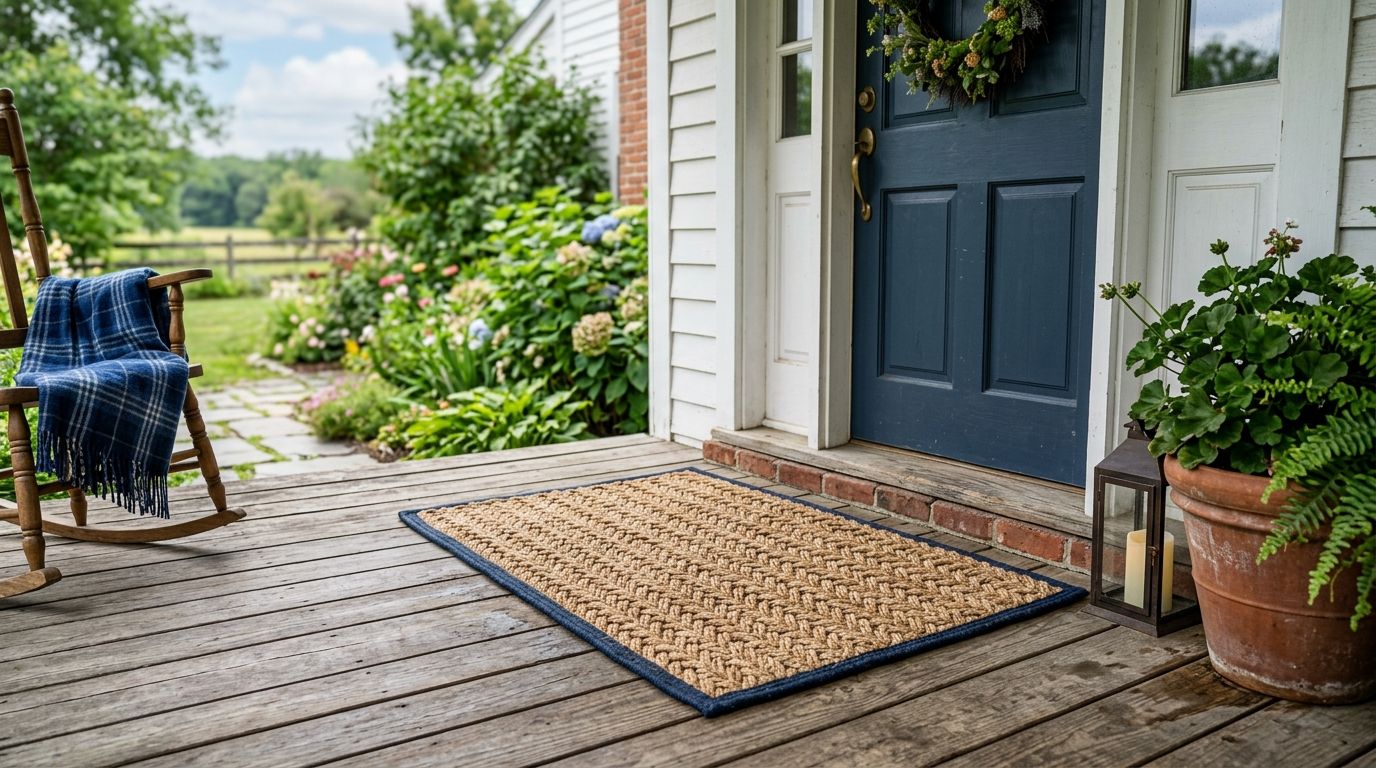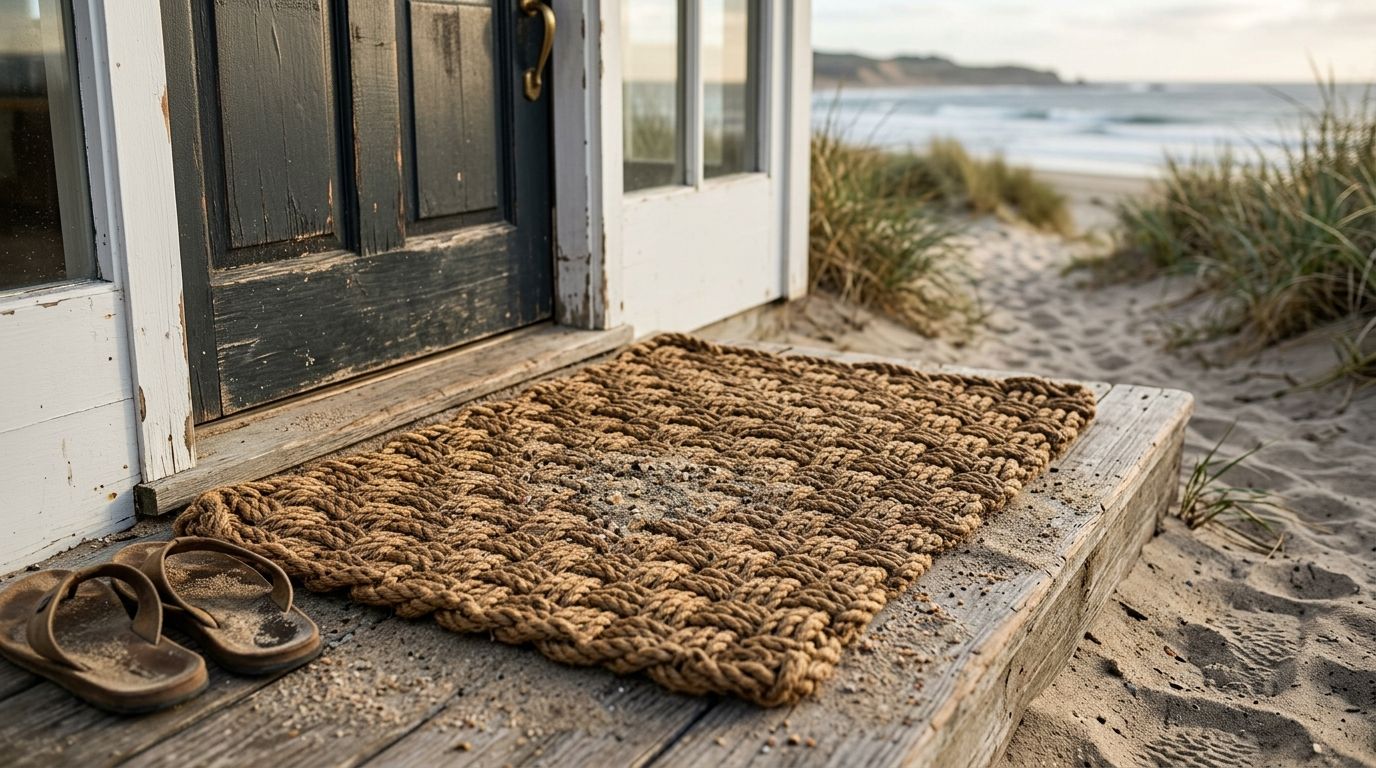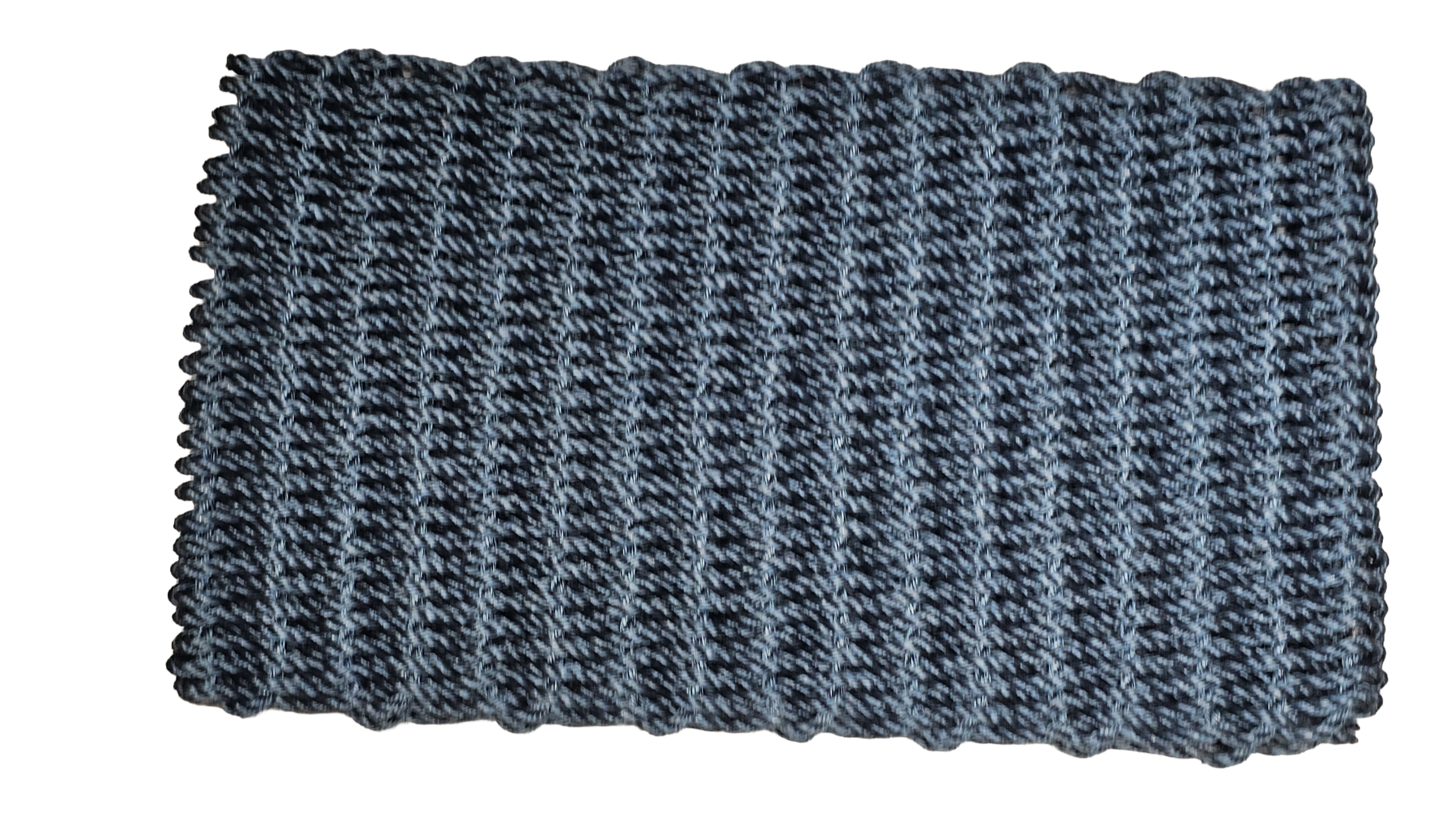
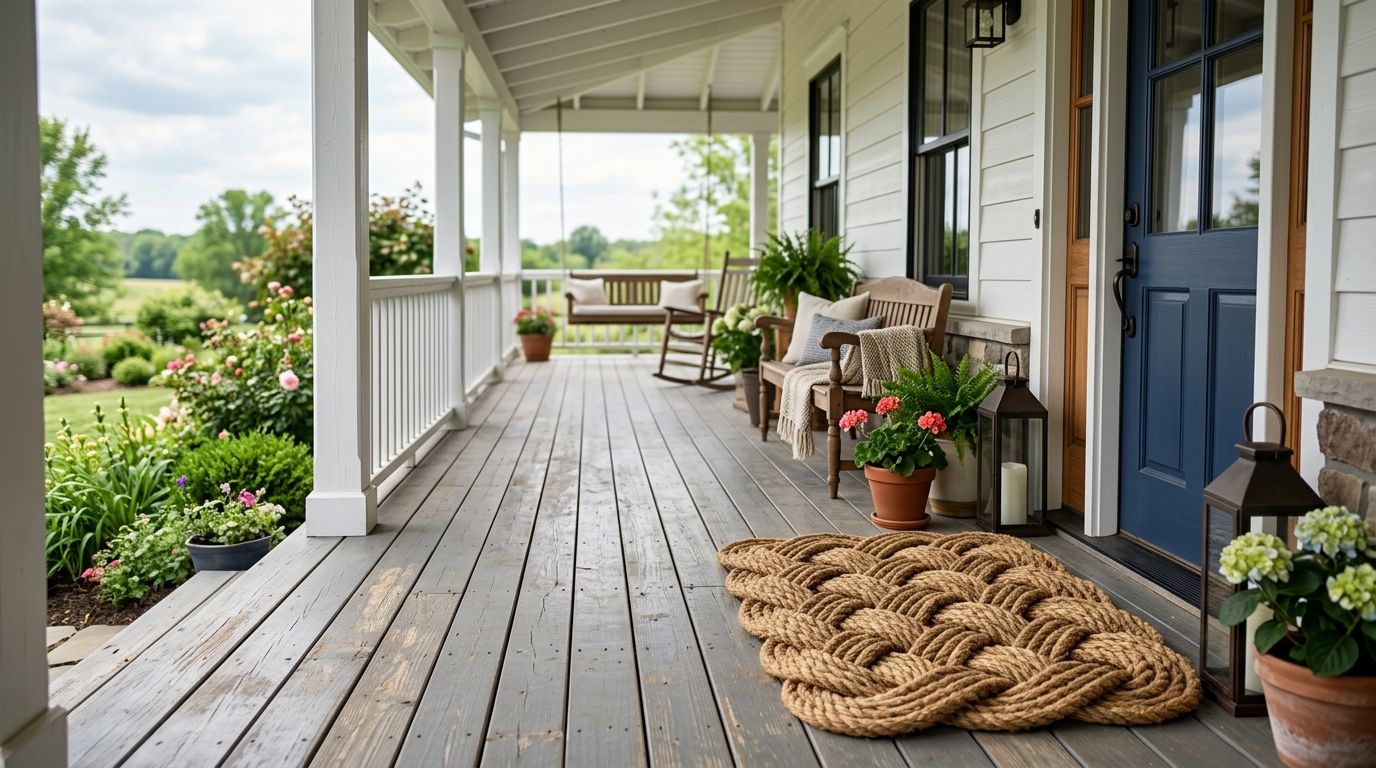
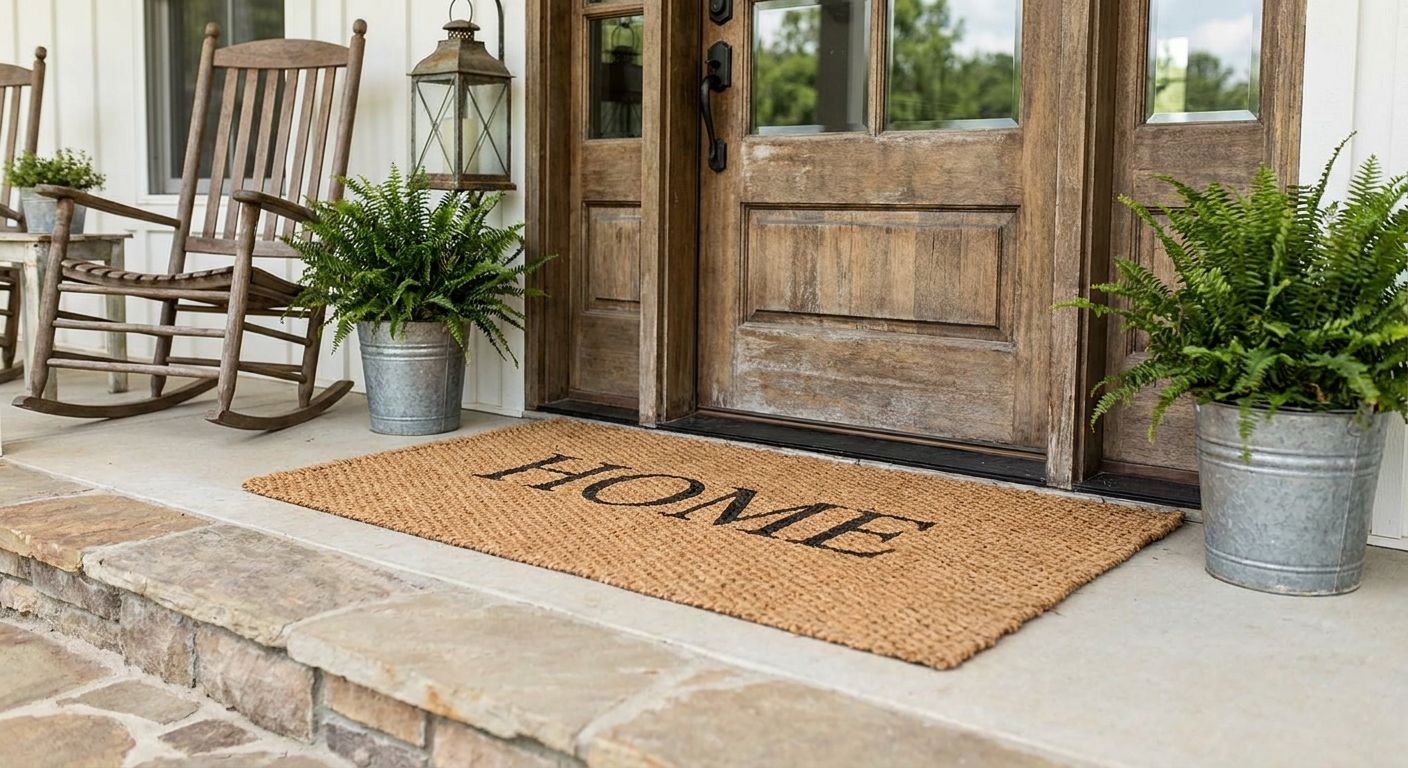
Farmhouse style porches call for an outdoor entryway mat that reads as handwoven and lived-in, not mass-produced, while still standing up to muddy boots, wet dogs, and open-air weather. A farmhouse porch differs from a formal front entry in one key way: it's usually a working space first, decor second, so the mat has to earn its keep before it earns its charm.
Farmhouse porches sit at the intersection of two demands: the design wants natural, worn-in texture, and the household wants something that doesn't fall apart by the second season. A rope weave selected for your entryway does both jobs at once because the material already looks handmade before it takes on any wear.
Most farmhouse entries also double as the main foot-traffic path for the household — kids, dogs, groceries, delivery boxes — which is different from a formal front door that only gets used a few times a day. That traffic pattern is exactly what should drive the mat choice, not just the color swatch.
A mat that's too small for the doorway catches almost none of the mud people actually track in. Farmhouse doors often run wider than standard builder-grade doors, so guessing at size wastes money twice.
Farmhouse style leans on visible, tactile materials — shiplap, exposed beams, woven textiles — and a rope doormat fits that language better than a flat printed mat. The weave pattern itself does most of the visual work here.
Farmhouse palettes run neutral: black, gray, cream, navy, weathered wood tones. A mat in a loud, saturated color fights the rest of the porch instead of grounding it.
A farmhouse porch mat rarely gets a break — it's the landing zone for every trip in and out of the house. Wear shows up fastest at the pivot point right in front of the threshold.
Handwoven rope doesn't need special cleaners — it needs a routine. Shake-out-and-rinse care is the whole system, and skipping it is what shortens a mat's life, not the material itself.
Some farmhouse porches use a single statement mat at the door; others layer a smaller accent mat over a larger one for depth. Both work — the decision comes down to porch size and how much surface area needs coverage.
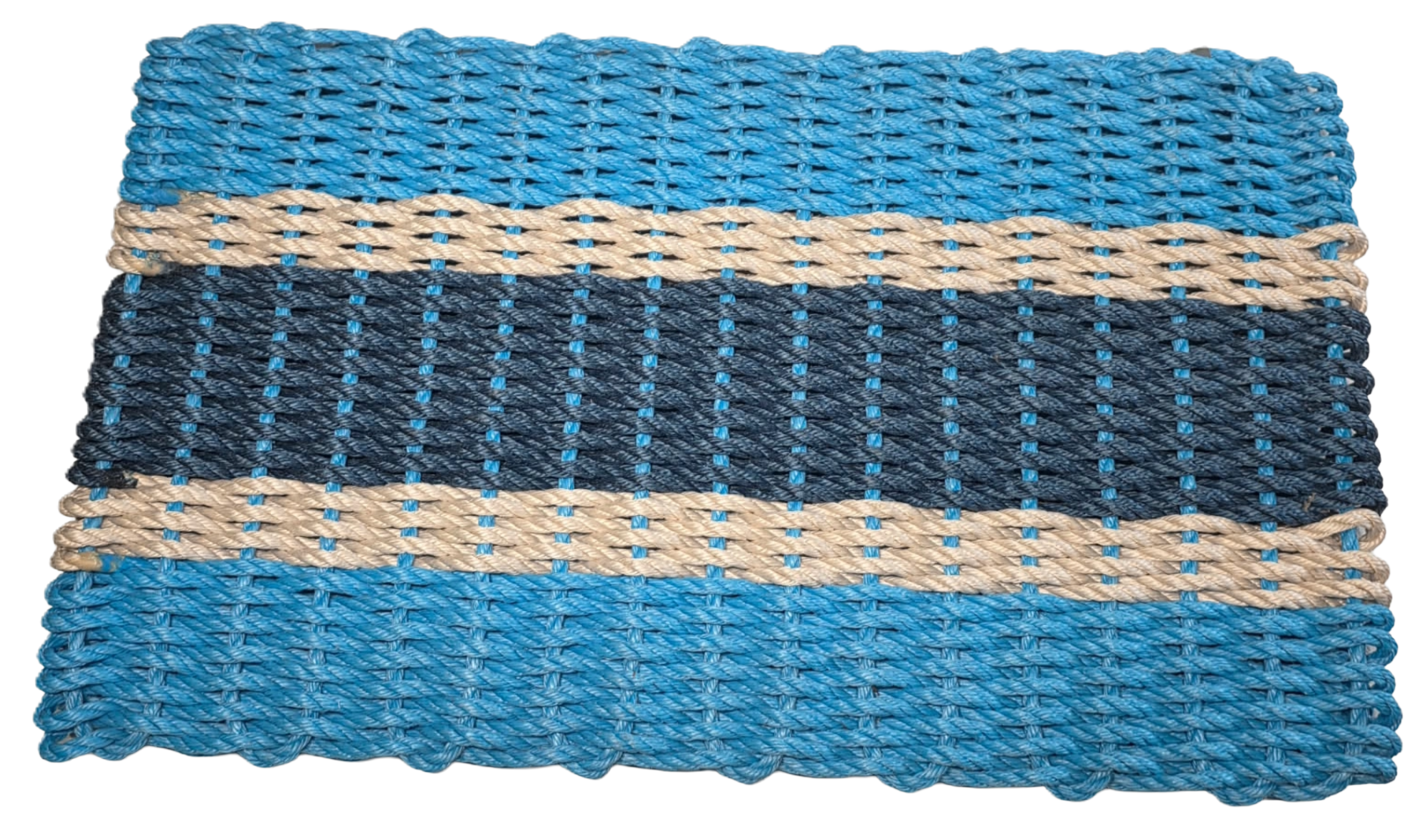
| Option | Best for | Key limitation |
|---|---|---|
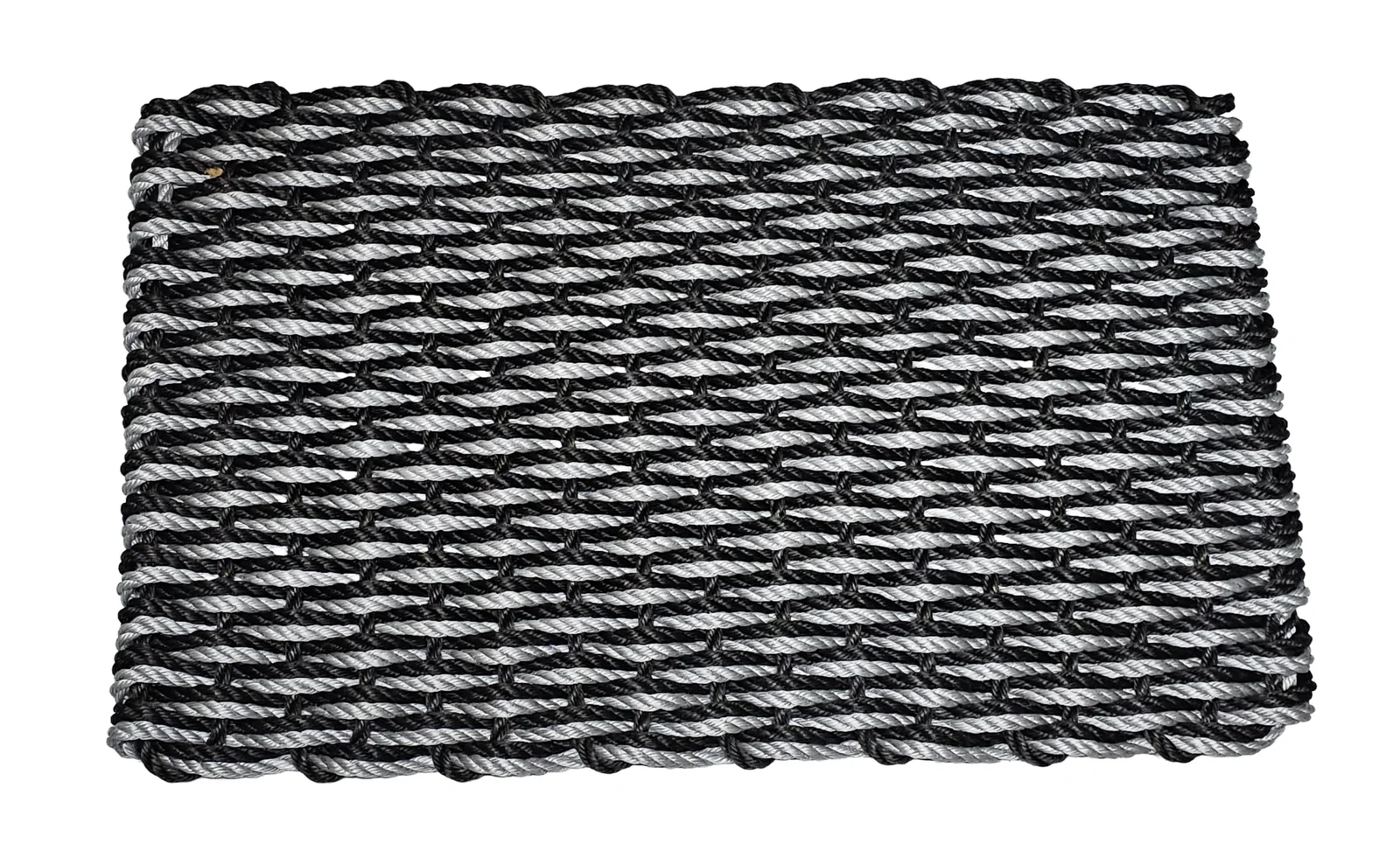
| Handwoven lobster rope doormat | Farmhouse porches with heavy daily foot traffic | Needs an occasional shake-out and rinse; not a plush indoor feel |
| Coir (coconut fiber) mat | Budget farmhouse look on low-traffic entries | Sheds fibers and breaks down fast in Florida humidity and rain |
| Rubber-backed woven mat | Renters wanting a quick, low-commitment swap | Backing traps moisture and can mildew on damp porches |
| Synthetic turf mat | Seasonal or snowbird homes closed up part of the year | Looks less like natural rope or jute texture farmhouse style calls for |
A handwoven rope doormat is the best outdoor entryway mat for a farmhouse porch in 2026 because it holds farmhouse texture without breaking down under daily traffic and Florida-style humidity.
What’s the best outdoor entryway mat for a farmhouse porch?
A handwoven rope doormat in a neutral tone like navy, black, or gray is the best match for farmhouse porches in 2026 because it holds the natural, worn-in texture farmhouse style calls for while surviving daily foot traffic and outdoor weather.
Is a rope doormat better than a coir mat for farmhouse style?
Yes, for outdoor use. Coir mats look farmhouse-adjacent but shed fibers and break down faster once exposed to repeated rain and humidity, while rope doormats hold their shape season after season.
How do I clean a rope doormat on a farmhouse porch?
Shake out loose debris weekly and rinse the mat with a garden hose monthly, letting it dry flat before it goes back down. This routine, not a special cleaner, is what keeps the weave intact long-term.
What size doormat fits a farmhouse front door?
Measure the door width and add 4 to 6 inches on each side for real mud coverage, since farmhouse doors often run wider than standard builder-grade doors.
Do rope doormats work in rain and humidity?
Yes. Rope doormats are built to be rinsed and air-dried, which makes them a better fit for Florida-style rain and humidity than jute or rubber-backed mats that trap moisture.
How much does a farmhouse-style rope doormat cost?
Striped rope doormats run from about $49.99 to $69.99 in 2026, depending on the color combination and stripe count.
Can rope doormats handle high foot traffic?
Yes, a denser rope construction is built specifically for multi-person households and daily use, which is why it’s the standard pick for working farmhouse porches rather than formal entries used once a day.
The detail most farmhouse porch owners miss: rotating the mat 180 degrees every few months evens out wear at the pivot point in front of the threshold, which is where 90% of the visible fraying starts first. A $69.99 mat that gets rotated on schedule will outlast one left facing the same direction for years, guarantee or not.