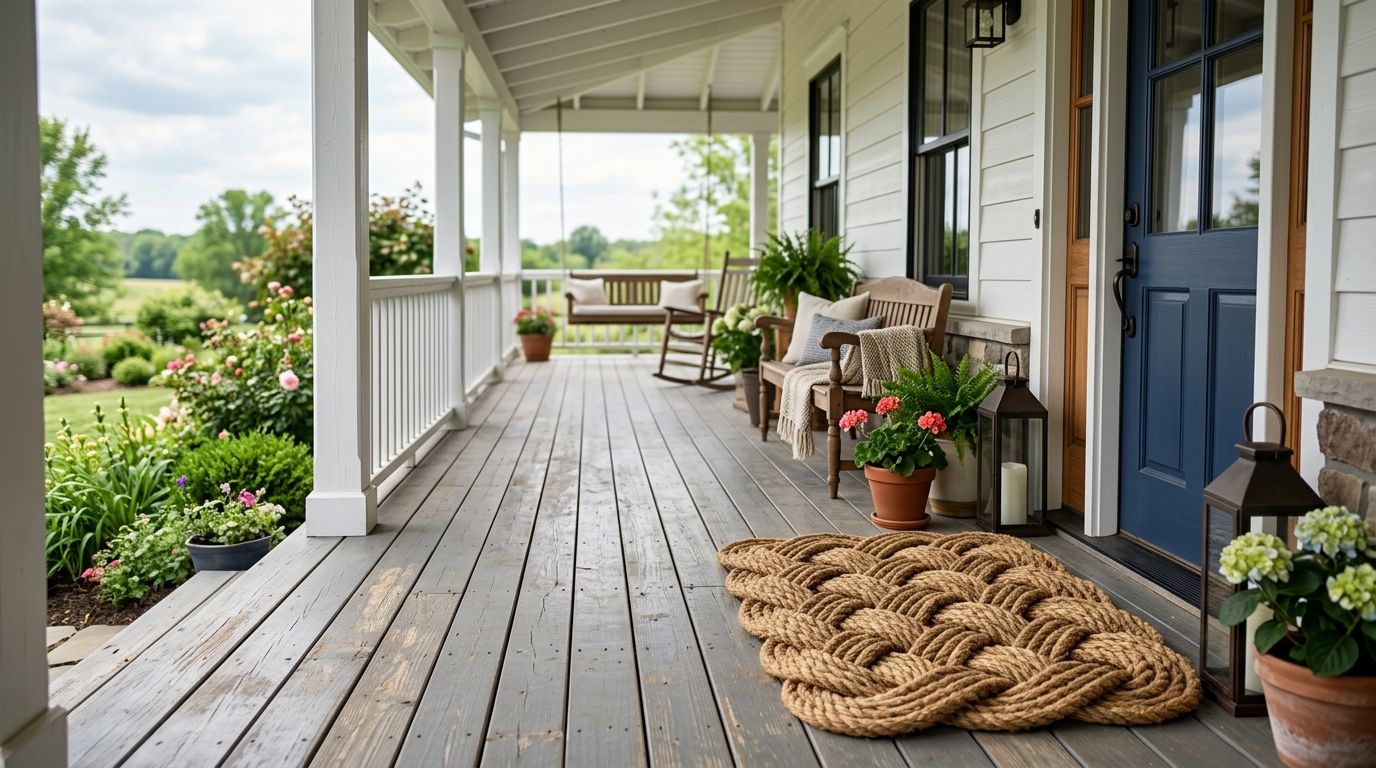
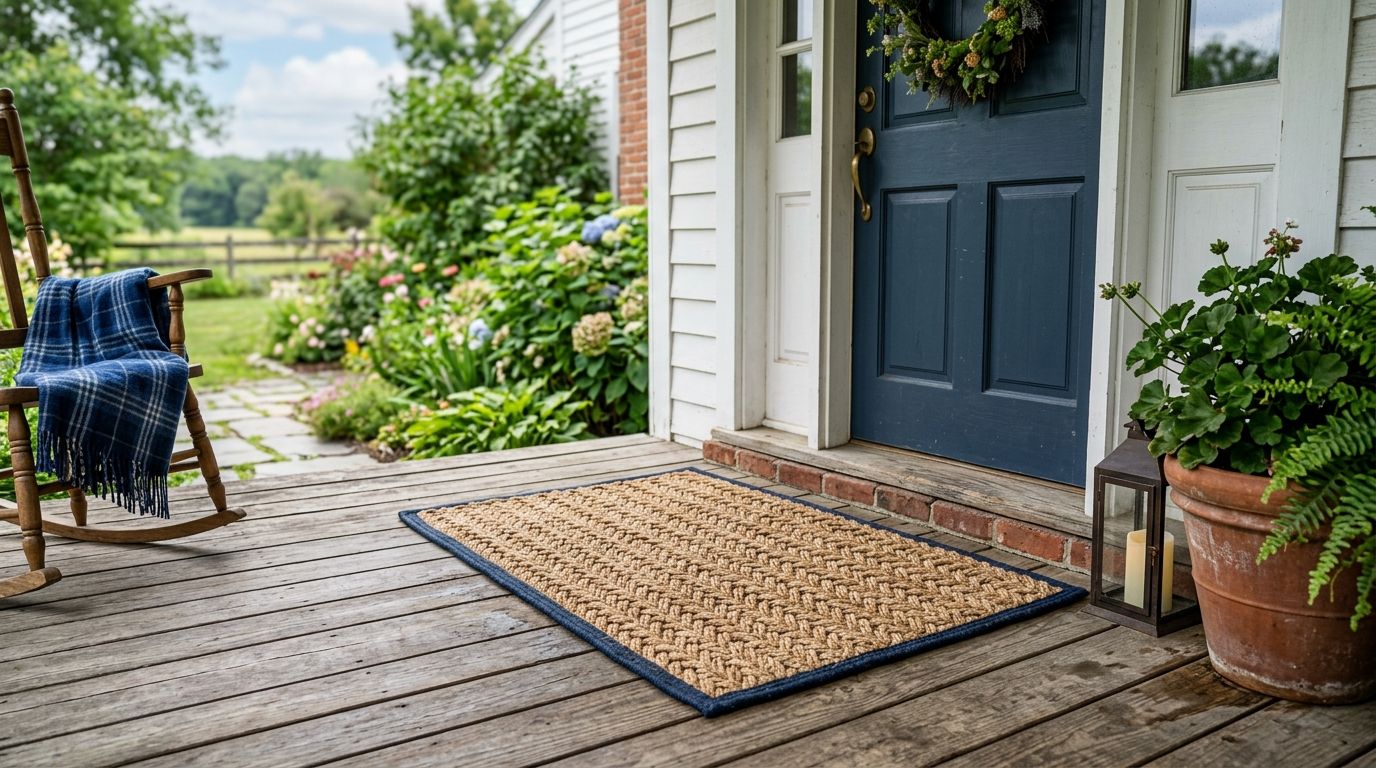
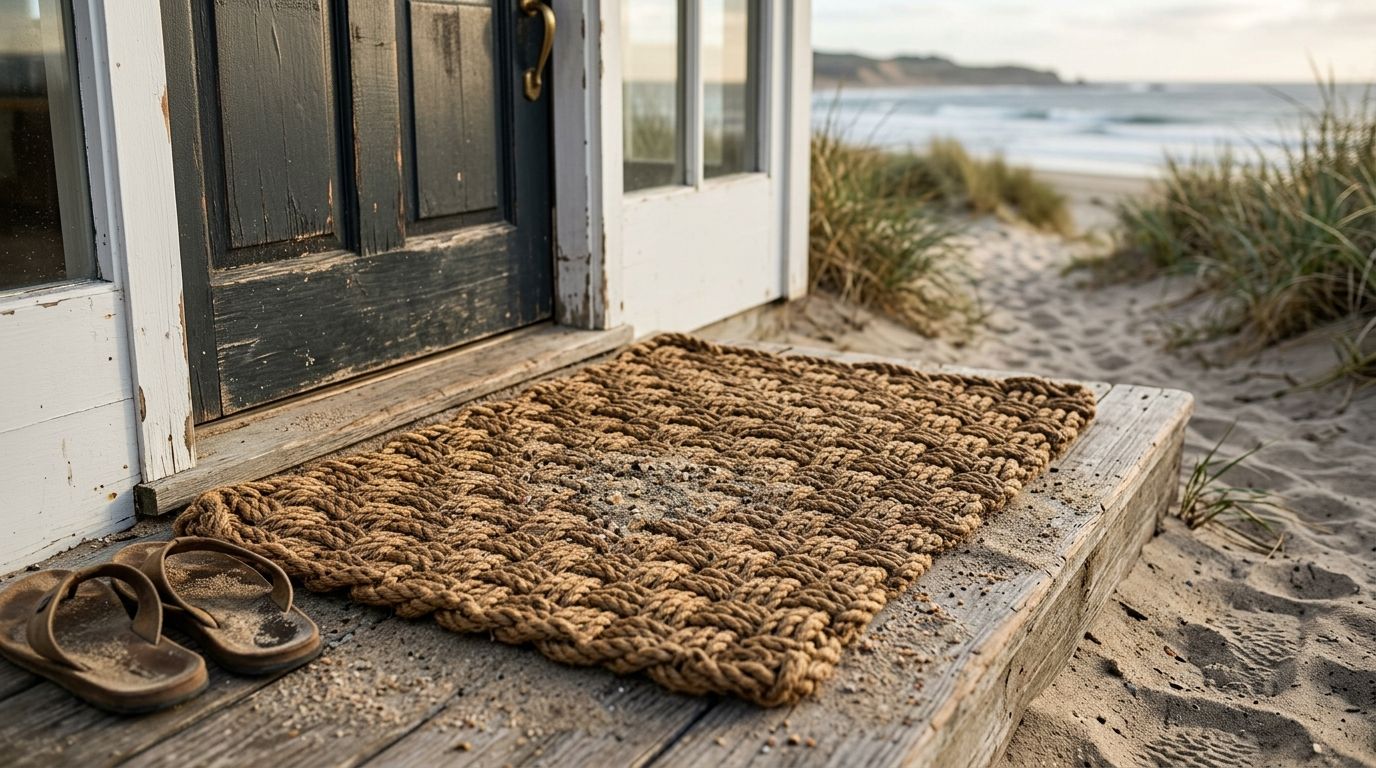
An uncovered porch needs a rope doormat built for full sun, driving rain, and wind — a tightly woven lobster rope mat in a UV-stable color, sized to sit flush against the threshold so gusts can't flip it. The trade-off nobody mentions upfront: unprotected exposure fades color faster than a covered entry, so the weave and dye matter more than the price tag.
A covered porch filters sun, wind, and rain before they hit the mat. An uncovered porch gets the full dose of all three, which is why the same rope doormat that lasts a decade under an awning can look tired in half that time when it sits exposed. Getting the weave, thickness, and color right at purchase saves a replacement two years later.
This matters even more in Florida and along any coastline in 2026, where UV index and afternoon storms are part of daily weather, not an occasional event. The mat closest to your door absorbs that first hit before anyone tracks water or sand inside.
Work through these steps in order — each one narrows the field before you look at color or style.
Most single-door entries take an 18×30-inch mat. Double front doors, common on beach houses and coastal builds, usually need 30×48-inch or a custom width so both doors clear a single continuous mat instead of two mismatched pieces.
A porch with zero shade cover puts the rope fiber and its dye under constant UV load for most of the daylight hours. Natural fiber rope handles this better than synthetic blends prone to brittleness, but color is the first thing to shift. Lighter, earth-tone dyes hold their look longer under direct sun than deep navy or black tones, which is worth factoring in before you fall for a color swatch indoors.
Open porches near the coast or on elevated decks catch more wind than a recessed entry ever will. A thin, lightweight mat is the first thing to move in a storm gust, and a mat that's constantly shifting wears unevenly at the edges. Weight and a wider footprint both help — a heavier three-strand weave sits flatter and resists lift better than a thinner braided one.
Rain on an uncovered porch doesn't just wet the mat — it pools if the porch surface isn't sloped, and a mat sitting in standing water for hours needs a weave that drains instead of holding moisture against the fibers. That's the difference between a mat that dries out by afternoon and one that stays damp long enough to invite mildew.
Find the right mat for your porch
Browse lobster rope doormats built for sun, wind, and rain.
Yes — an uncovered porch needs a mat with UV-stable dye, a flatter profile to resist wind, and a weave that drains standing water faster than a covered-porch mat requires. Covered entries can get away with more decorative, open weaves since they're shielded from direct sun and rain.
Weekly rinsing is a reasonable baseline for an uncovered porch in 2026, more often after a storm or a stretch of high pollen or sand. A quick shake-out between rinses keeps grit from grinding into the fibers underfoot.
Mildew risk actually depends more on drying time than direct exposure — a mat that dries quickly in open sun and air often resists mildew better than a shaded mat that stays damp. Check how to prevent mildew on a coastal rope doormat if you're seeing spotting.
A lobster rope doormat from Ropemats Florida is built with the coastal, uncovered-entry scenario in mind — dense three-strand construction, sun-stable dye options, and a 10-Year Guarantee that covers the kind of wear an exposed porch causes faster than a covered one.
What’s the best rope doormat for an uncovered porch?
The best rope doormat for an uncovered porch is a densely woven three-strand lobster rope mat with UV-stable dye, sized to sit flush against the threshold. Loose or lightweight weaves shift in wind and fade faster under direct sun.
Is a rope doormat better than a coir mat for an uncovered entry?
A rope doormat generally outlasts a coir mat on an uncovered porch because coir breaks down faster under repeated rain-and-dry cycles. Rope holds its shape and drains water more consistently over multiple seasons.
How much sun fading should you expect on an uncovered porch mat?
Fading speed depends on sun exposure hours and dye saturation, with darker colors typically showing UV wear sooner than lighter, muted tones. Choosing a sun-stable dye at purchase is the main lever you control.
Do rope doormats need to be anchored on windy porches?
Yes, on open or elevated porches that catch consistent crosswind, a heavier weave or a simple anchor point keeps the mat from shifting or flipping. Lightweight, thin mats are the first to move in a gust.
What size rope doormat fits a standard front door?
An 18×30-inch rope doormat fits most standard single front doors, while double-door entries usually need 30×48-inch or custom sizing. Measure the full threshold width before ordering.
How long does a rope doormat last on an uncovered porch?
Lifespan depends on sun, rain, and foot traffic exposure, but a well-chosen weave with routine rinsing can hold up for years under a 10-Year Guarantee. Uncovered exposure shortens color life faster than structural life.
Can you leave a rope doormat outside all year on an uncovered porch?
Yes, rope doormats are designed for year-round outdoor use, though seasonal storage during hurricane season or extreme winter exposure extends the mat’s appearance. Check the off-season storage guide if your porch sees severe weather swings.
Most people size a porch mat for the door width and stop there — the bigger factor on an uncovered entry is drainage, since a mat sitting in a puddle after a 2026 summer storm wears out faster than one that dries within an hour. Pick the weave for water flow first, color second.

Doormats designed to look better, last longer, and clean easier.
Handmade lobster rope doormats crafted for outdoor durability, easy care, and a warm first impression. Designed for porches, patios, entryways, decks, boats, and RVs across the USA
Copyright © 2026 All Rights Reserved.