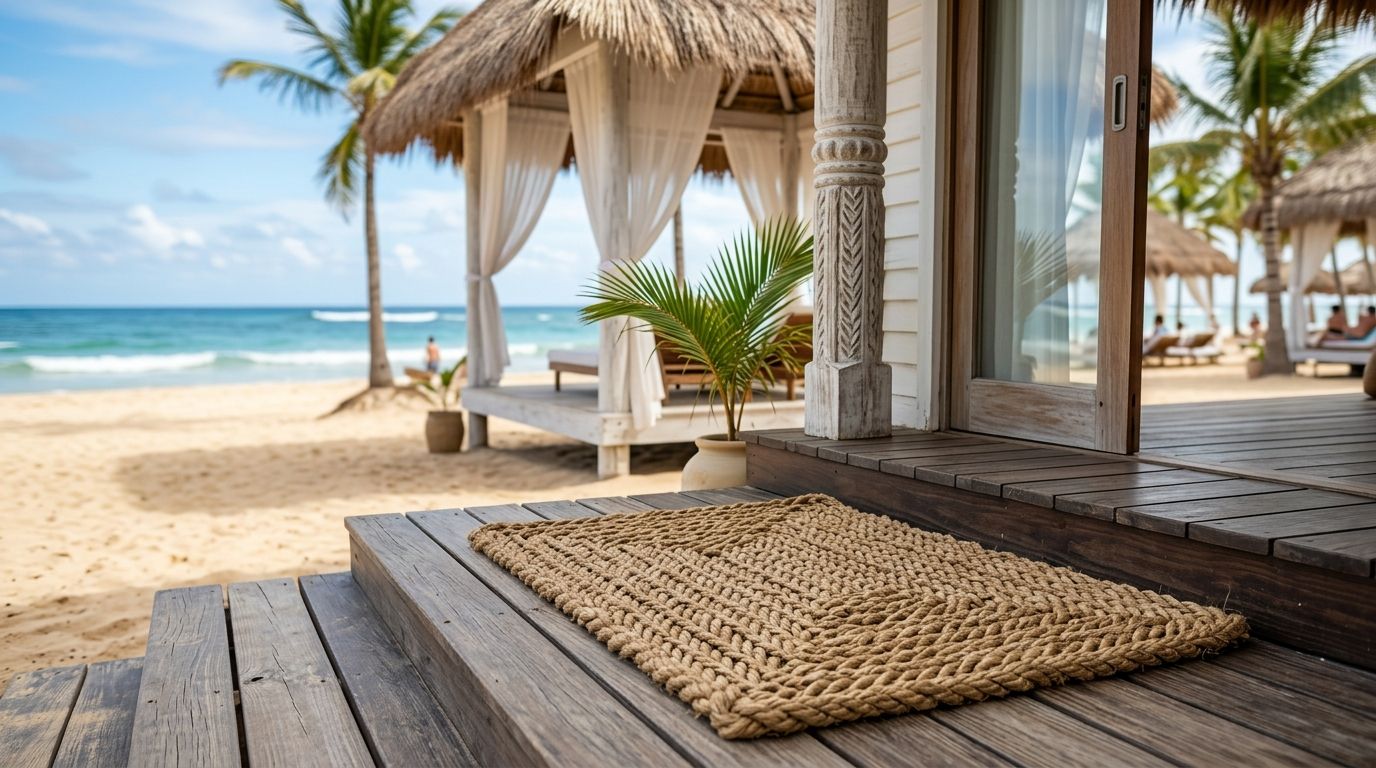
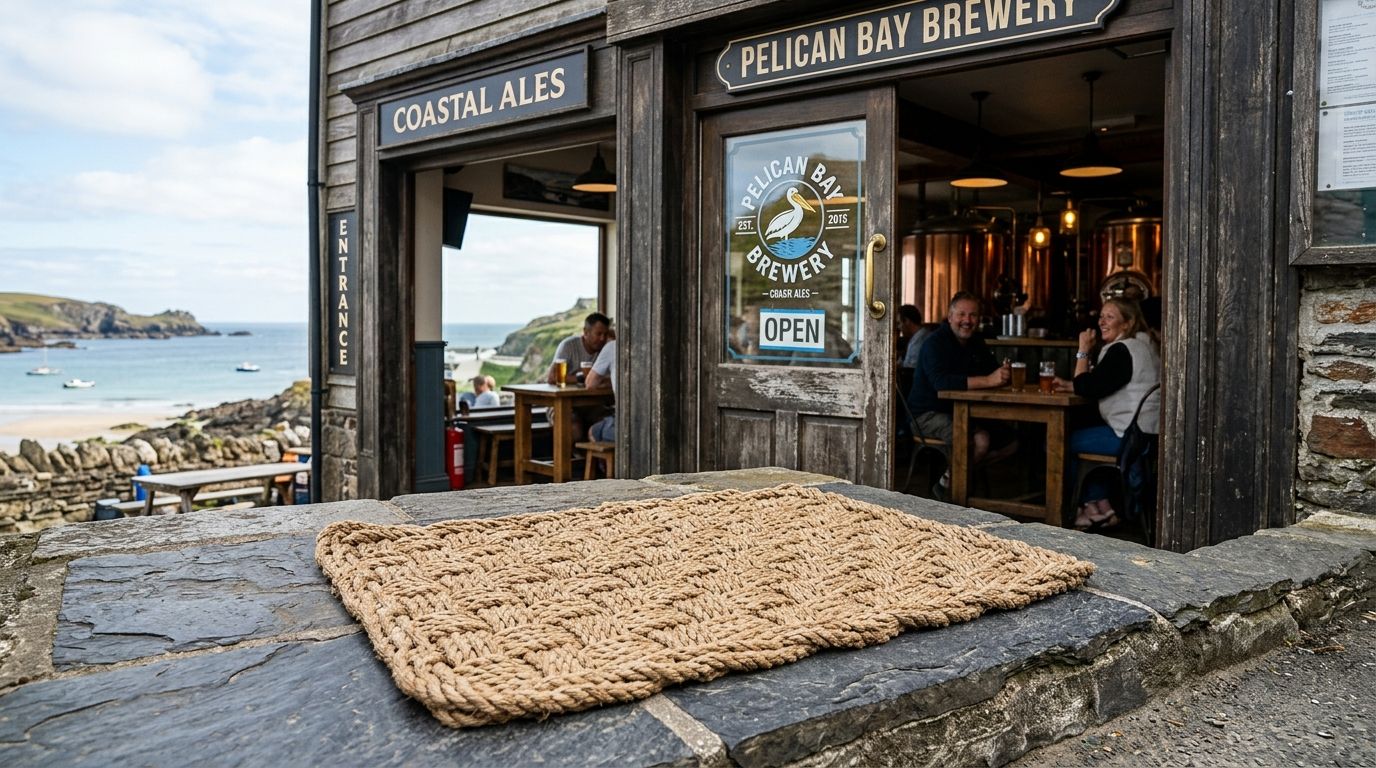
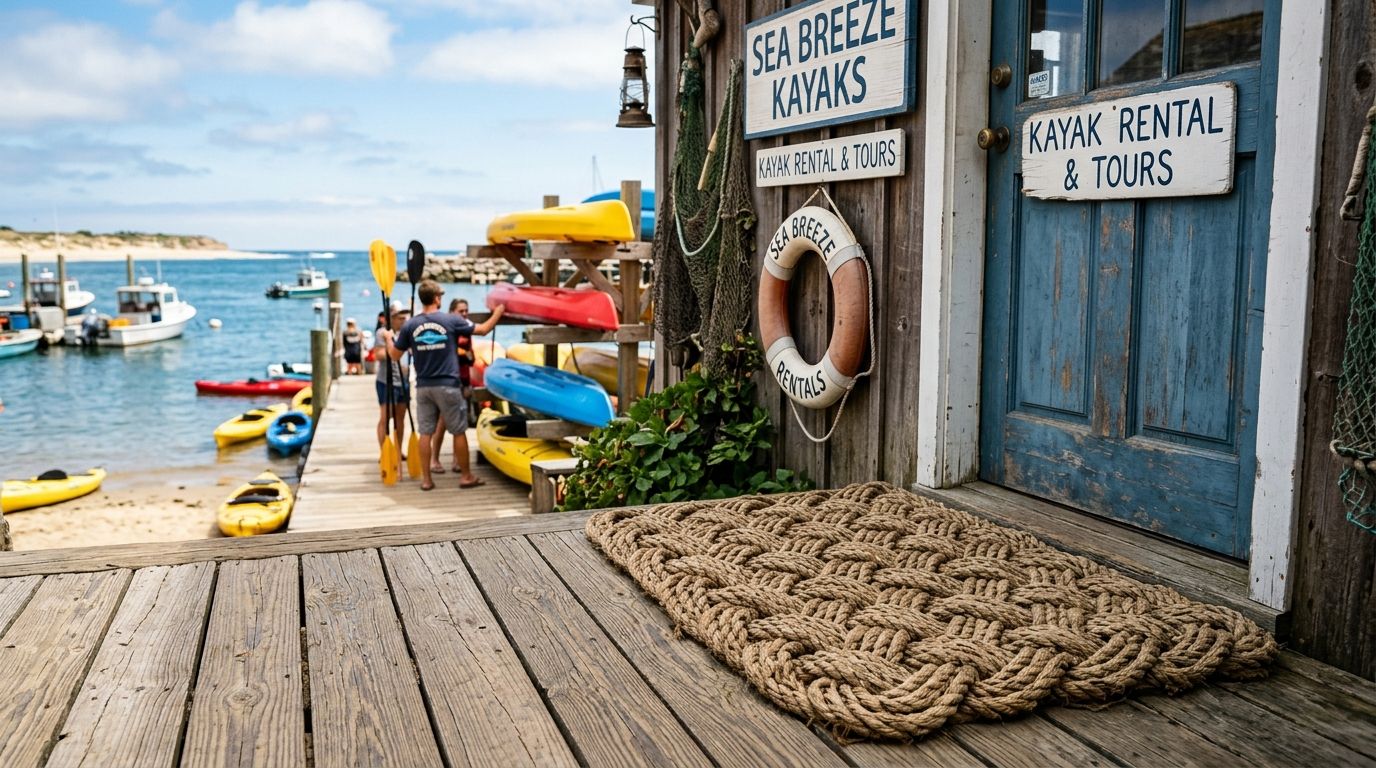
Rope doormats for breweries have to survive flip-flops dripping pool water, boots tracking in sand, and the occasional spilled pint — all in one Saturday afternoon rush. A coastal brewery entrance takes more abuse in a single weekend than most front porches see in a season, so the mat sitting at that door needs to be tougher than standard retail doormats built for suburban homes.
A brewery patio door in 2026 sees a different kind of wear than a residential entry. Wet shoes come off the boat launch or the beach, sandy flip-flops shuffle in from a waterfront patio, and spilled beer gets ground into the mat before anyone notices. Regular indoor-outdoor mats mat down, mildew, or shred within a season under that kind of traffic — the same problem seen at coastal restaurant entrances, where high covers and constant foot traffic wear out cheap mats fast.
A lobster rope doormat is built from thick, tightly wound rope instead of woven fiber, so it holds its shape under repeated stomping and doesn't compact into a flat, useless slab after a few months. That matters at a brewery door where the mat might get hundreds of foot-crossings on a busy weekend and zero attention in between.
Start with the door itself, not the mat. A single-door taproom entrance and a double-door beer garden gate need very different footprints.
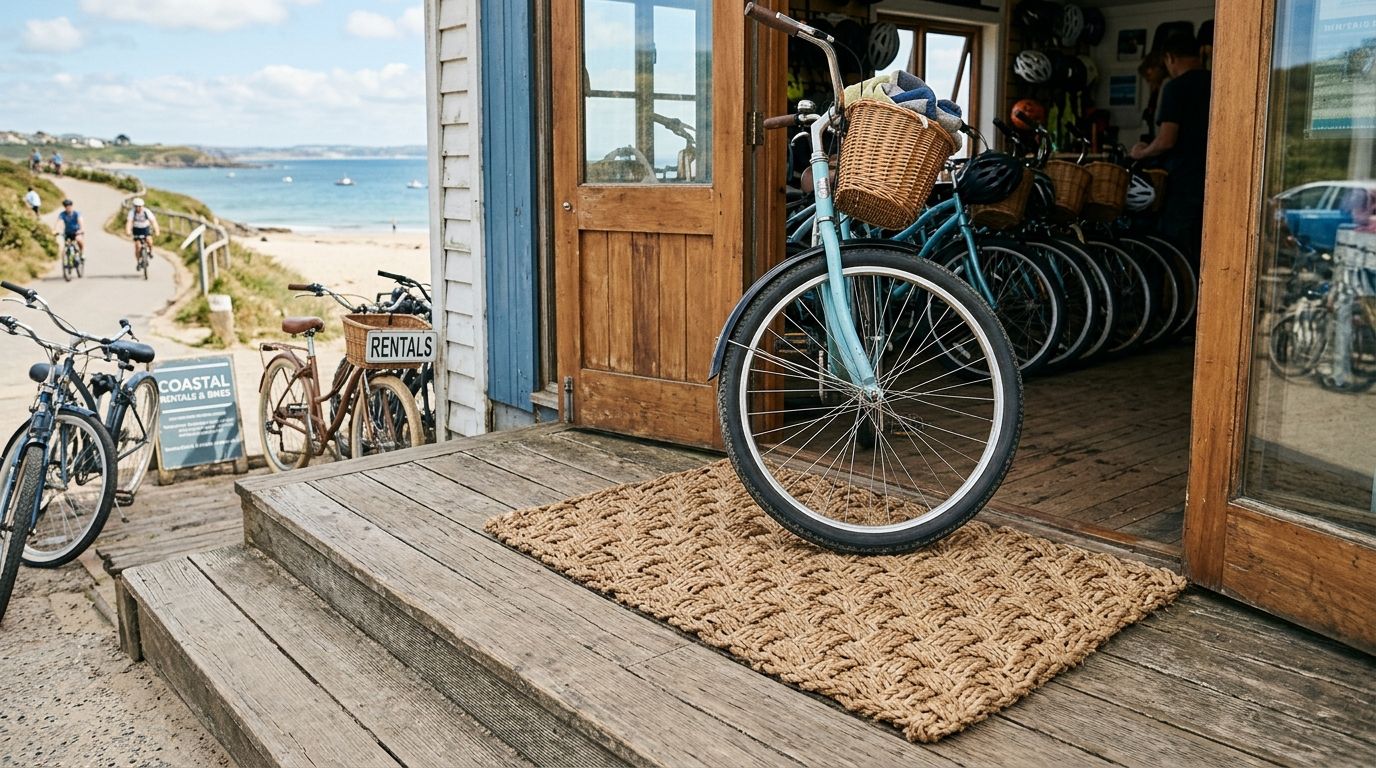
The weave decides whether the mat sheds debris or holds onto it. An open weave lets sand and spilled liquid fall through instead of pooling on the surface, which matters at an entrance where kegs get tapped and glasses get topped off all day.
A brewery mat needs to look good in photos and hide the reality of daily use. Lighter rope shows beer and mud stains faster than a darker, natural rope tone.
One narrow mat at a double-door brewery entrance leaves half the walkway uncovered, so foot traffic just steps around it onto bare concrete or wood.
A brewery entrance can't wait for a slow week to get cleaned. Sand, glass shards, and beer residue build up fast and need a quick routine, not a deep-clean schedule.
Coastal breweries deal with salt air and sudden downpours that regular mats aren't built for. A rope mat handles both better than fabric or rubber, but it still needs some seasonal attention to hold its color and shape through a Florida summer in 2026.
Get a brewery-ready rope doormat
Browse handwoven sizes and weaves built for daily coastal foot traffic.
| Option | Best for | Key limitation | Verdict |
|---|---|---|---|
| Coir doormat | Small taprooms with light indoor traffic | Breaks down fast in rain and salt air | Skip |
| Rubber-backed carpet mat | Indoor tasting rooms only | Traps moisture, grows mildew outdoors | Skip |
| Synthetic turf mat | Budget patio entries | Doesn't scrub sandy shoes clean | Wait |
| Generic braided rope mat | Occasional outdoor use | Thin rope unravels under daily brewery traffic | Hold |
| Lobster Rope Doormats with a 10-Year Guarantee | Daily brewery entrances with heavy wet-shoe traffic | Handwoven order lead time varies by weave | Buy |
A handwoven rope doormat built for daily brewery foot traffic outlasts a coir or turf mat by a wide margin, and it's the option worth waiting on for a custom weave.
“If a mat can’t survive a Saturday keg tapping and a Sunday rinse-down, it doesn’t belong at a brewery door.”
What’s the best doormat for a brewery entrance?
A handwoven lobster rope doormat is the best choice for a brewery entrance in 2026 because it drains sand and spilled beer instead of trapping it, and it holds up under daily heavy foot traffic better than coir or rubber-backed mats.
How often should a brewery replace its outdoor doormat?
A standard fabric or coir mat at a busy brewery entrance often needs replacing within a single season. A rope doormat backed by a 10-Year Guarantee is built to handle years of daily traffic without flattening out.
Do rope doormats work in rainy coastal climates?
Yes. Rope doormats dry faster than fabric mats because the open weave lets air move through the rope instead of holding water against the surface.
Can rope doormats handle spilled beer and salt air?
Rope doormats resist staining better than light-colored fabric mats, and a quick rinse routine clears spilled beer and salt residue before it sets into the fiber.
How wide should a doormat be for a brewery’s double doors?
Measure the full width of both doors plus 4-6 inches on each side so foot traffic lands on rope instead of stepping around a mat that’s too narrow.
Are rope doormats slip-resistant on wet patios?
A tightly woven rope surface gives shoes more texture to grip than a flat rubber or turf mat, which helps on wet patio tile near a brewery bar.
How do you clean a rope doormat at a busy brewery?
Shake it out before opening and after closing, rinse with a hose during slow midweek hours, and spot-treat beer stains before they set in.
Is a rope doormat better than a rubber mat for outdoor brewery use?
Rope holds up better outdoors because it doesn’t trap moisture against a rubber backing, which is what causes rubber mats to mildew at open-air entrances.
Most coastal breweries budget for one mat at the front door and forget the side entrance staff and delivery crews use all day — that door often takes more sandy, wet-shoe traffic than the customer entrance ever sees. A second, smaller rope mat at that side door saves more in cleaning time than it costs, and in 2026 it's the cheapest fix for sand tracked across a taproom floor every shift.

Doormats designed to look better, last longer, and clean easier.
Handmade lobster rope doormats crafted for outdoor durability, easy care, and a warm first impression. Designed for porches, patios, entryways, decks, boats, and RVs across the USA
Copyright © 2026 All Rights Reserved.