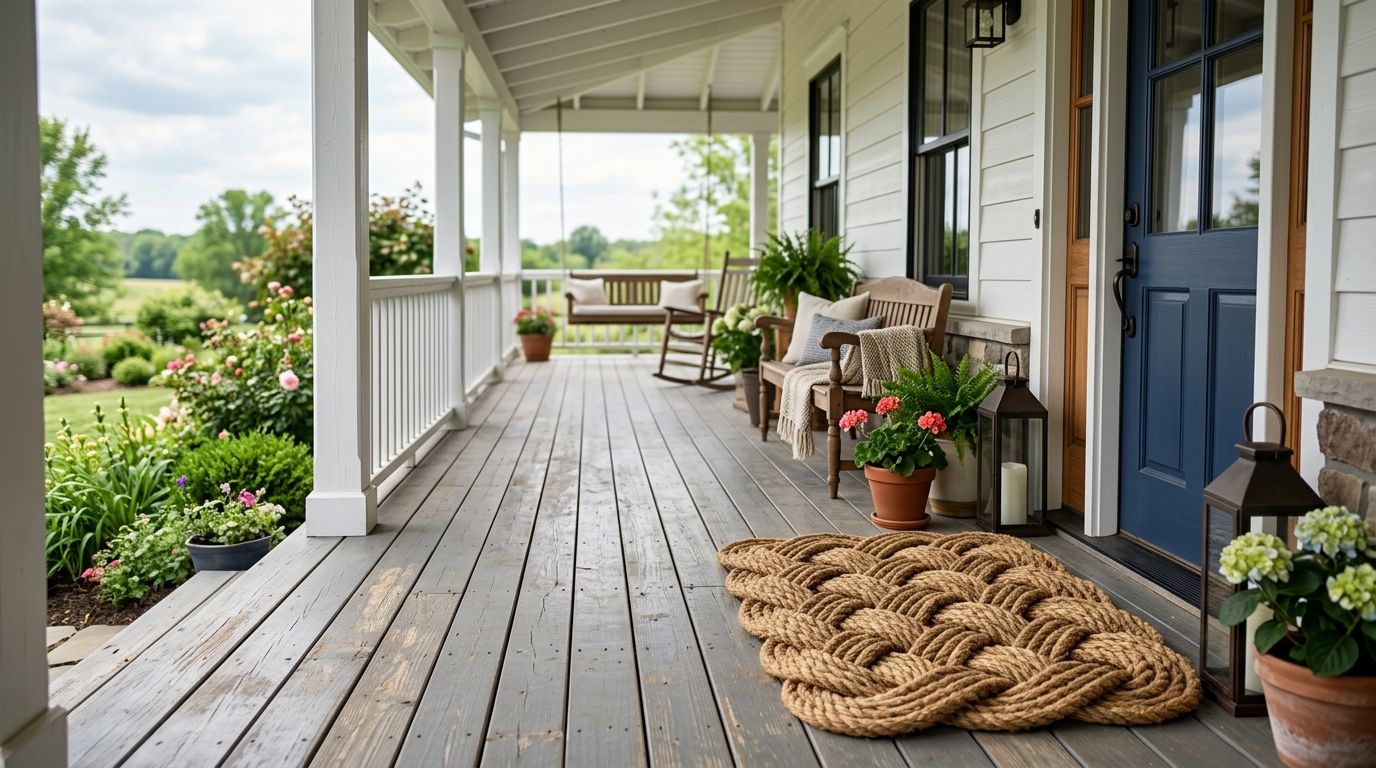
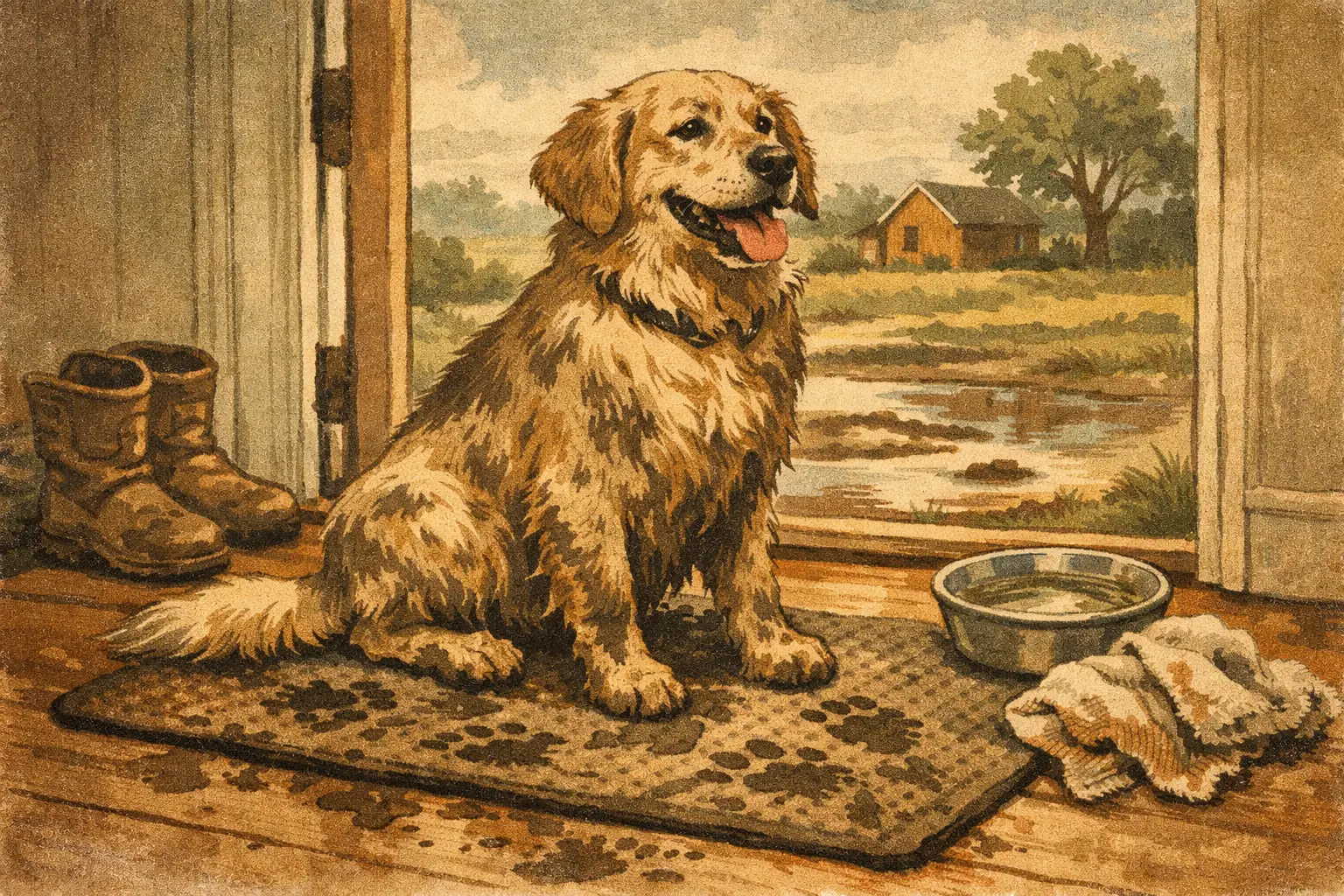
A dog can turn a freshly swept porch into a trail of wet paw prints in one quick trip outside. If you are asking what mat works for muddy dogs, the answer is not a thick, absorbent rug that stays damp for days. You need an outdoor mat that can take on mud, shed water, clean up easily, and still look welcoming at your front door.
For busy homes, beach houses, lake properties, RVs, and patios, the best muddy-dog mat is one that works with real life. It should give paws a textured surface to step across, allow moisture and debris to move through instead of collecting inside, and stand up to frequent rinsing without falling apart.
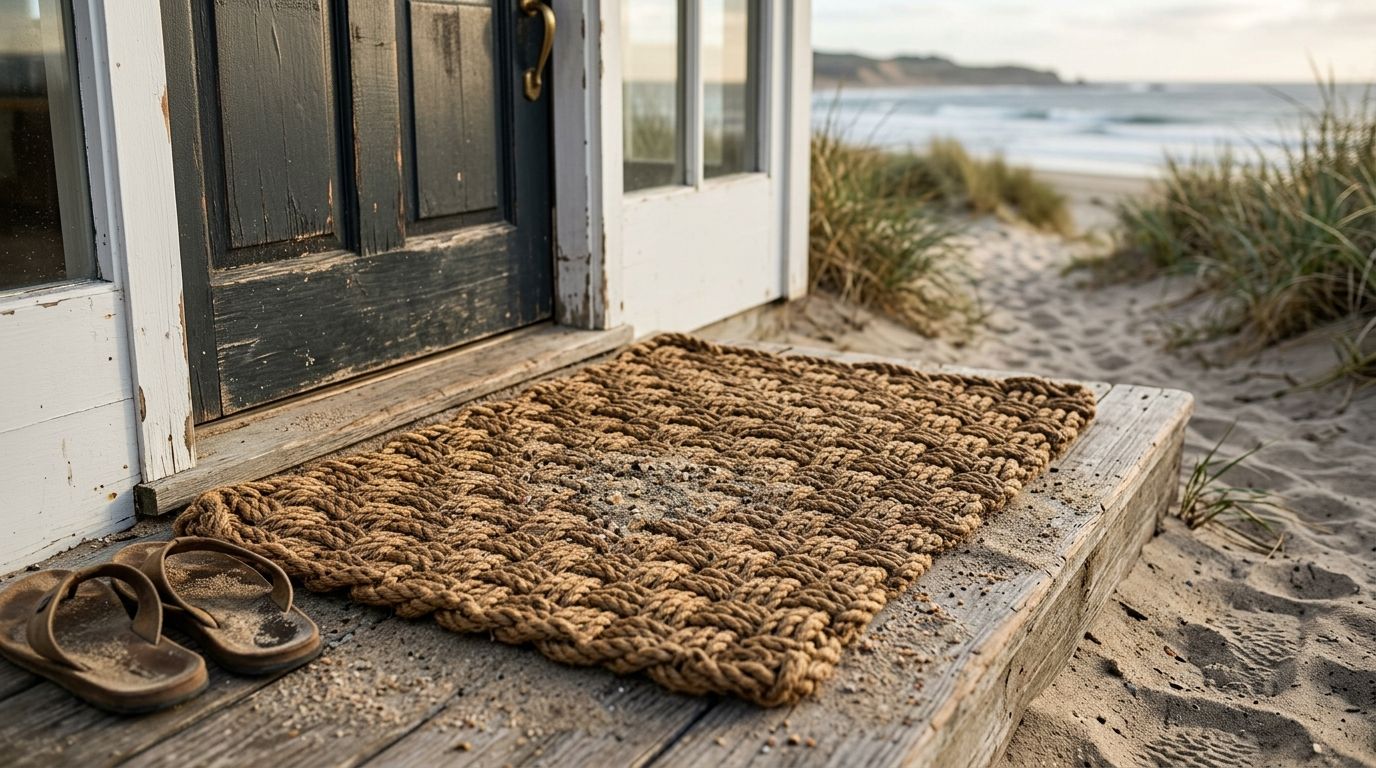
A durable, open-weave outdoor rope mat is an especially practical choice for muddy dogs. Its raised, textured construction helps loosen dirt from paws while open spaces in the weave prevent water, sand, and small debris from becoming trapped underneath your pet’s feet.
Unlike a plush doormat, an outdoor rope mat does not rely on soaking up every drop of water. That distinction matters. A mat that holds moisture can become heavy, grimy, and slow to dry, especially in humid climates or during a rainy stretch. It may also carry that damp, musty smell right to your entryway.
A well-made outdoor mat should stay useful after repeated exposure to rain, sunshine, muddy boots, wet paws, and everyday traffic. For a home with dogs, that means choosing performance first, then finding colors and a weave style that complement the porch, deck, or entry.
Texture does the work. When a dog walks across a mat with a substantial, woven surface, the mat can help knock loose clumps of dirt and grass before those paws reach the floor inside. An open weave also gives mud somewhere to go instead of creating a packed-down layer on top.
This is why very flat mats are often disappointing for muddy pets. They may look neat at first, but they provide little scraping action and can show every paw print. A deeper, handwoven texture is better suited to a household where the dog comes in from the yard, the dock, or a rainy walk several times a day.
Natural coir mats are common at front doors, but they are not always the easiest answer for wet, muddy conditions. Coir can shed, hold moisture, and break down faster when it is constantly exposed to rain and repeated cleaning. Fabric-backed mats can have similar issues, particularly if the backing traps water against the porch surface.
A synthetic rope mat designed for outdoor use is a stronger fit when wet paws are part of the routine. It resists moisture, does not need to be babied, and can be rinsed when the mess is more than a quick shake can handle. The goal is not to find a mat that never gets dirty. The goal is to find one that is easy to get clean again.
Even the toughest material is not a good choice if it shifts every time your dog runs toward the door. Look for a mat with enough weight and structure to stay put on a level surface. A solid, handwoven construction helps it lie flat and keeps the entry looking orderly.
If your porch gets strong wind or your dog is large and enthusiastic, size and placement matter even more. A bigger mat has more surface area to catch debris and is less likely to get pushed aside by busy paws.
A mat should be wide enough that your dog actually steps on it, not hops over it. For a standard front entry, a larger rectangle gives pets room to take two or three steps before crossing the threshold. That extra space makes a noticeable difference when paws are wet or muddy.
For a back door used for yard breaks, consider the traffic pattern. Put the mat where the dog naturally lands after coming through the door, not simply centered beneath the door itself. At a sliding door, mudroom entrance, or garage entry, a longer runner-style mat can create a more useful cleanup zone.
It also helps to think in layers. Place a durable outdoor mat just outside the door to remove the worst dirt, then use a washable indoor mat or towel station inside for the remaining moisture. The outdoor mat does the heavy work, while the inside layer protects hard floors and rugs from the last few damp prints.
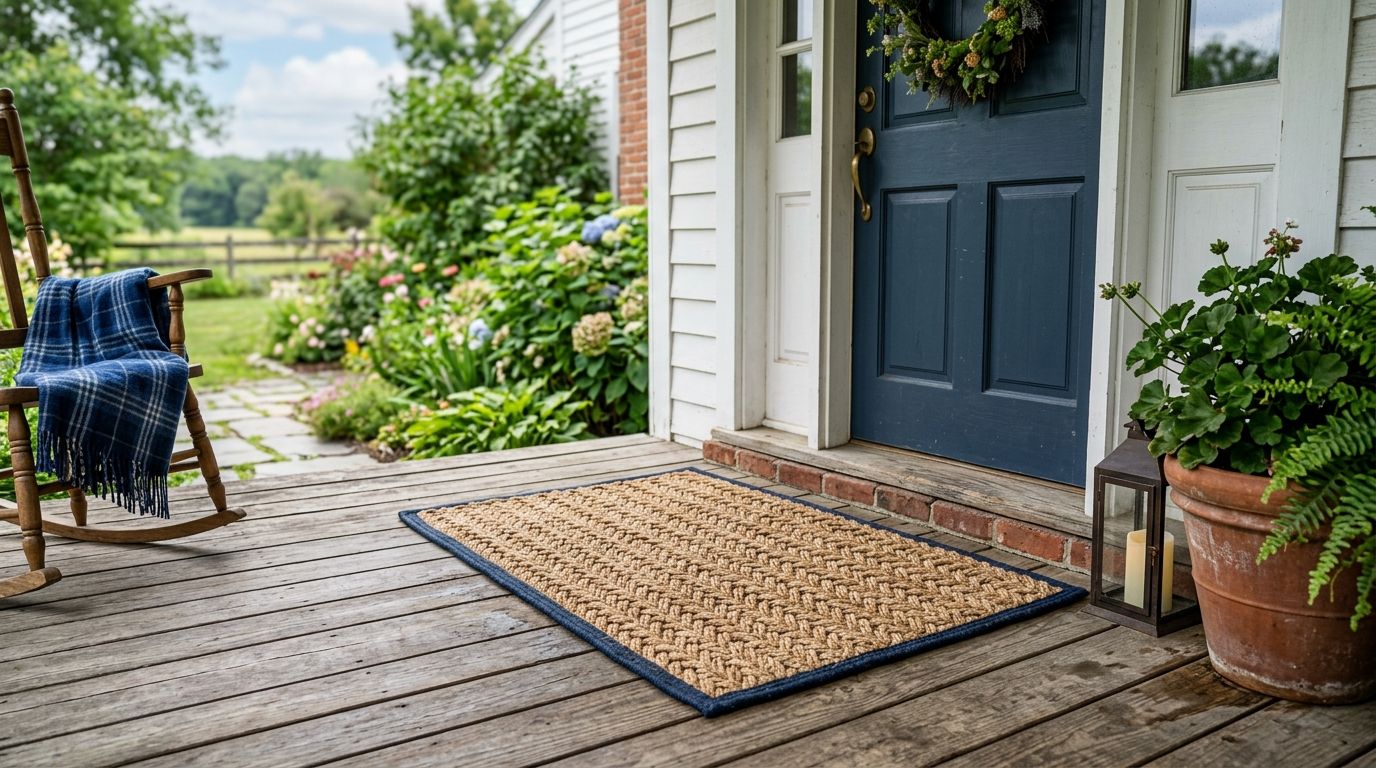
A muddy-dog mat needs to perform, but it still sets the tone for your entry. Deep navy, charcoal, black, brown, and mixed-color weaves tend to be forgiving between cleanings. Variegated color combinations can visually soften the appearance of a little sand or soil, which is helpful at a beach home or near a heavily used yard.
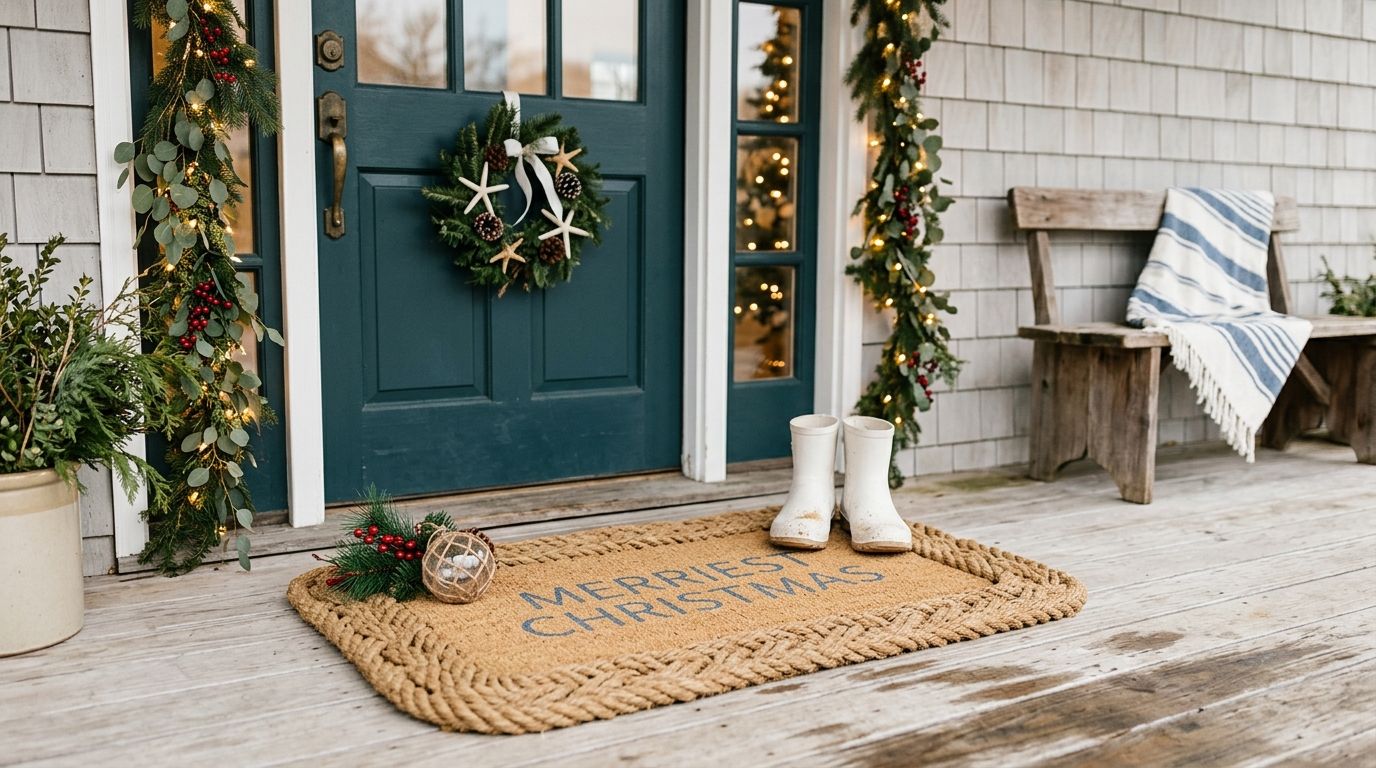
That does not mean every pet owner needs the darkest mat available. Bright coastal colors can still be practical when they are woven with contrast. A patterned or multi-color design hides everyday debris better than a single pale shade, while bringing a clean coastal look to the porch.
At Lobster Rope Doormats of Florida, handwoven rope designs offer that balance of hardworking outdoor performance and a warm first impression. The right mat can look intentional at the front door while being ready for the dog that just raced through a puddle.
The best maintenance routine is simple enough that you will actually keep up with it. Let thick mud dry when possible, then shake the mat out or lift it and tap it against a hard surface. Dry dirt and grass are far easier to remove than a wet layer that has been rubbed into the weave.
When the mat needs more attention, rinse it with a garden hose. Water can carry loosened dirt through an open weave rather than forcing you to scrub deep into a fabric pile. For stubborn spots, use mild soap, work it in gently with a soft brush if needed, and rinse thoroughly.
After cleaning, lay the mat flat or hang it where air can circulate. Quick drying is a major advantage at a busy entry because the mat can return to service without becoming a damp obstacle underfoot. Avoid harsh chemicals that may affect color or material over time, and skip putting a heavy outdoor mat in a household washer unless its care instructions specifically allow it.
The most common mistake is buying a soft indoor doormat for an exterior door. These mats may feel cozy under bare feet, but many are made to catch dust, not handle daily mud and rain. They often become saturated, flatten quickly, and require more washing than most households want to do.
Another mistake is choosing a mat that is too small. A small decorative mat can look nice, yet it gives a large dog one step at most. Muddy paws need a practical landing area. Going up one size is often the simplest upgrade for a frequently used door.
Finally, do not place a moisture-holding mat directly on a surface that needs airflow. On wood decks, painted porches, or boat surfaces, trapped moisture can be a concern. A breathable, quick-draining construction supports a cleaner entry without creating a wet layer that lingers underneath.
No doormat will replace wiping paws after a truly messy day, especially with a long-haired dog or heavy clay mud. But the right outdoor mat reduces how much dirt makes it inside, cuts down on constant sweeping, and keeps the entry looking cared for between cleanings.
Choose a mat built for water, dirt, sun, and daily use, then give it enough room to do its job. Your dog still gets to enjoy the yard, and your home gets a cleaner, more welcoming place to come back to.

Doormats designed to look better, last longer, and clean easier.

Handmade lobster rope doormats crafted for outdoor durability, easy care, and a warm first impression. Designed for porches, patios, entryways, decks, boats, and RVs across the USA
Copyright © 2026 All Rights Reserved.