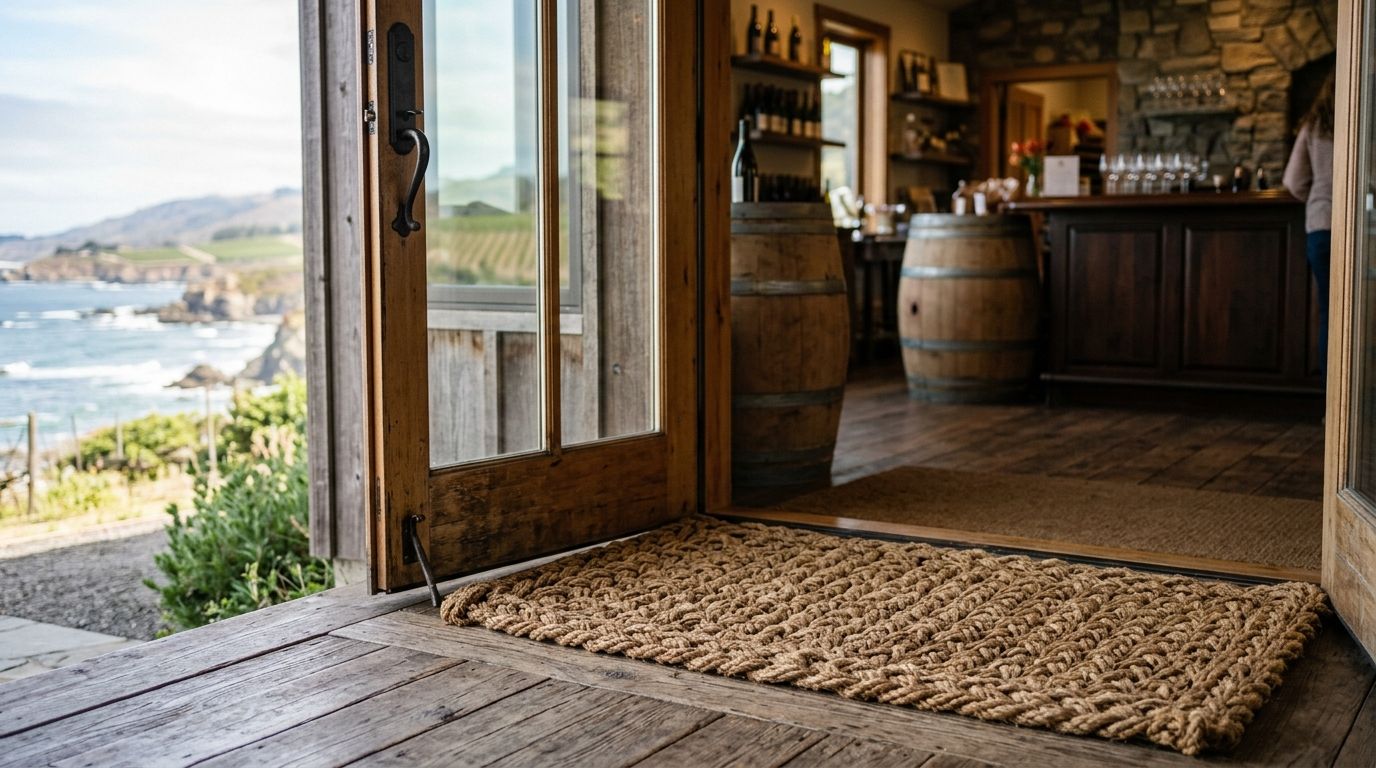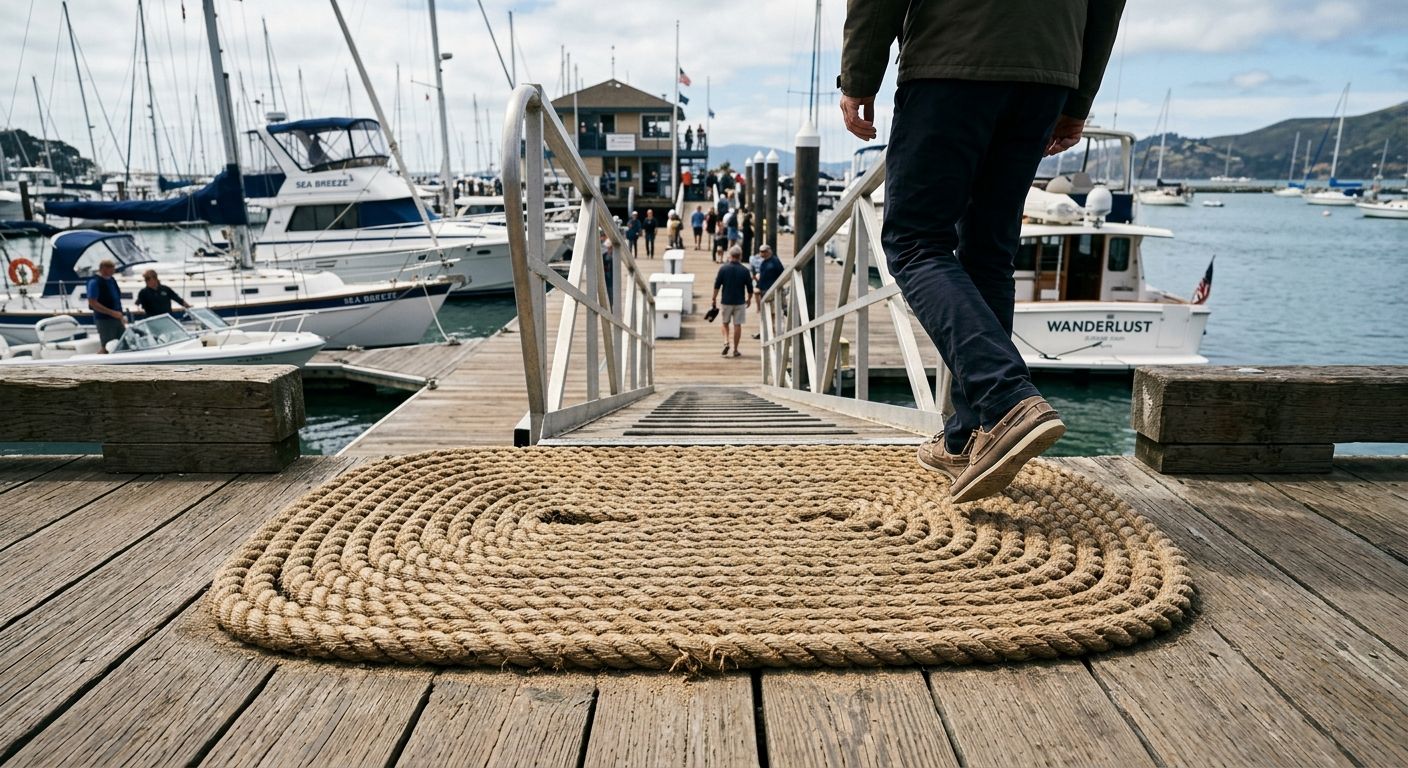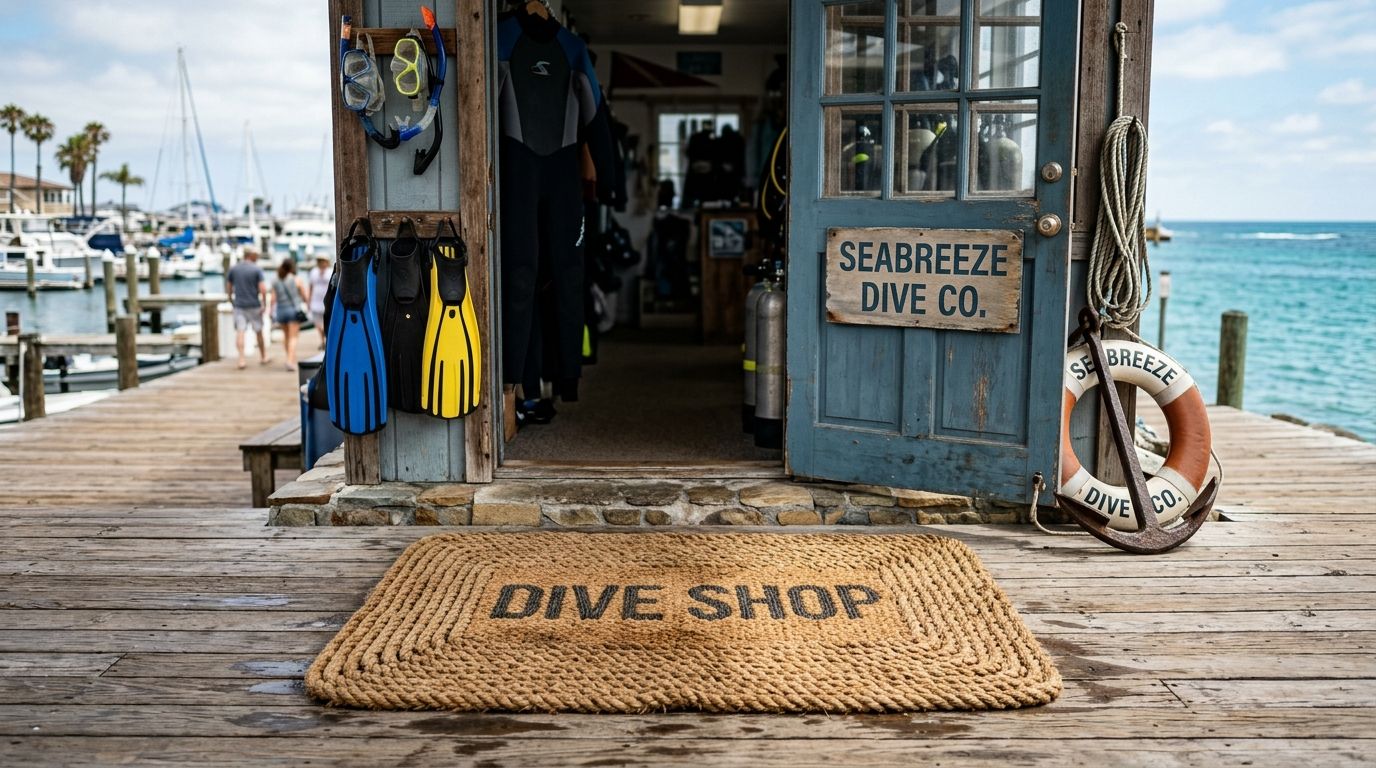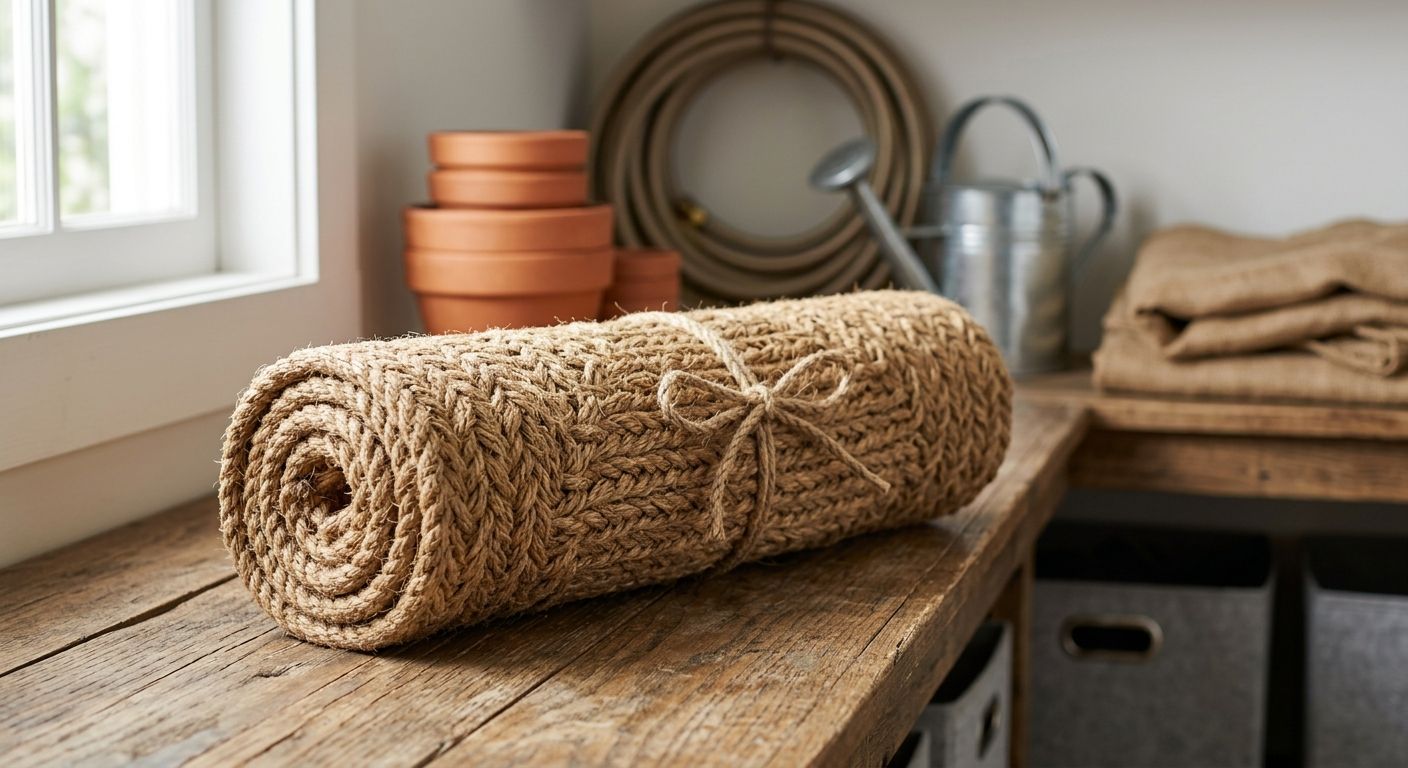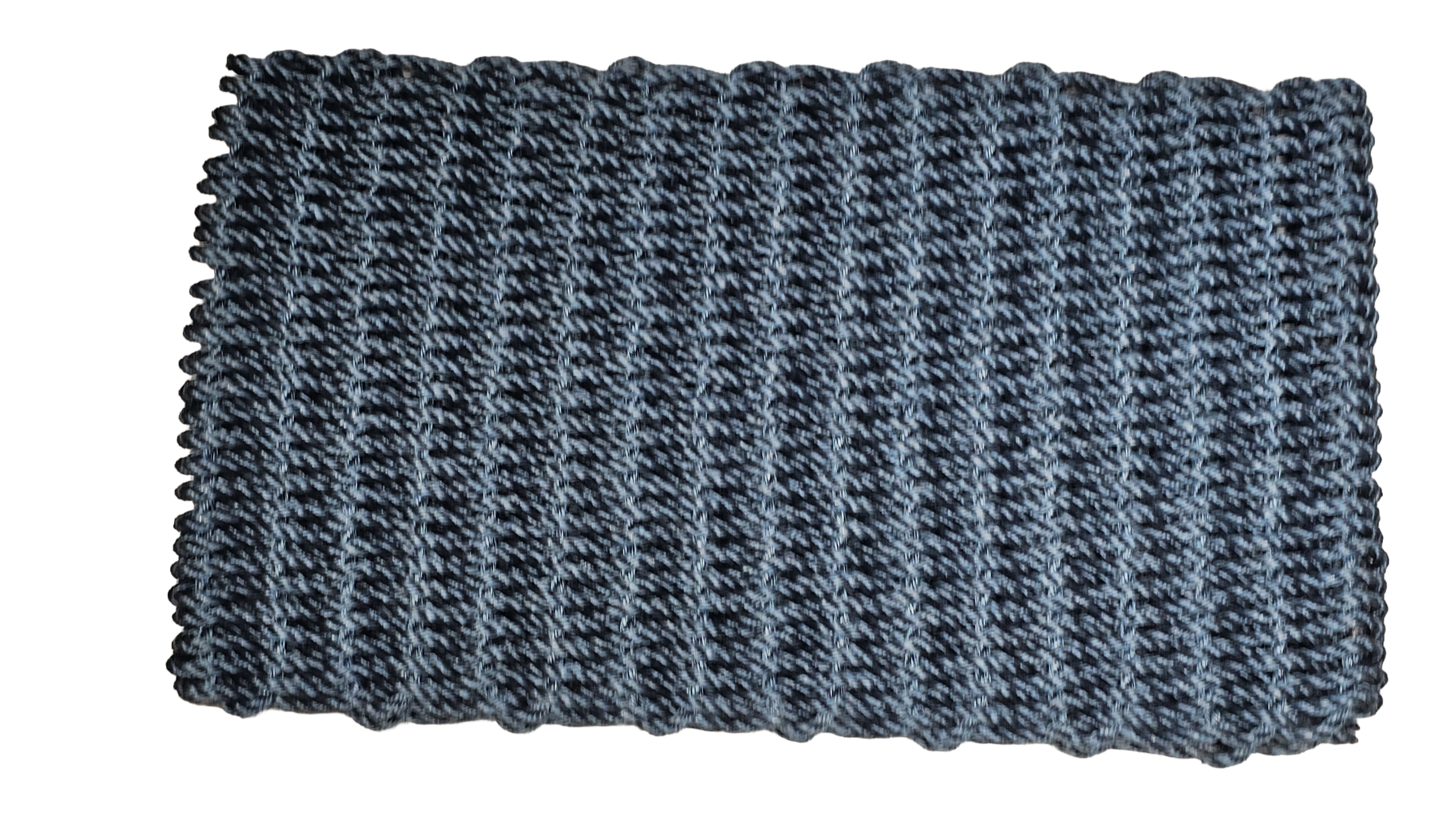
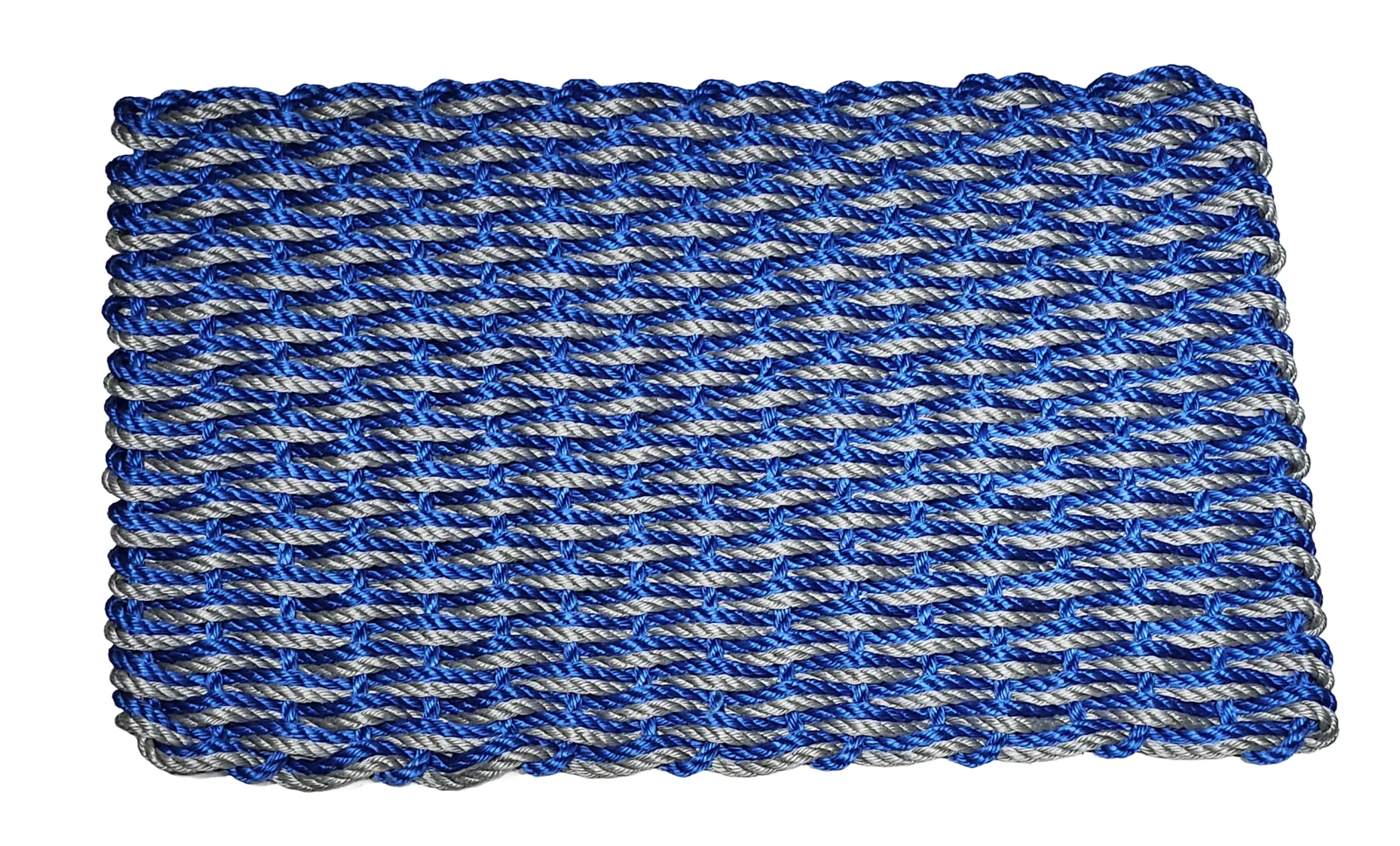

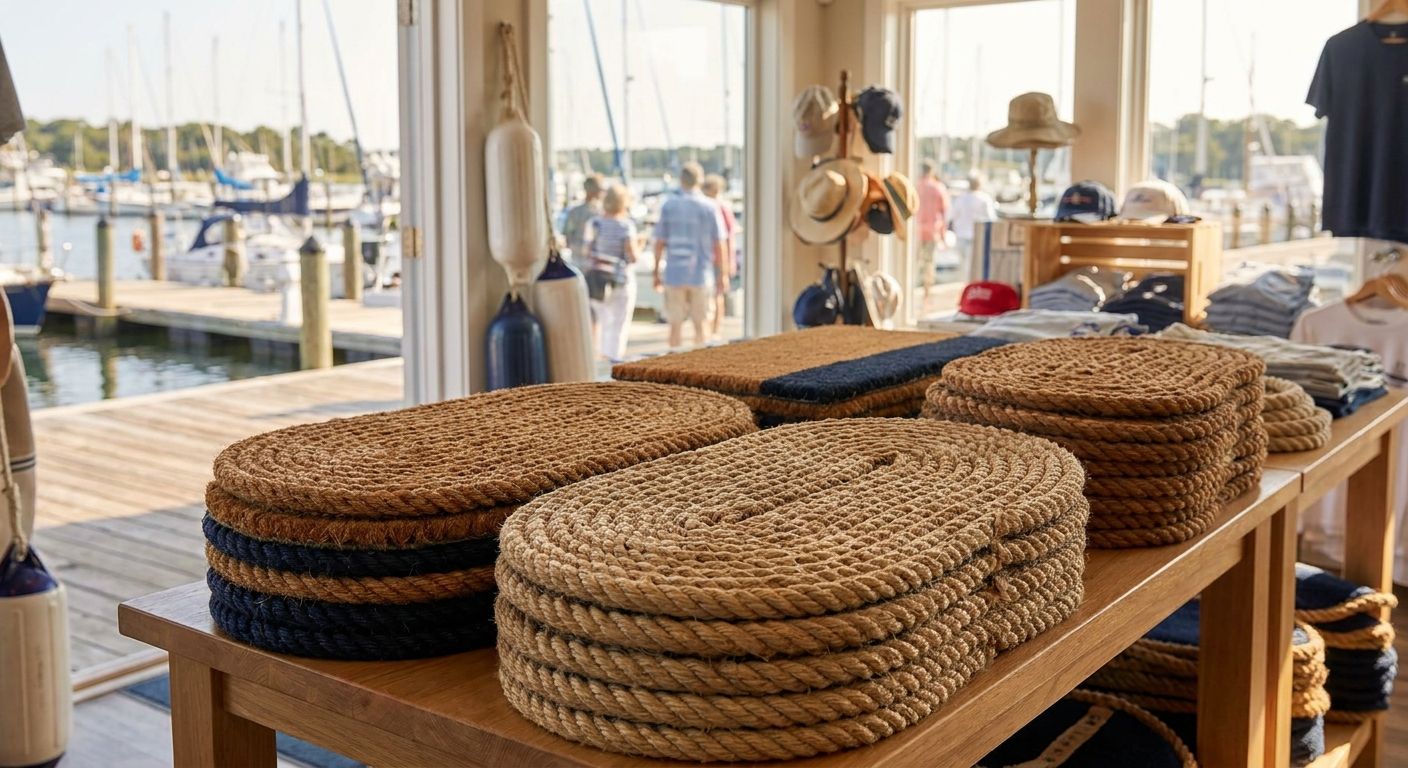
Rope doormats for marina shops are handmade lobster rope entry mats built to handle sandy, wet-soled foot traffic at ships' stores, dock shops, and marina retail counters, with the goal of protecting flooring and keeping the entrance looking sharp without daily mopping. A marina shop entrance takes different abuse than a beach house porch — more feet per hour, more salt spray blowing off the docks, more tackle and gear scraping through the door — so sizing, weave, and placement all need to shift to match.
A marina shop entrance is a chokepoint. Every customer walking in from the slips has wet deck shoes, sand in their treads, and sometimes a coating of boat wax or fuel residue on their soles. That traffic hits the same six square feet of flooring dozens of times a day during season, and a mat that can't shed water and grit fast enough just pushes the mess ten feet further inside.
Nautical doormats for boat marinas exist because standard indoor entry mats mat down, mold, and hold water against the door threshold within a season near saltwater. A lobster rope doormat is woven from the same rope style used on working lobster boats — thick, gapped, and built to let sand and water fall through instead of soaking in. For a retail shop where the floor behind the mat is the merchandise display, that difference shows up in the cleaning schedule and the flooring budget.
Measure before you order. A single-door retail entrance needs a mat sized to the door plus the natural side-step customers take when carrying gear or a cooler.
Weave tightness decides how much grit a mat traps versus how much it lets fall through to be swept later. Marina shops do better with an open, gapped weave than a dense pile.
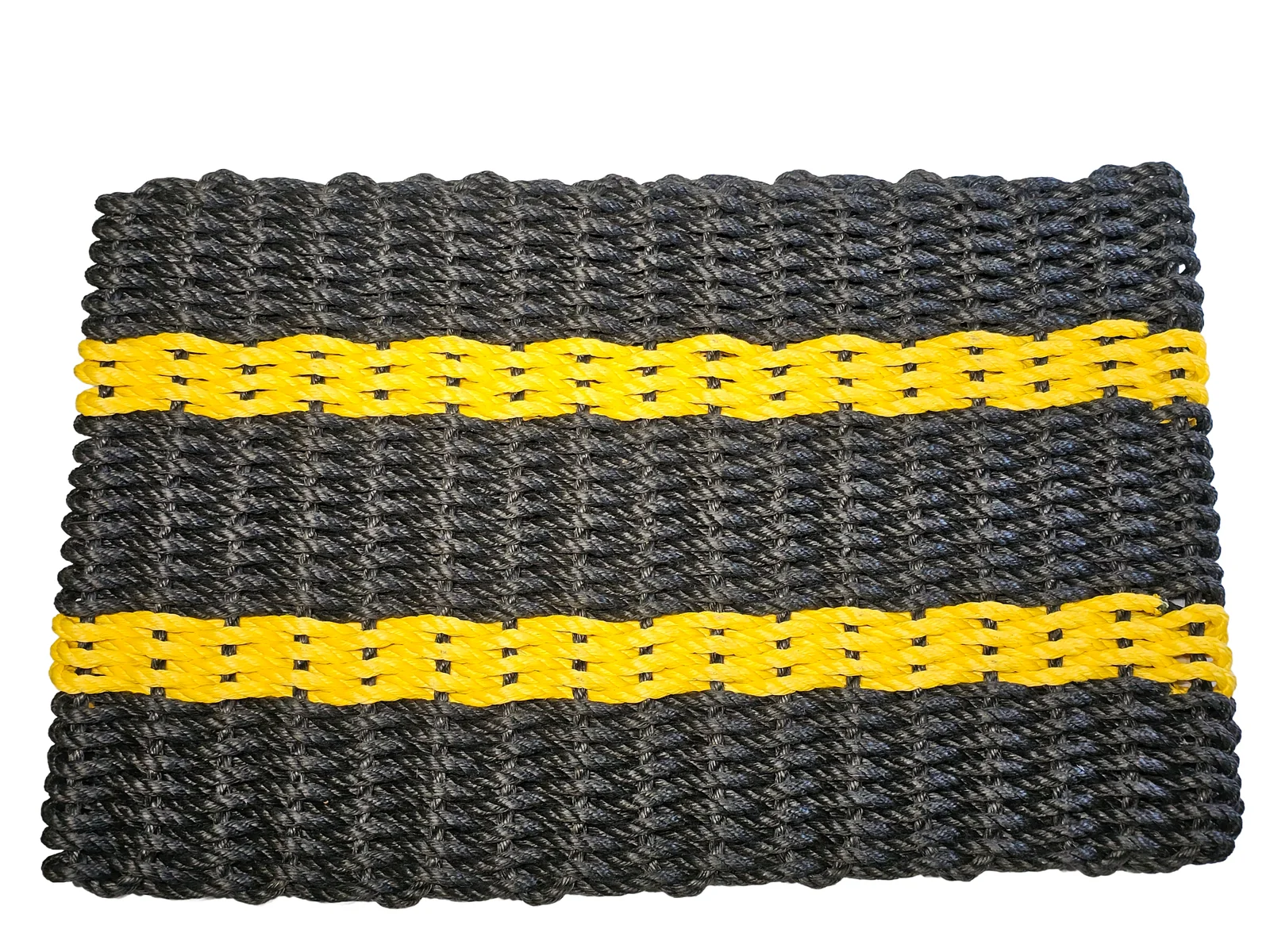
Color is functional here, not just decorative. Dark stripes hide oil and rust stains between cleanings better than pale solids, and high-visibility colors mark the entrance for customers walking up from the slips at dusk.
Salt air degrades most entry mat materials faster than fresh-air locations, corroding metal grommets and breaking down synthetic backing. How to protect a rope doormat from salt water covers the maintenance side; placement handles the rest.
Open marina entrances catch gusts that push loose mats into the doorway or off the porch entirely. A mat that slides becomes a trip hazard, which matters more at a retail counter than a private porch.
Retail shops can't close for a deep clean the way a private residence can, so cleaning has to happen on a schedule that doesn't interrupt business hours. How to clean a lobster rope doormat lays out the shake-and-rinse routine in more detail.
A worn mat with curled edges or bare patches is a trip hazard in a retail setting, and it looks worse to customers than no mat at all. Plan the swap before the mat fails, not after a complaint or a fall.
"If the mat can't handle forty soaked, sandy footsteps a day, it doesn't belong at a marina shop entrance."
| Option | Best for | Starting price | Key limitation |
|---|---|---|---|
| Rubber-backed coir mat | Low-budget, low-traffic side doors | not specified in most retail listings | Backing traps moisture, breaks down fast in salt air — Skip for a marina front entrance |
| Vinyl loop scraper mat | Indoor mall-style retail, not dockside | not specified | Poor sand drop-through, mats down under heavy boot traffic — Hold unless it's a secondary interior mat |
| Lobster rope doormat (Ropemats Florida) | Marina shops, dock stores, ships' stores | $49.99–$69.99 | Handwashing/rinsing needed on a schedule, not a wipe-and-go mat — Buy for salt-air, sandy-foot entrances |
| No mat / bare threshold | Nothing recommended | $0 | Sand and salt track directly onto retail flooring — Skip |
What’s the best doormat for a marina retail shop entrance?
A lobster rope doormat with an open weave is the best fit for a marina retail shop in 2026 because it lets sand and salt water drop through instead of trapping them against the flooring. Rubber-backed or loop-pile mats hold moisture and break down faster in salt air.
How much does a rope doormat for a marina shop cost?
A lobster rope doormat from Ropemats Florida runs $49.99 to $69.99 depending on size and color pattern. That price includes a 10-Year Replacement Guarantee, which lowers the cost per year for a shop that keeps the same mat in place through multiple seasons.
Is a rope doormat better than a coir mat for a dock store?
Yes, a rope doormat outperforms a coir mat at a dock store because coir backing holds water and mildews faster in salt air. Rope weaves are open enough for sand and water to fall through rather than sitting on the surface.
How often should a marina shop clean its entry mat?
Shake out loose sand every morning before opening and rinse the mat weekly during peak boating season. A monthly deep soak with mild soap keeps salt residue from building up in the rope fibers.
Do rope doormats need to be anchored at a marina entrance?
Yes, open dockside entrances catch enough wind that an unanchored mat can slide into the doorway or blow off a porch. A sandbagged corner or a non-slip pad underneath solves most wind-lift problems.
What size doormat does a marina retail shop need?
Measure the doorway width and add 10 to 12 inches on each side to catch side-stepping customers, with at least 3 feet of walking depth. Shops with heavier peak-hour traffic should size up further.
Can a rope doormat handle boat oil and fuel residue?
A darker rope color hides oil and rust stains better between cleanings than a pale solid mat, though any residue should still be rinsed off during the regular cleaning schedule. No entry mat is stain-proof against heavy fuel spills.
Most marina shops underestimate how much a mat's weight alone does the anchoring work. A lightweight synthetic mat needs sandbags or hardware to stay put in dock-level wind; a dense, handmade lobster rope doormat often stays in place from its own weight alone, which is one less maintenance task on a retail schedule that's already full during season.