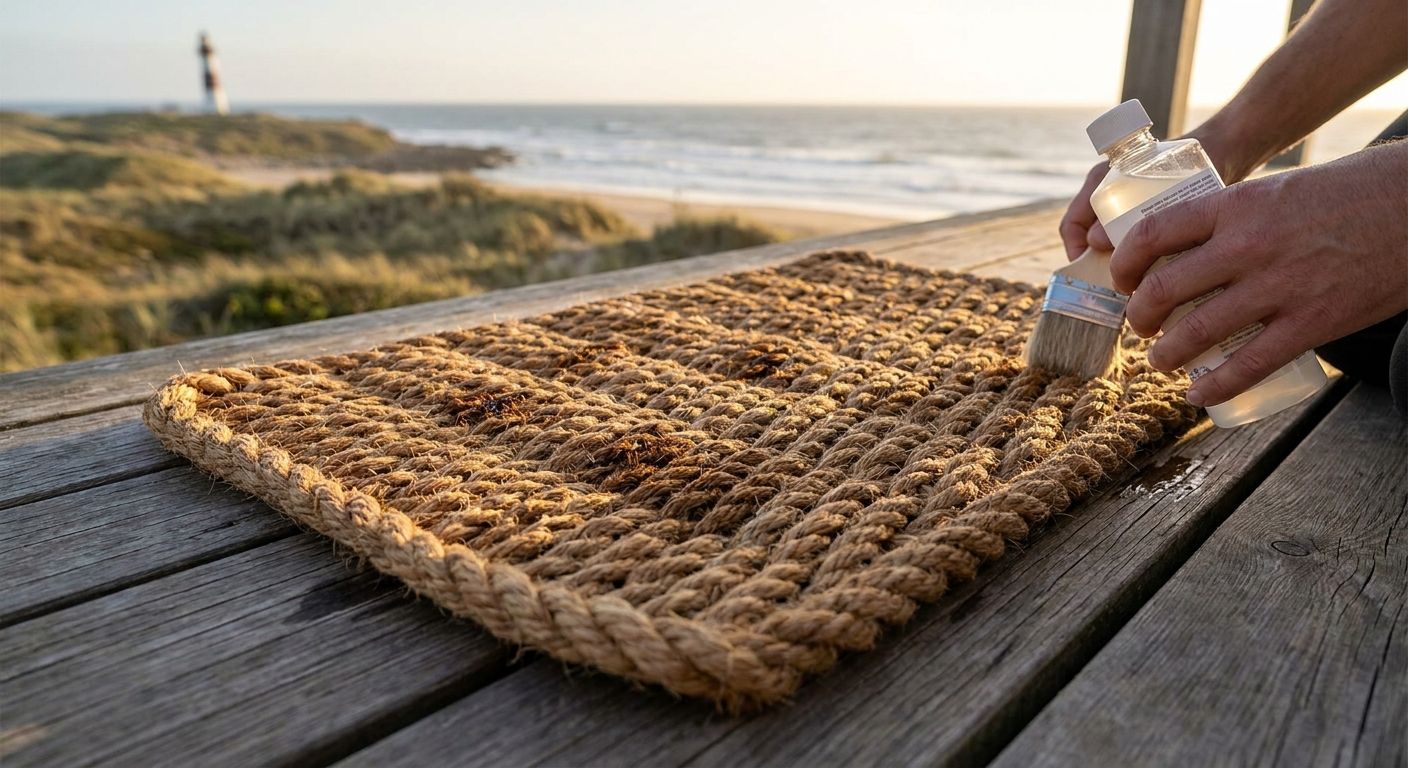
A lobster rope doormat gets mildew when moisture stays trapped in the fiber core longer than it takes to evaporate — usually because the mat sits on a surface that won't drain, or it never gets a full sun-dry between rinses. Fix the airflow and drying cycle, and you fix the mildew, no matter how much salt air or rain the entry sees.
Mildew doesn't ruin a rope doormat overnight — it builds in the fiber core over repeated cycles of wetting without full drying. By the time you see a gray-green film on the rope, spores have already worked into strands that a surface rinse won't reach.
Coastal entries make this worse than inland ones. Salt air holds humidity longer than dry-climate air, ocean spray and pool splash-off keep the mat damp between rains, and covered porches that block direct sun slow evaporation to a crawl. None of that means you need a different product — it means you need a drying routine that matches the climate the mat actually lives in.
The fix is a five-step routine, not a one-time treatment. Skip step 3 and the rest barely matters.
| Step | Frequency | Why it prevents mildew |
|---|---|---|
| Shake out debris | Daily | Grit holds moisture against rope fibers |
| Hose rinse | Weekly | Removes salt and residue that feed mold |
| Sun-dry flat | After every wetting | Evaporates moisture trapped in the fiber core |
| Elevate off concrete/vinyl | Ongoing | Stops water from wicking up from underneath |
An open, looser weave lets air pass straight through the rope, which is why it dries fastest after a rinse or a rainstorm. If your entry gets afternoon sun and moderate foot traffic, an open weave is the lower-maintenance choice — less drying time means fewer windows for mildew to take hold. Verdict: Buy for sunny, exposed entries where drying speed matters more than a dense, plush look.
A denser weave feels more substantial underfoot and holds its shape longer under heavy traffic, but it also holds water longer. In a shaded or covered entry, a tight weave can stay damp for a full day or more after a hard rain, which is exactly the window mildew needs. Verdict: Hold for shaded porches unless you're committed to the elevate-and-rotate routine above; Buy for sunny entries where drying isn't a concern.
If the surface under the mat is the real problem, the fix sometimes has nothing to do with the mat itself. Homeowners dealing with a chronically damp entry often solve it by rethinking the whole threshold, the way a moisture-resistant tile entryway removes standing water at the source instead of managing it after the fact.
Salt water itself doesn't grow mold, but it holds ambient humidity against the rope longer than fresh water does, which extends the drying window mildew needs. Boat docks and beachfront entries see this most, since spray hits the mat daily without a full rinse cycle in between.
A pressure washer on a low setting can clean a lobster rope doormat, but high pressure held too close can fray the twist and loosen the weave over 2026's heavier storm season. A garden hose on a firm spray does the same job with none of the risk.
If mildew has worked past the surface and into the fiber core, no amount of rinsing brings it back — replace the mat rather than keep treating it. A mat backed by a 10-year replacement guarantee removes the guesswork on when "treat it" turns into "replace it."
Shop mildew-resistant rope doormats
Handwoven weaves built for salt air, rain, and daily rinse-and-dry routines.
What’s the best way to prevent mildew rope doormat buildup year-round?
Rinse the mat weekly and sun-dry it flat for at least 4 hours after every wetting. Elevating it off concrete or vinyl stops the second source of trapped moisture that rinsing alone won’t fix.
Is a lobster rope doormat better than a coir mat for mildew resistance?
Lobster rope resists mildew better than coir because the twisted polypropylene rope doesn’t absorb water into a fibrous mat the way coir husks do. Coir also breaks down faster once mold sets in, while rope can usually be rinsed and dried back to normal.
How much sun does a rope doormat need to dry fully?
A rope doormat needs at least 4 hours of direct sun, laid flat, to dry through the fiber core. Shaded or covered porches can push that to 24 hours or more.
Can you machine wash a coastal rope doormat?
Most lobster rope doormats are built for hose rinsing and sun drying, not machine washing, since the twist and backing aren’t designed for a washer drum. A weekly hose rinse plus a monthly mild-soap scrub handles routine cleaning without that risk.
Does elevating a doormat actually stop mildew?
Yes — elevating a doormat off concrete or vinyl lets air move underneath instead of trapping runoff against the rope’s underside. This one change often does more than a stronger cleaner would.
Why does my rope doormat smell musty even after rinsing?
A musty smell after rinsing usually means the mat never fully dried between uses, so mildew is developing inside the fiber core rather than on the surface. Sun-drying flat for a full 4-plus-hour cycle usually resolves it within a week or two.
Are darker rope doormats more prone to mildew?
Color doesn’t cause mildew, but darker weaves can mask early mildew spotting longer than lighter colors, delaying treatment. The drying routine matters far more than the dye.
Most mildew complaints trace back to residue, not rainwater — sunscreen, pool chemicals, and dish soap left in the rope from rinsed-off feet feed mold faster than plain water ever does. A quick hose rinse after beach days and pool afternoons does more for mildew prevention in 2026 than any treatment applied after the fact.

Doormats designed to look better, last longer, and clean easier.
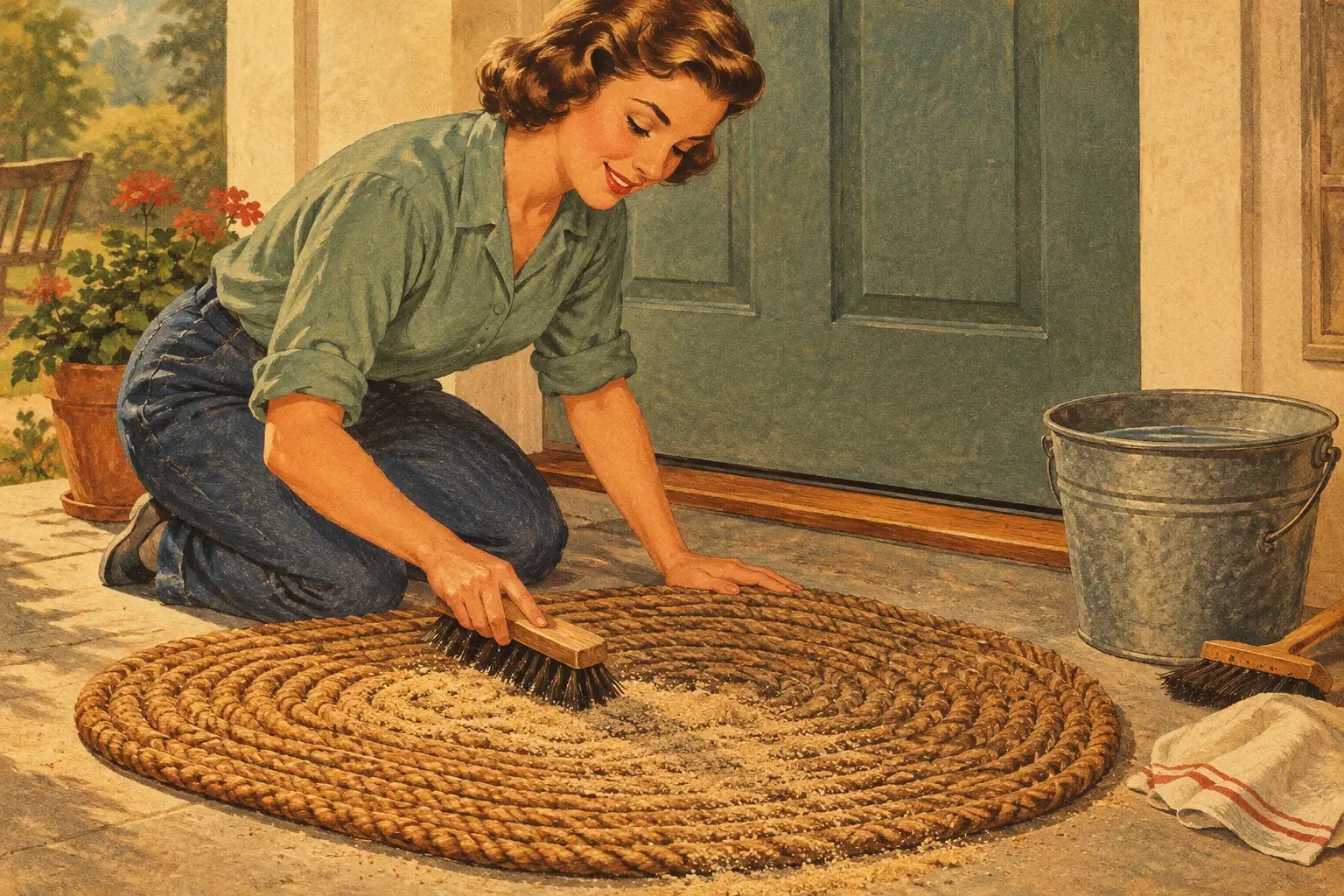
Handmade lobster rope doormats crafted for outdoor durability, easy care, and a warm first impression. Designed for porches, patios, entryways, decks, boats, and RVs across the USA
Copyright © 2026 All Rights Reserved.