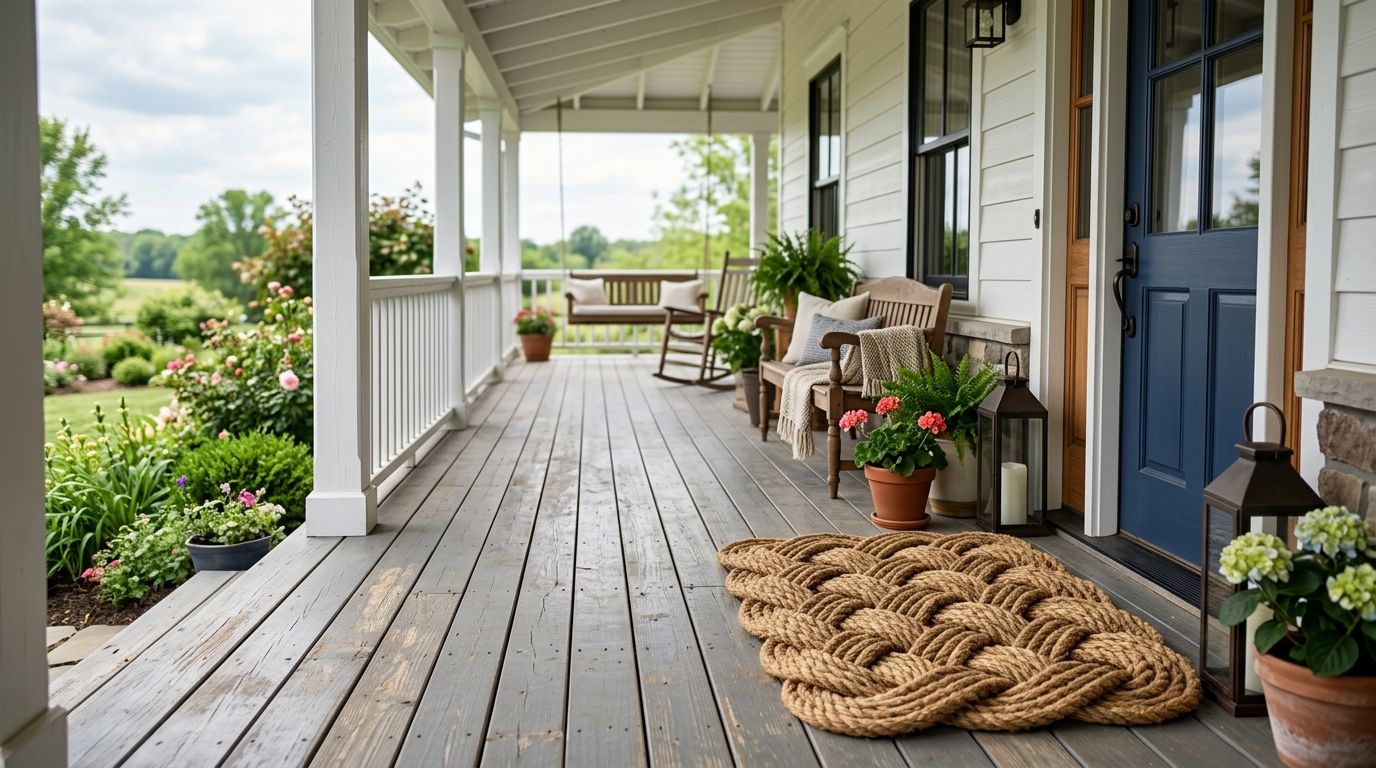
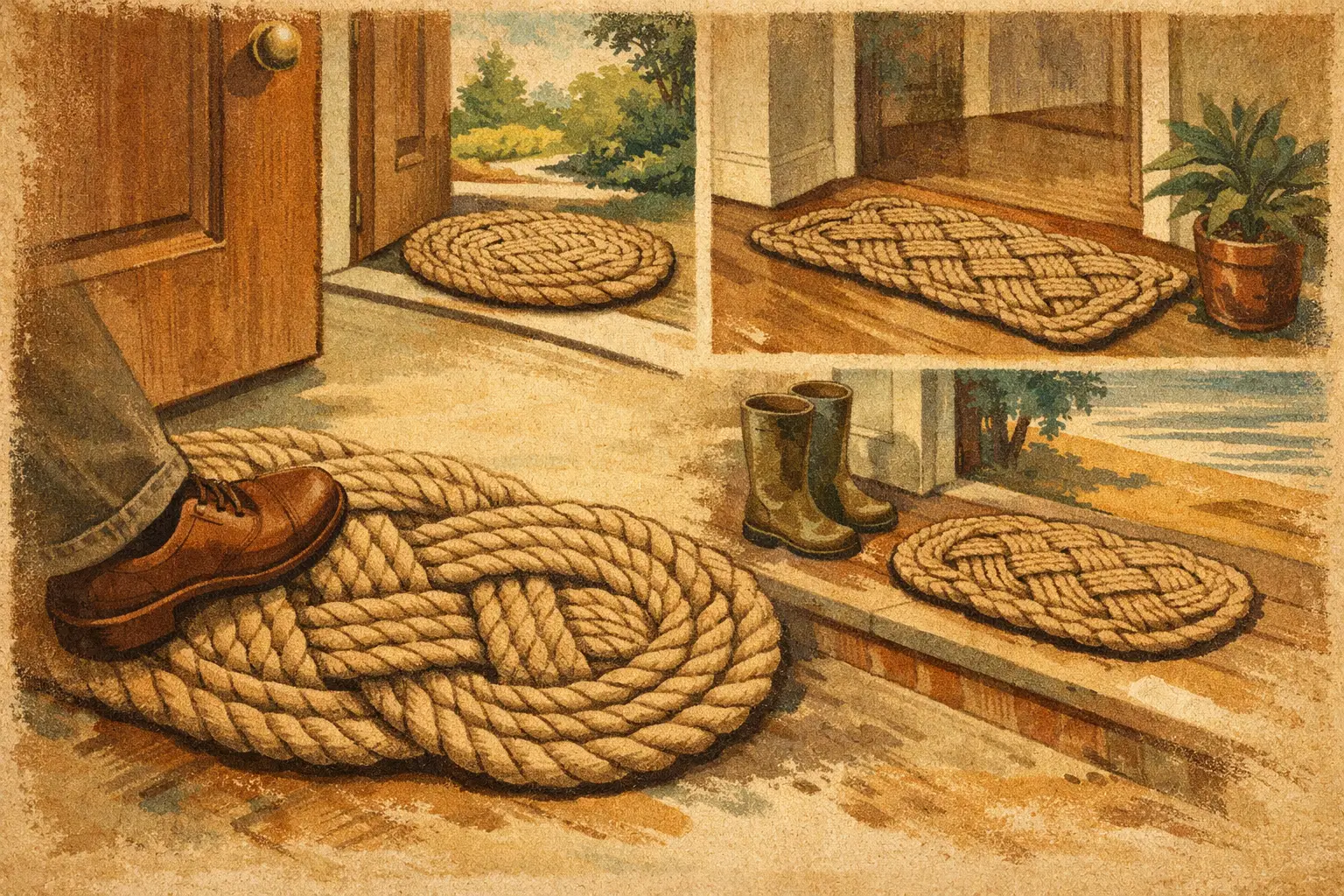
A doormat that looks too small can make a wide front porch feel unfinished. One that is too deep can crowd a door swing or create a tripping edge. This guide to rope mat sizes helps you choose coverage that feels intentional while giving your entry the durable, easy-clean performance real outdoor spaces need.
It is tempting to replace a worn-out mat with the same dimensions. That works only if the old mat actually fit the entry. Before choosing a new rope mat, measure the usable area in front of the door, including the clear space needed for the door to open fully.
For a front door, measure the width of the door itself, then look at the full visual width of the entry. A mat should generally feel substantial enough to anchor the doorway rather than appear like a small rectangle placed in the middle of a large porch. At the same time, leave room around the mat so rainwater can drain and the porch still looks open.
Depth matters just as much. Measure from the threshold outward, stopping before stairs, a porch edge, furniture, or a change in flooring. If the door opens outward, confirm that the mat will not interfere with it. Most residential doors open inward, but screened doors and storm doors often create a different clearance situation.
Rope doormats come in several formats because an RV step, a single front door, and a double-door entry do not need the same footprint. The right choice depends on traffic, available space, and the look you want to create.
A smaller mat is a practical fit for narrow apartment-style entries, side doors, garage service doors, boat cabins, and RVs. These areas usually have limited standing room, so extra depth can become more of a problem than a benefit.
For a standard single door in a tight space, choose a mat that covers the main stepping area without reaching wall to wall. A compact size can still deliver a clean coastal look, especially when its color pattern complements the door, siding, or deck finish. The key is making sure guests can step fully onto it as they enter.
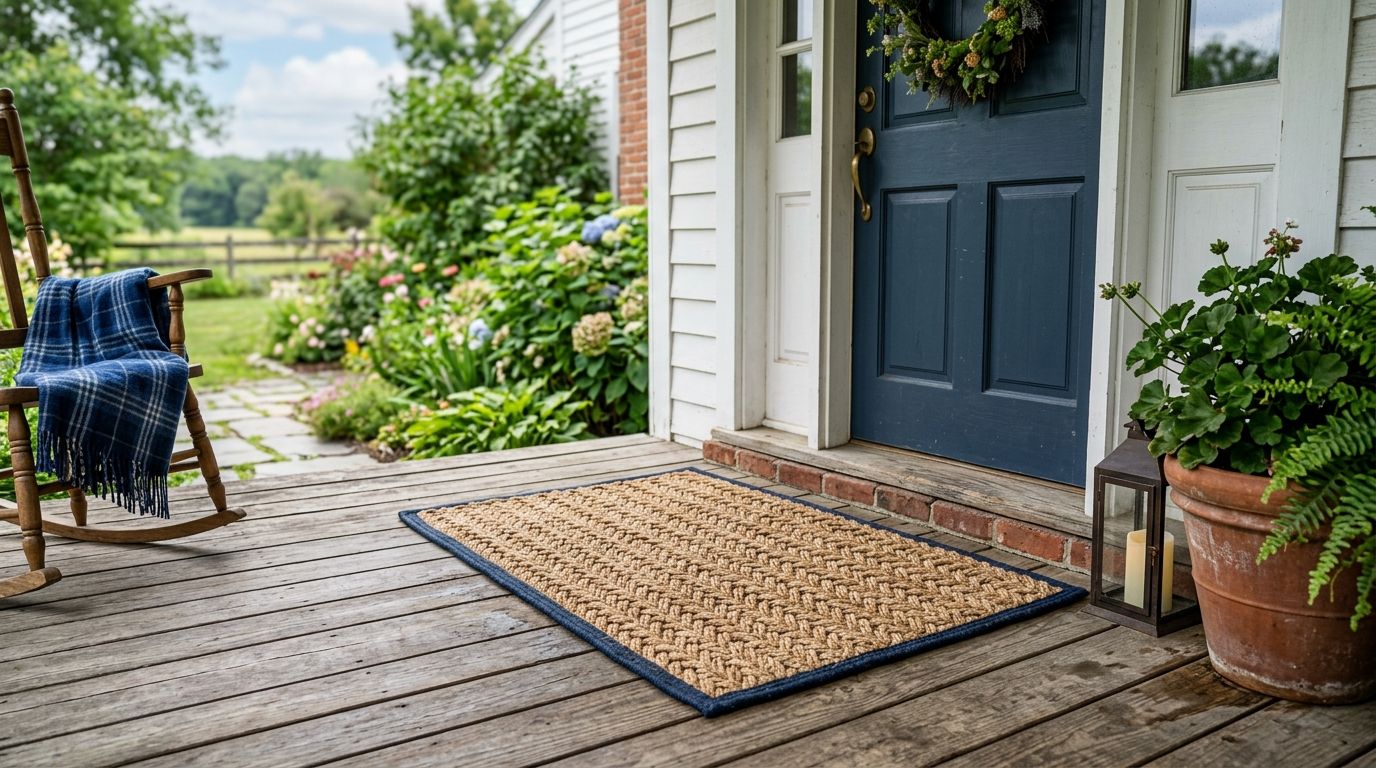
Medium rectangular mats are the everyday choice for many homes. They provide enough width to frame a standard front door and enough depth for shoes, paws, sand, and damp feet before people enter the house.
This is often the best starting point for a busy family entry. It gives children room to pause, gives guests a clear place to stand, and makes the front step look more finished. On a covered porch, a medium rope mat can be the main visual anchor without competing with planters, benches, or seasonal decor.
A large rope mat makes sense when the entry is wide, the household gets frequent visitors, or more than one person often arrives at once. Think double doors, French doors, broad coastal porches, pool entrances, and patio doors leading into the home.
A larger format creates better practical coverage, but it also needs enough open floor around it. If a mat stretches too close to the edge of a landing, it can make the space feel crowded. Aim for balanced margins on both sides when possible, and do not let the mat extend over a step or down a sloped surface.
A runner-style rope mat is useful where people walk in a line rather than gather in front of a door. Long porch approaches, patio thresholds, galley-style boat walkways, and RV exterior areas can all benefit from this shape.
Runners are not simply oversized doormats. Their job is to protect a longer path and define the direction of travel. Measure carefully for clearance around doors, chair legs, and railings. In a narrow area, a runner with a little visible flooring on each side will look neater and allow water to move freely.
For a single front door, a mat that is at least close to the width of the door usually looks more balanced than a narrow option. If your porch has room, going wider than the door can create a warmer first impression and offer more space for guests.
For double doors, avoid using a small mat centered under the seam. It can make a generous entrance feel undersized. Choose a wider mat that visually connects both doors, while leaving a clear border around the outer edges.
There is one exception: a constrained landing. If the porch is narrow or bordered by steps, safety and fit should win over visual scale. A properly placed smaller mat is better than a wide one that reaches the edge of a stair tread or bunches against trim.
Depth determines how much usable standing and wiping area you have. A shallow mat can work at a tight threshold, but a deeper mat is more comfortable for a household that tracks in sand, grass clippings, rainwater, or pool traffic.
At a front entry, choose enough depth for someone to step onto the mat with both feet. At a patio or pool door, extra depth is often worthwhile because people may arrive barefoot, carrying towels, or moving in groups. On a boat or RV, prioritize safe door clearance and a secure walking surface over maximizing coverage.
Handwoven rope mats are made for real use, but no mat should be forced into a space where it curls at the edges or presses against a door. Measure the flat area, not just the overall porch or deck.
Size is not only a design choice. It affects how well the mat performs over time. A small mat at a high-traffic door will get all the wear in one concentrated spot. A larger mat spreads out foot traffic and gives more surface area for dirt and moisture to stay outside.
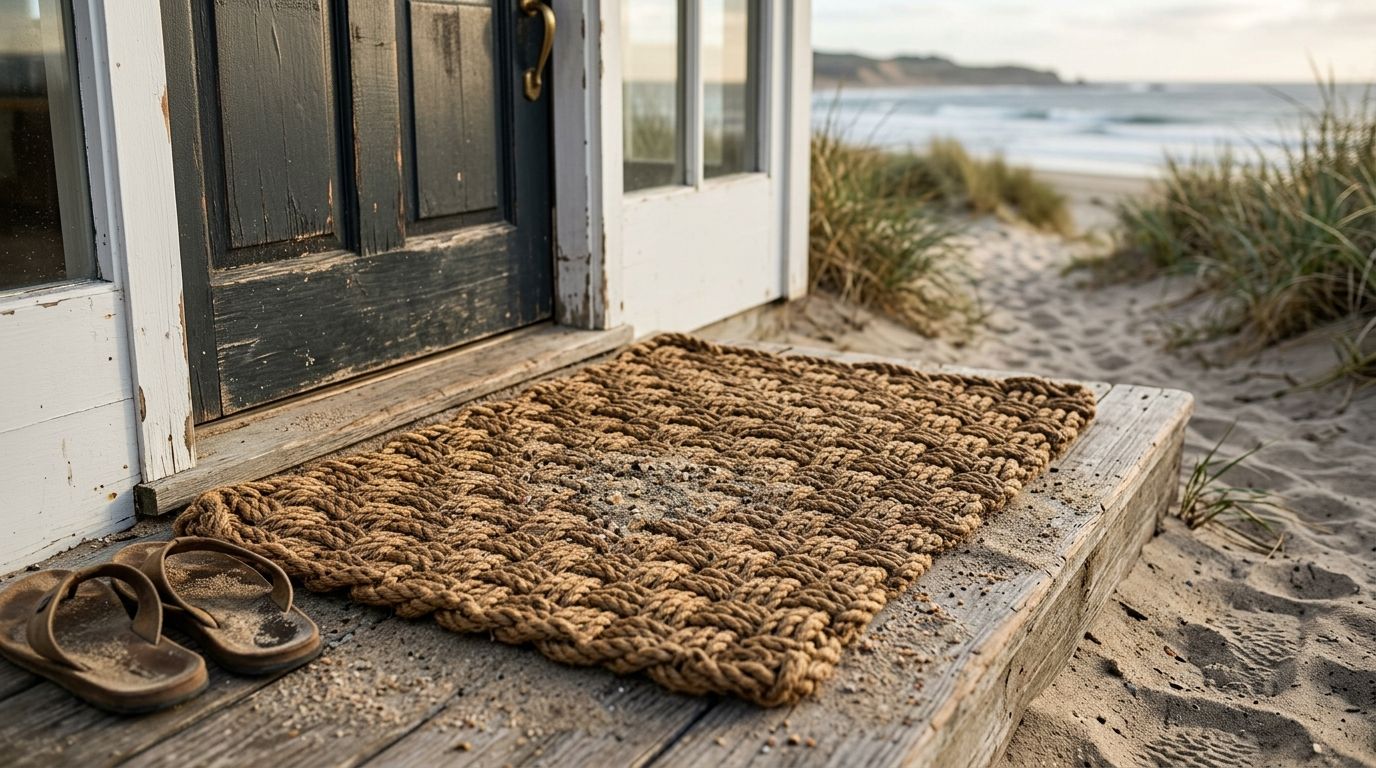
For homes near the beach, lake, or pool, consider a wider or deeper option than you would for a sheltered city entry. Sand has a way of showing up everywhere, and wet feet rarely land in the exact center of a mat. A generously sized rope mat gives the household a more forgiving landing zone.
Pet owners should think about the path their dogs actually take. If a dog comes through the same door after the yard, choose a mat wide enough for both the pet and the person holding the leash. For families, a larger entry mat can also handle backpacks, grocery bags, and the quick rush inside after a summer storm.
A doormat should lie flat with room for the door to move. Before ordering, measure the gap between the bottom of the door and the floor or deck surface. This is especially important for exterior doors that swell slightly in humid weather and for low-clearance screen doors.
Rope mats are a smart choice for outdoor living because their open weave helps avoid the moisture-trapping feel of many conventional mats. Even so, placement matters. Keep the mat on a stable, level surface where water can move away naturally. If your porch holds standing water after heavy rain, address the drainage issue rather than expecting any mat to solve it.
For steps and sloped walkways, use a size designed to sit fully on the level surface. A mat should never hang over a stair edge or sit partly on a threshold and partly on a lower level.
Rectangular rope mats are the most versatile choice for front doors, sliding doors, patios, and decks. Their clean lines work with nearly every home style, from a Florida beach house to a traditional family home.
A half-round or shaped mat can soften the look of a single door and works well when a porch is compact. It is less practical for very high-traffic areas because it provides less side-to-side coverage than a rectangle. If function is the priority, especially at a busy outdoor entrance, a rectangular shape usually gives you more usable surface.
Color also changes how a size reads. Light, bright coastal colors can make a larger mat feel airy on a shaded porch. Darker or more patterned weaves can ground a wide entry and help everyday debris blend in between rinses. Choose the size first, then select a color combination that complements the space.
Mark the proposed dimensions on the porch, deck, or patio with painter’s tape. Open the door, walk through the area, stand where guests would stand, and look at the entry from the sidewalk or driveway. This simple test reveals whether a mat will feel too narrow, too deep, or just right.
The best rope mat size is the one that gives your household room to use the entry naturally, stands up to the weather, and makes the space feel cared for every time you come home.
Ready to pick a size? Shop handmade lobster rope doormats — or start with our shorter entry mat size checklist if you only need a quick measure.

Doormats designed to look better, last longer, and clean easier.
Handmade lobster rope doormats crafted for outdoor durability, easy care, and a warm first impression. Designed for porches, patios, entryways, decks, boats, and RVs across the USA
Copyright © 2026 All Rights Reserved.