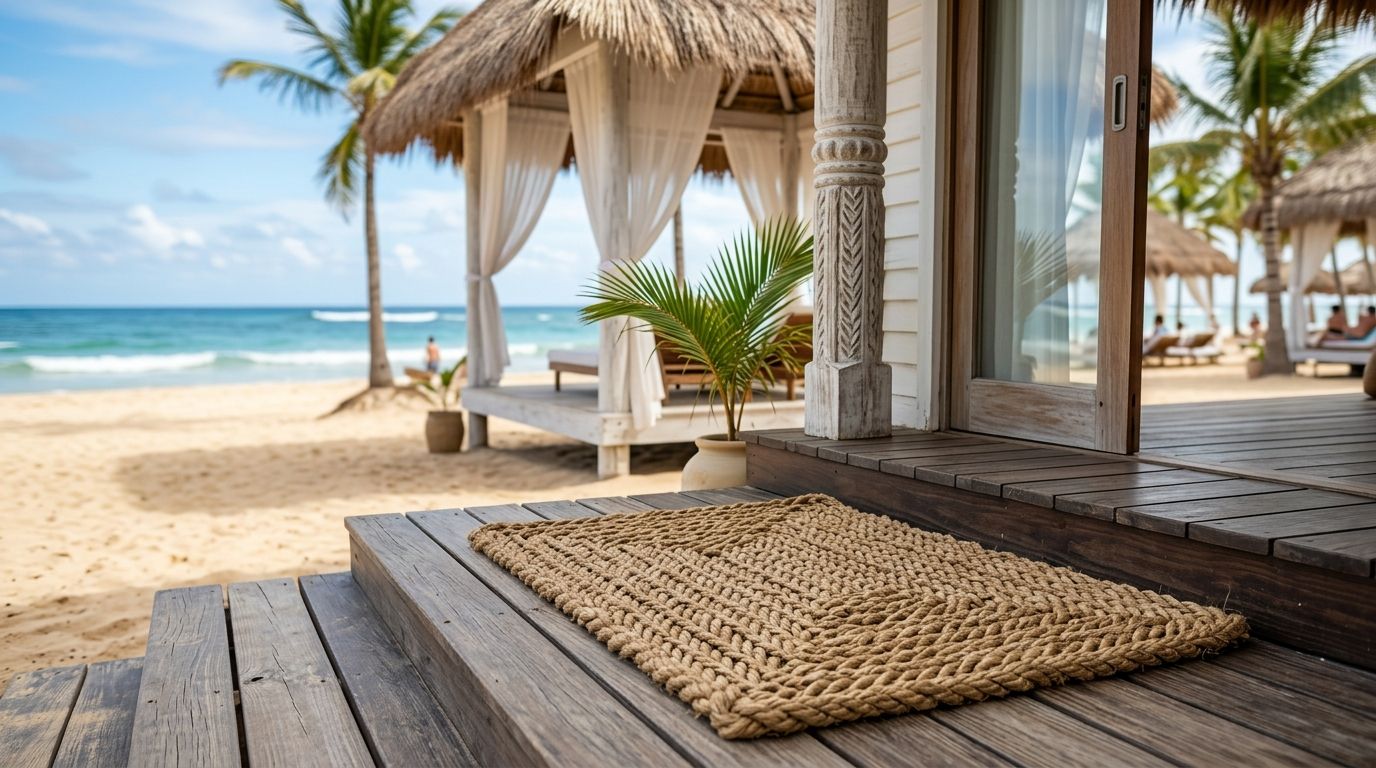
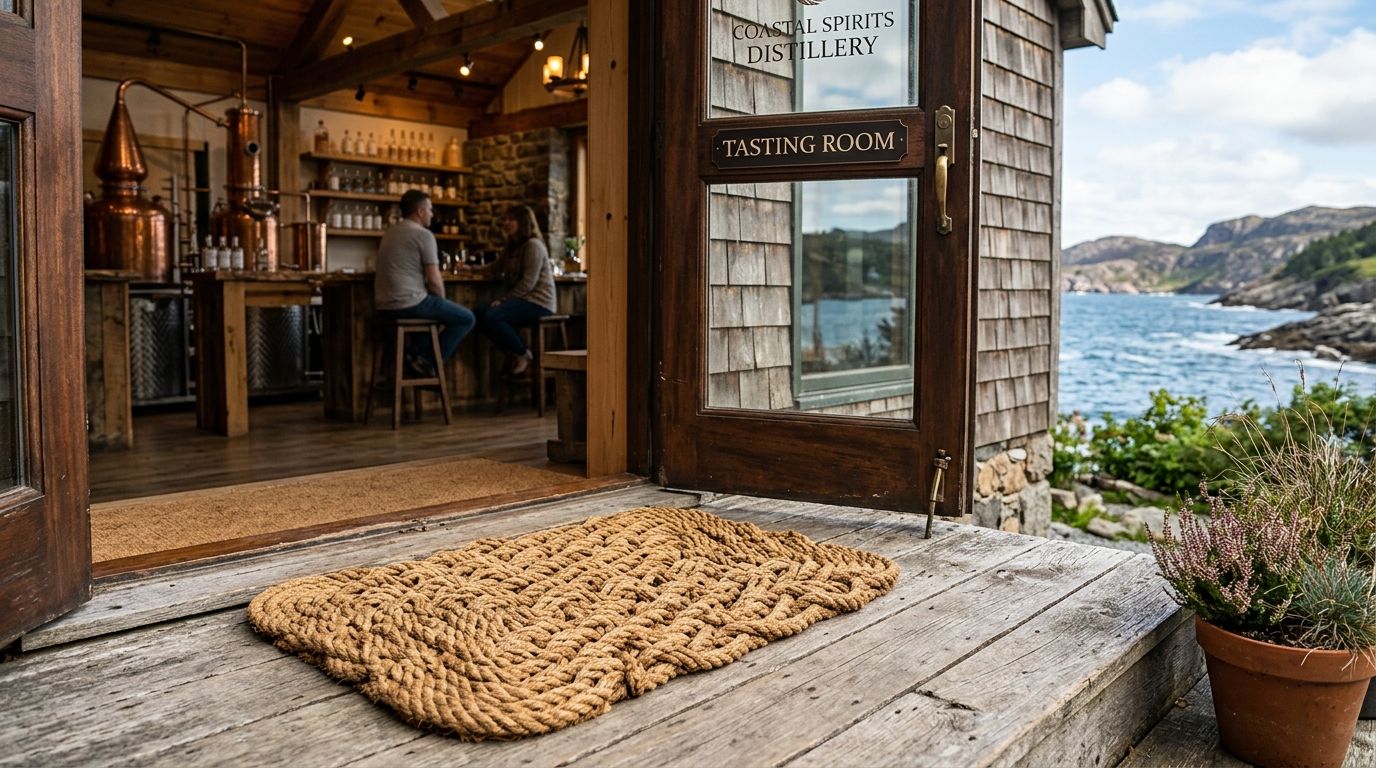
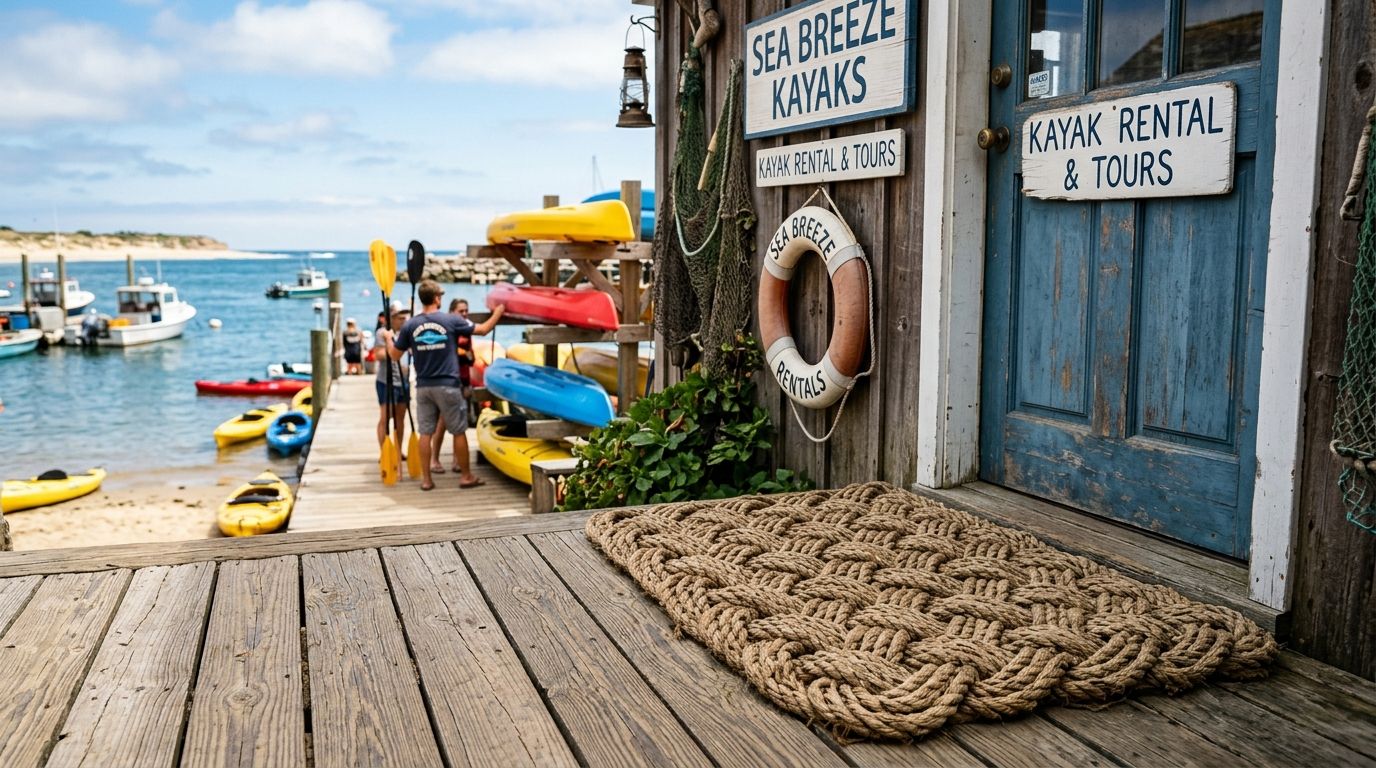
Rope doormats for coastal distillery tasting rooms need to survive sandy boots, spilled spirits, and salt-thick air every single day the tasting room is open, and a handwoven lobster rope mat from Ropemats Florida is built for exactly that kind of punishment. Tasting rooms near the water get a different kind of traffic than a front porch: tour groups tracking in sand, condensation dripping off glasses near the door, and staff running back and forth during pours. A standard indoor mat wears through in one season under that load.
A coastal tasting room sees three kinds of debris a normal home entryway never does: fine beach sand tracked in by tourists, splashed spirits near the pour station, and salt residue that settles on everything within a mile of the water. None of that is speculation about your specific location — it's the operating reality of any coastal hospitality entry, and it's why generic doormats fail fast in these settings.
Rope doormats for distilleries need a weave dense enough to trap grit before it hits the tasting room floor, and a fiber that doesn't mildew when it stays damp between the door and a humid Florida afternoon. Lobster rope, sourced from retired commercial fishing line, was built to sit in salt water for years — that same toughness is why it holds up at a tasting room threshold better than jute, coir, or a synthetic bristle mat.
Before you pick a mat, count what actually crosses your threshold on a busy tasting day.
Not every rope weave handles the same load. A loose, decorative weave looks coastal but lets sand and liquid pass straight through to the floor underneath.
A mat that's too small leaves a gap where sand and spilled liquid bypass it entirely — the single most common mistake tasting rooms make.
Salt air corrodes metal fixtures and degrades synthetic fibers faster than most tasting room owners expect. Rope holds up because it was designed for exactly this environment.
Spirits spills near the door dry into a sticky residue if they sit through a full shift. A quick mid-day check prevents buildup that a nightly mop can't fully remove.
Coastal tasting rooms often sit exposed to open water views, which means wind gusts strong enough to flip or displace a lightweight mat.
Once the entry is sized, weaved, and rinsed correctly, the mat should outlast a full tourist season without curling, fading, or thinning at the high-traffic center.
Get a mat sized for your tasting room
Handwoven rope mats backed by a 10-Year Guarantee for commercial coastal entries.
| Option | Best for | Verdict / Limitation |
|---|---|---|
| Handwoven lobster rope doormat (tight weave) | High-traffic tasting counters with sand and spirit spills | Buy — dense weave traps grit, resists salt air, needs periodic rinsing |
| Standard coir doormat | Low-budget, low-humidity indoor entries | Skip for coastal use — mildews fast, wears thin under daily boot traffic |
| Rubber-backed synthetic mat | Pure slip resistance near wet floors | Hold — functional but traps moisture underneath and lacks coastal look |
| Custom oversized double-door rope mat | Wide barn-style or double-door tasting room entries | Buy for large entries — heavier and needs a longer break-in period |
A related read worth a look before ordering: best rope doormats for coastal wine cellars and tasting rooms covers sizing specifics for indoor tasting counters, and best rope doormats for heavy foot traffic marinas shows how the same weave performs under commercial marina foot traffic — a close proxy for a busy tasting room floor.
What’s the best doormat for a coastal distillery tasting room?
A tightly woven lobster rope doormat is the best fit for a coastal distillery tasting room in 2026 because it handles sand, spirit spills, and salt air without mildewing or thinning under daily foot traffic.
Is rope better than coir for a tasting room entrance?
Yes, rope holds up better than coir in coastal humidity. Coir absorbs moisture and mildews within a season near salt air, while a rope weave sheds water and dries faster.
How often should a tasting room rinse its entry mat?
Rinse a high-traffic tasting room mat at least weekly during peak tourist season, with a quick shake-out every few hours to clear loose sand and debris.
Do rope doormats work for double-door tasting room entrances?
Custom oversized rope mats are made for double-door entries, sized to overlap both door leaves so sand and spills don’t slip through a gap in the middle.
Can a rope doormat handle spilled spirits without staining?
A tight rope weave sheds most spilled spirits if rinsed promptly; letting the spill dry in over a full shift is what causes staining, not the fiber itself.
How long does a rope doormat last in a commercial coastal setting?
With a rinse-and-rotate routine, a handwoven lobster rope doormat backed by a 10-Year Guarantee is built to outlast several tourist seasons of daily commercial traffic.
Should a tasting room use one mat or rotate two?
High-traffic tasting counters do better with two mats on rotation, so one is always fully dry while the other is in use, extending the working life of both.
Does salt air damage a rope doormat faster than a home entry?
Rope doormats near open water see more salt exposure than a typical home entry, which is why a regular fresh-water rinse matters more for commercial coastal locations than for an inland porch.
The detail most tasting rooms miss: the mat that looks the most "coastal" — loose, open weave, driftwood-colored rope — is usually the worst performer at a working entrance. Ropemats Florida's tighter commercial weaves look plainer up close but are the ones still doing their job at the end of a 2026 tourist season, while the loose decorative weaves have already thinned out at the center.

Doormats designed to look better, last longer, and clean easier.
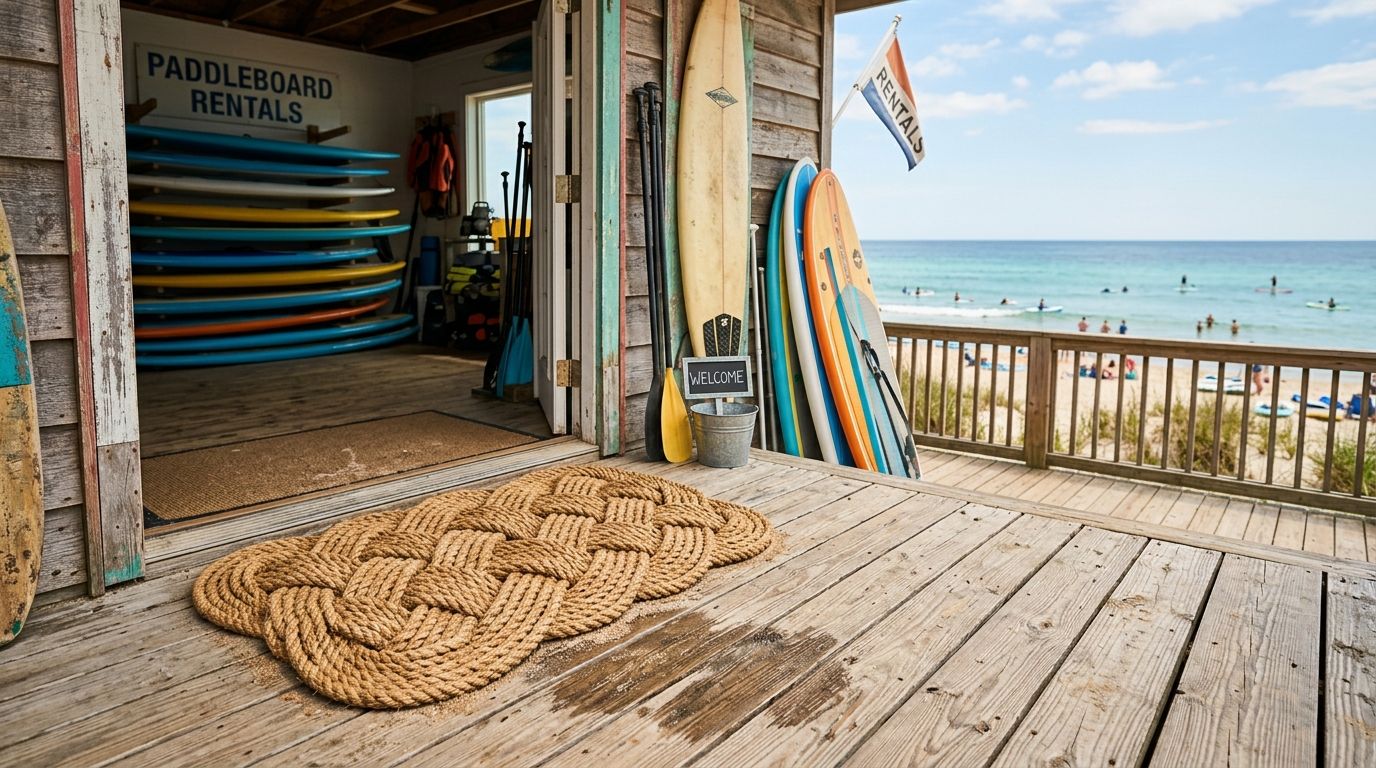
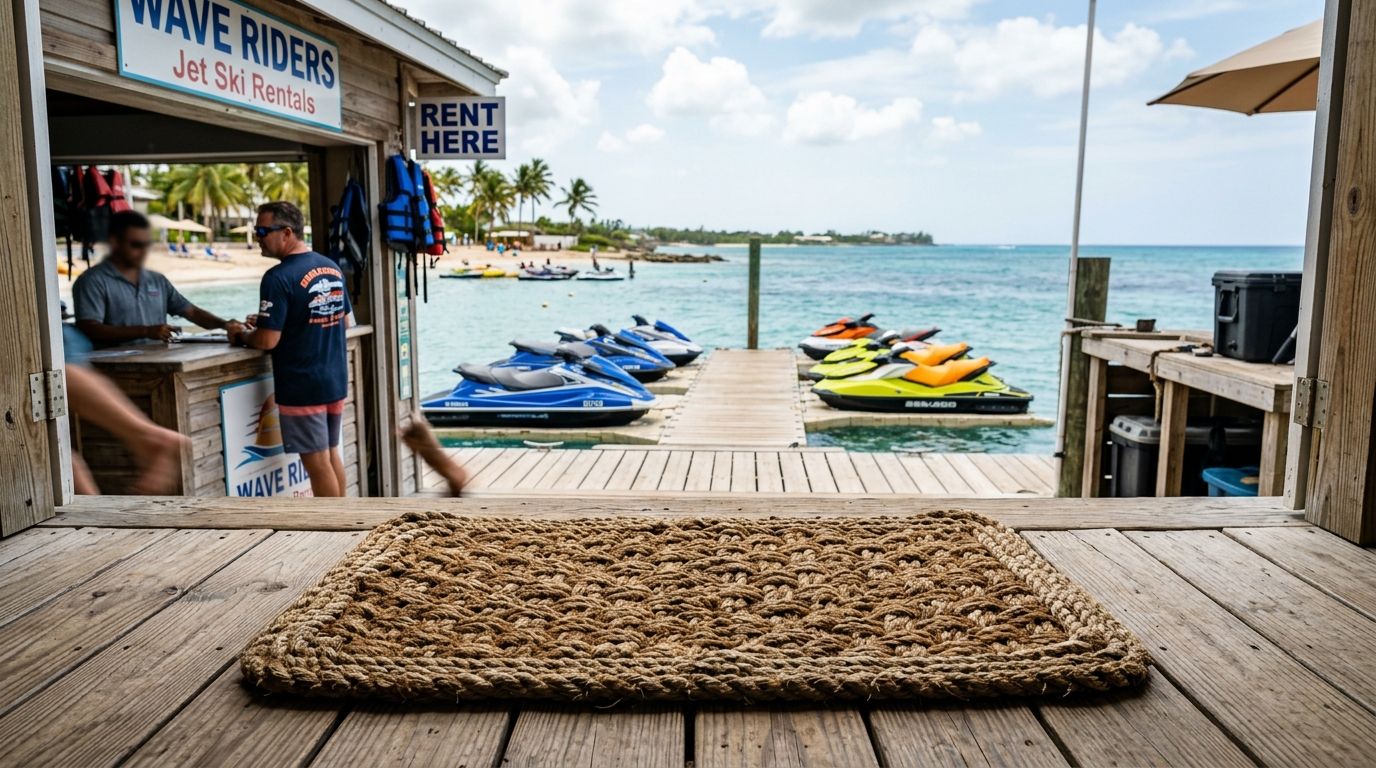
Handmade lobster rope doormats crafted for outdoor durability, easy care, and a warm first impression. Designed for porches, patios, entryways, decks, boats, and RVs across the USA
Copyright © 2026 All Rights Reserved.