
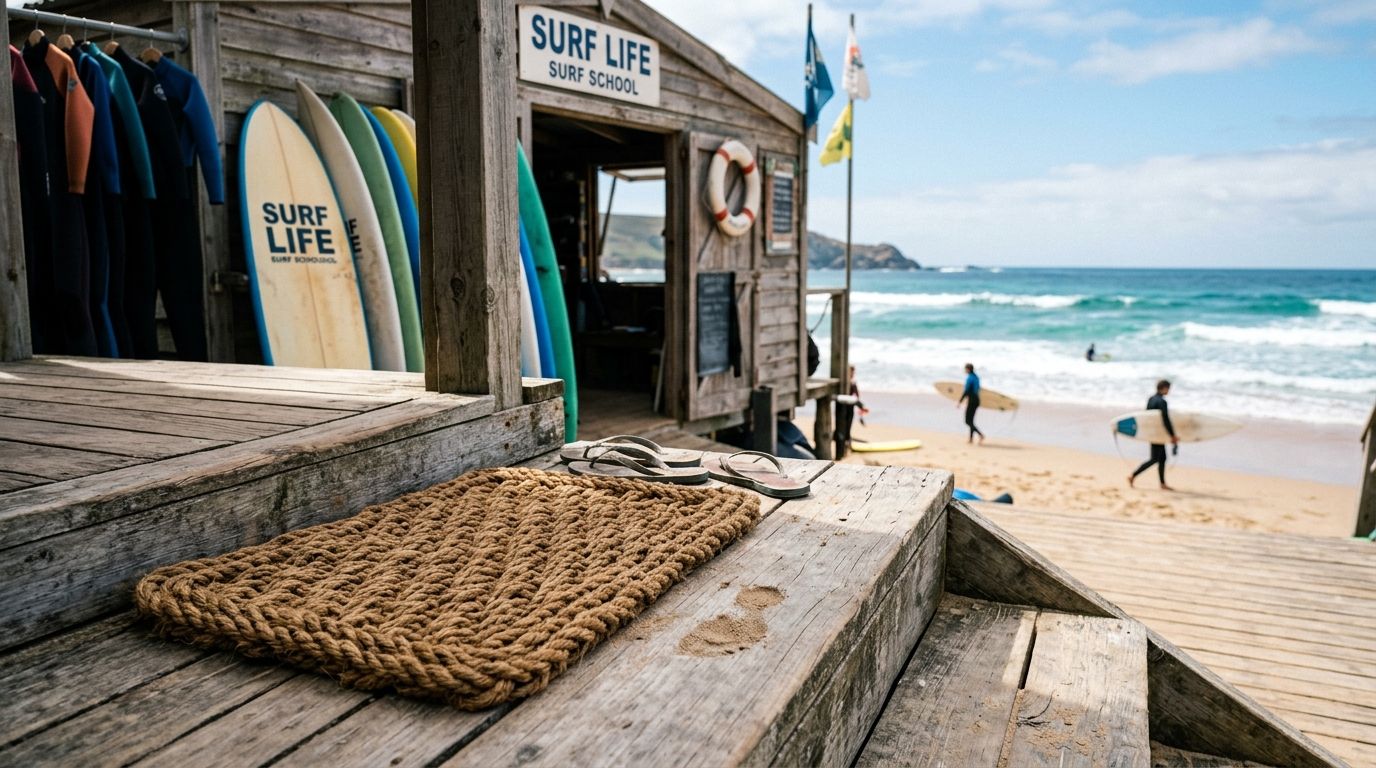
Surf school entries take more abrasion in one Saturday than a residential porch sees in a month — wet feet, wetsuit drag, sand, board wax, and salt spray moving through the same 3-foot doorway all day. Rope doormats for surf schools need a loose, sand-shedding weave and a design that survives daily rinsing, not a decorative accent mat rated for occasional use.
A surf school entry isn't a doorstep — it's a transition zone between sand and whatever floor is inside, whether that's a retail counter, a rental desk, or a locker room. Students walk through wet, sandy, and often barefoot, multiple times a day, every day the surf is up.
Standard coir mats break down fast under that kind of repeat wetting and drying. Rubber-backed mats trap sand and salt against the backing, which speeds up rot and mildew. A loosely woven nautical doormat built for surf shacks lets sand fall through instead of collecting on top, and it dries faster between sessions because there's no solid backing holding moisture in.
The practical upside for a surf school owner: less sweeping, less mold smell near the entry, and a mat that still looks presentable after a full summer of lessons — not just week one.
Weave tightness decides whether sand gets scraped off feet or just gets pushed around on the surface. Tight, decorative weaves look clean in photos but hold onto sand and grit, which then tracks inside anyway.
A single 18×30 mat sized for a home doorway does nothing at a surf school entry where two or three students pass through at once carrying boards. Undersized mats get sidestepped, and the sand walks right past them.
Surf schools sit right on the salt air line, and mats there take direct exposure most residential coastal homes never see — wet wetsuits dripping brine, board rinse buckets, and salt spray carried on the wind. Untreated rope degrades faster under constant salt contact than under rain alone.
Staff time at a surf school goes to lessons, not mat maintenance, so cleaning has to be fast. The advantage of a rope weave over a fabric mat is that most of the daily cleaning is just shaking and rinsing, no scrubbing required.
Oceanfront surf schools deal with wind gusts that can flip a lightweight mat, plus a volume of foot traffic that shifts unanchored mats within days. A mat that slides around is a trip hazard on a wet, sandy step — the last thing you want with kids running to catch a wave.
| Weave Type | Best For | Sand Handling | Key Limitation |
|---|---|---|---|
| Open diamond weave | High-traffic surf/beach entries | Sheds sand well, dries fast | Less refined look for retail-style storefronts |
| Tight basket weave | Low-traffic decorative entries | Holds sand on surface, needs more shaking | Not ideal for daily sand-heavy foot traffic |
| Custom oversized weave | Double-wide or multi-student entries | Same as base weave, spread over more area | Needs accurate width measurement before ordering |
| Rubber-backed mat (non-rope) | Indoor transition zones only | Traps sand and moisture against backing | Poor fit for direct outdoor salt exposure |
A loosely woven lobster rope mat in an open diamond pattern is the clear pick for a surf school entry — it handles the sand-and-saltwater combination better than any tight-weave or rubber-backed alternative, and it holds up to daily rinsing without the backing rotting out.
Outfit your surf school entry
Browse handwoven rope mats built for daily sand and salt exposure.
What’s the best doormat for a surf school entrance?
An open, loosely woven lobster rope doormat is the best choice for a surf school entrance in 2026, since it sheds sand instead of trapping it and dries fast between lessons. Tight-weave or rubber-backed mats hold moisture and sand against the surface, which shortens their life in daily salt exposure.
How often should a surf school rinse its entry mat?
Rinse a surf school’s entry mat with fresh water at least weekly, and more often during peak season when foot traffic is heaviest. Salt from ocean water crystallizes in the fibers if it isn’t rinsed out regularly, which stiffens the rope over time.
Do rope doormats hold up better than rubber mats near saltwater?
Rope doormats generally hold up better near saltwater because they don’t trap moisture against a solid backing the way rubber-backed mats do. An open weave lets water and sand pass through rather than pooling underneath.
How big should a doormat be for a surf school entry?
Size a surf school doormat to the full clear width of the entry, adding 6 to 12 inches on each side if boards or bags regularly pass through. Standard residential mat sizes are usually too narrow for the traffic volume a surf school sees.
Can a rope doormat handle being outside year-round in Florida?
A rope doormat built for outdoor coastal use can stay outside year-round in Florida if it’s rinsed regularly and given some shade when possible. Constant sun and salt exposure without maintenance will shorten the life of any outdoor mat, rope or otherwise.
What weave sheds sand the best?
An open diamond weave sheds sand the best because the wider gaps between rope let debris fall through instead of collecting on the surface. Tighter weaves look neater but require more frequent shaking to stay clear.
How long does a lobster rope doormat last at a busy entry?
Lifespan depends heavily on traffic volume and maintenance, but a lobster rope doormat backed by a 10-year replacement guarantee is built to handle sustained daily use better than most fabric or coir alternatives.
Rotating two mats — one drying while one is in use — cuts the visible wear surf schools usually blame on "cheap materials." The real culprit is almost always moisture that never fully evaporates before the next round of wet feet arrives, and a rope weave only shows its full advantage over rubber-backed mats when it actually gets the chance to dry between sessions.

Doormats designed to look better, last longer, and clean easier.
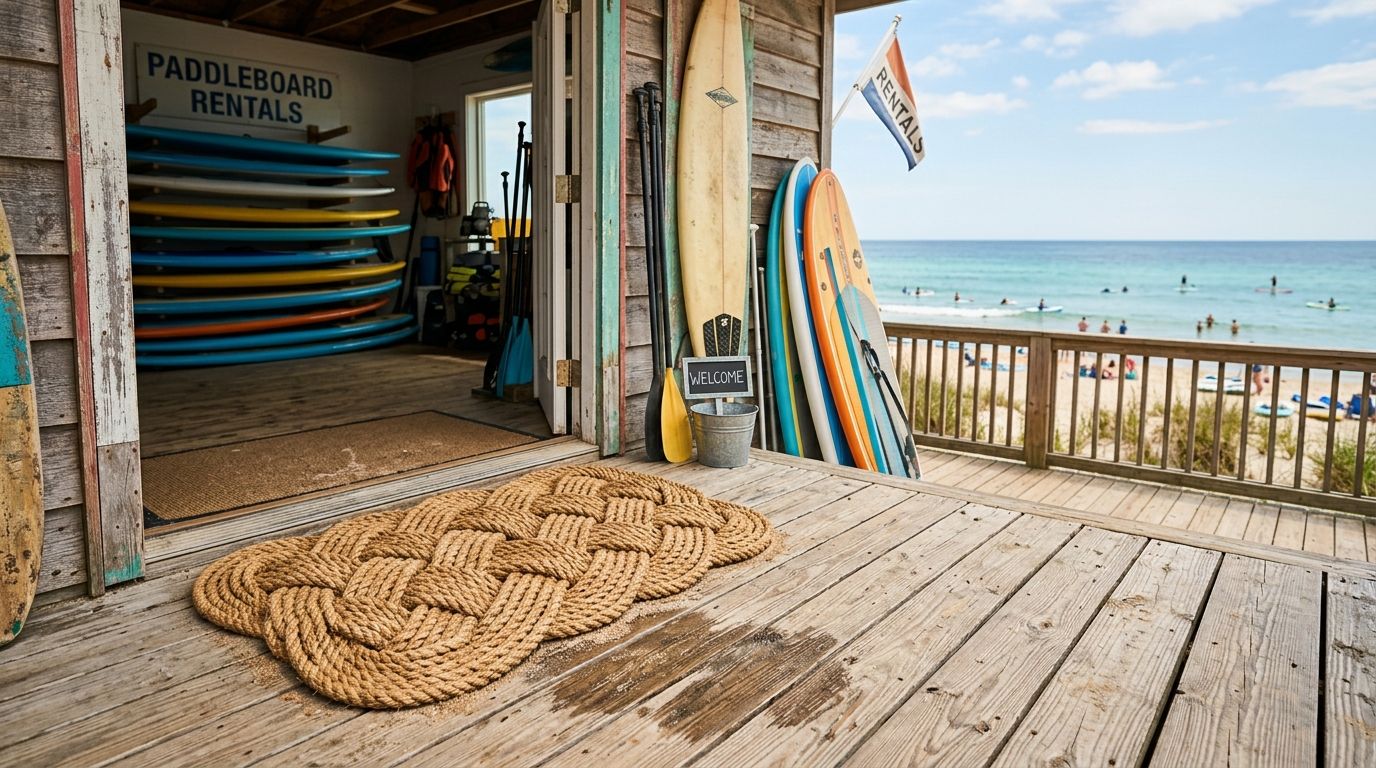
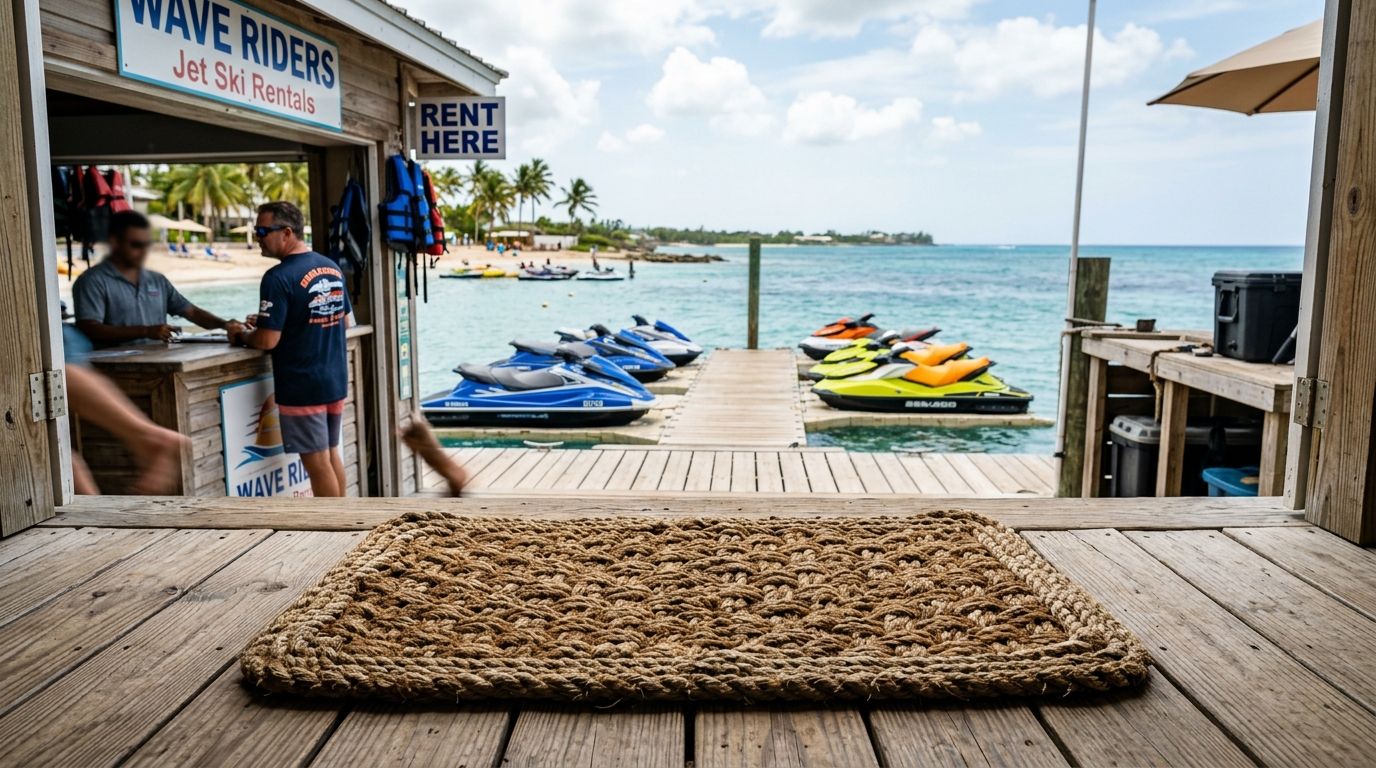

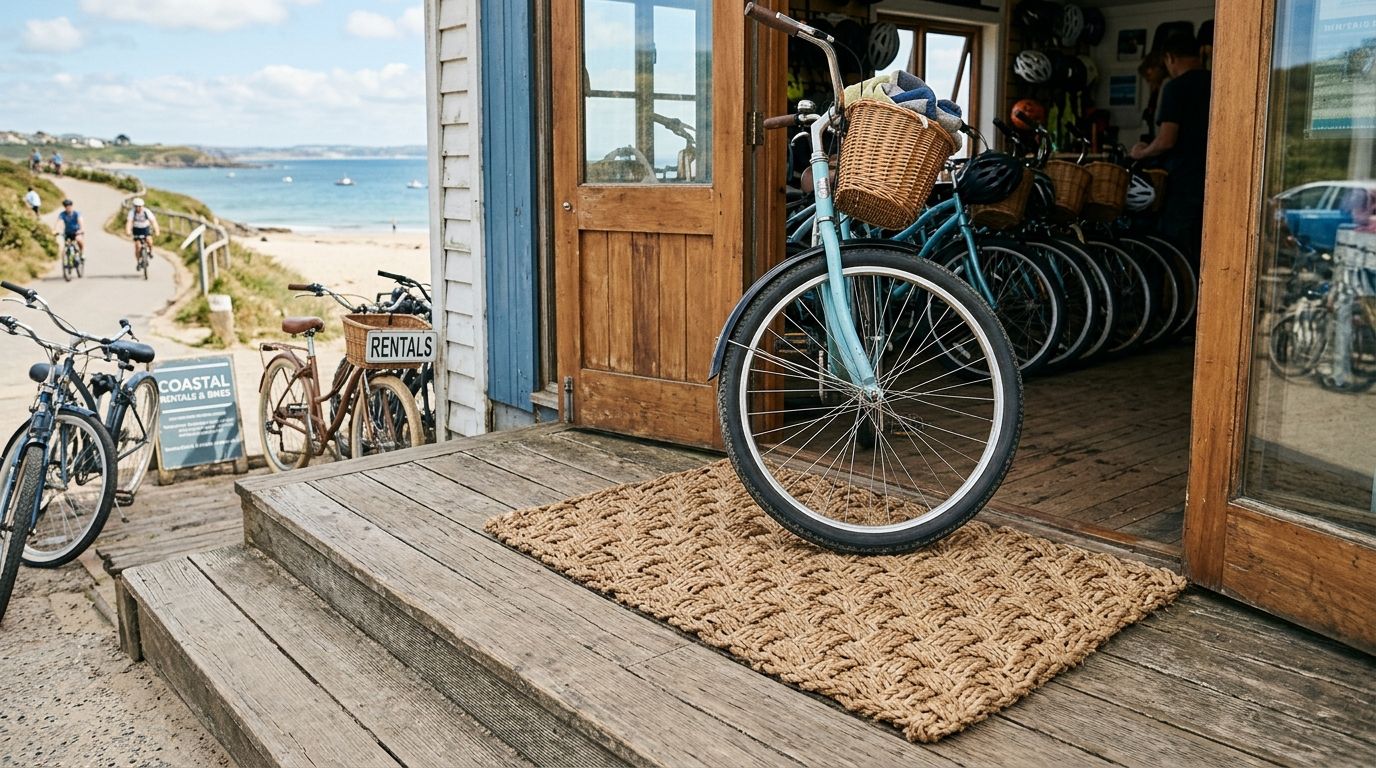
Handmade lobster rope doormats crafted for outdoor durability, easy care, and a warm first impression. Designed for porches, patios, entryways, decks, boats, and RVs across the USA
Copyright © 2026 All Rights Reserved.