Pontoon owners deal with wet feet, sandy soles, and salt spray every time someone climbs off the swim platform or dock ladder — a rope doormat for pontoon boat owners solves the tracking problem better than a rubber-backed mat that traps moisture underneath and mildews within a season.
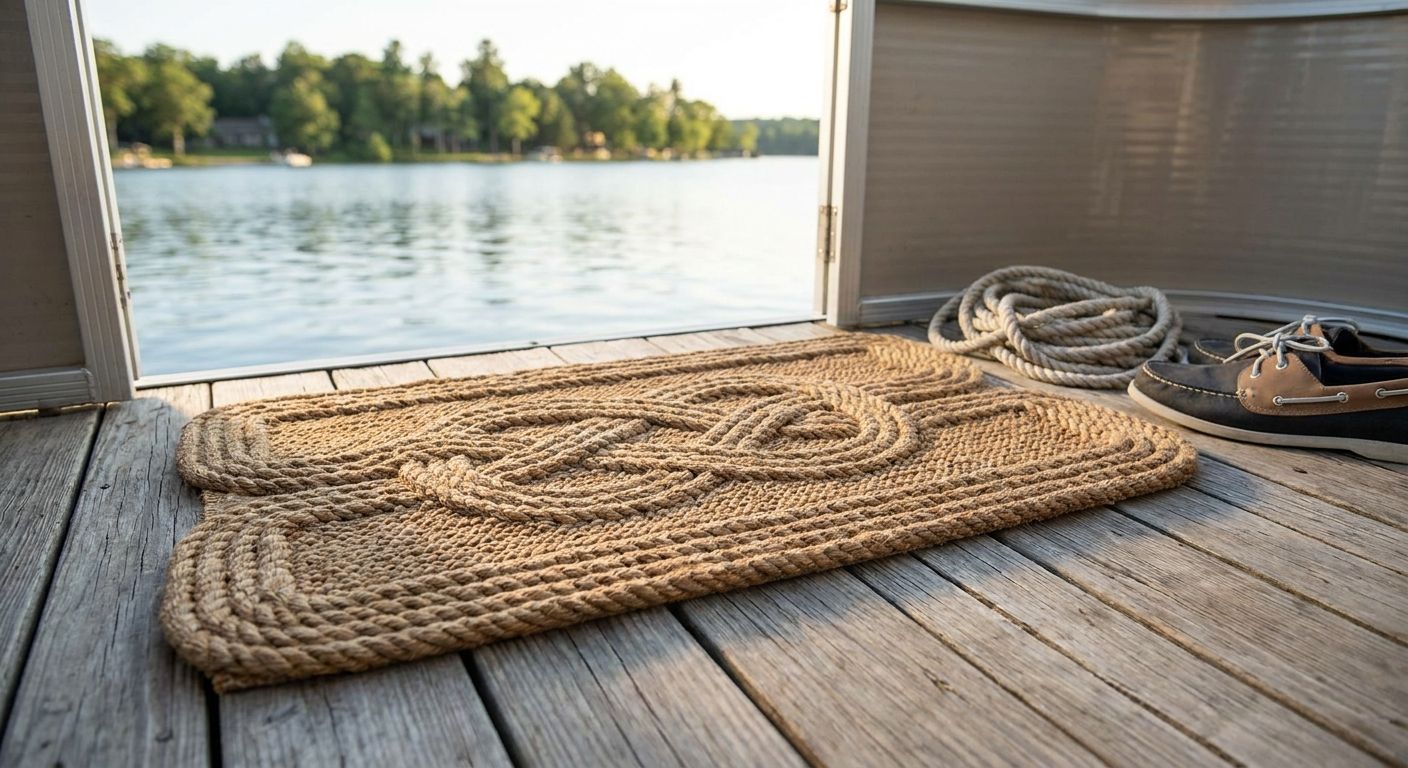
A pontoon deck sees more bare and wet feet per square foot than almost any other entryway in the coastal home ecosystem. Sand, lake grit, fish scales, and standing water all move from the dock to the boat and back to the house — the mat at that transition point either stops the mess or becomes part of it.
A cheap coir or rubber mat softens after one Florida summer of sun and standing water. A nautical doormats for boat docks built from lobster rope is designed for exactly this cycle: soaked, sun-baked, soaked again, on repeat, for years rather than months.
This guide is for pontoon owners who dock at a private lift, a community marina slip, or a lake house pier and need a landing mat that survives direct sun, standing water, and constant foot traffic without curling, cracking, or growing mildew by the second summer. If your pontoon sits at a lake house or a beach-adjacent dock and the mat gets walked on wet multiple times a day, the criteria below matter more than color-matching your deck furniture.
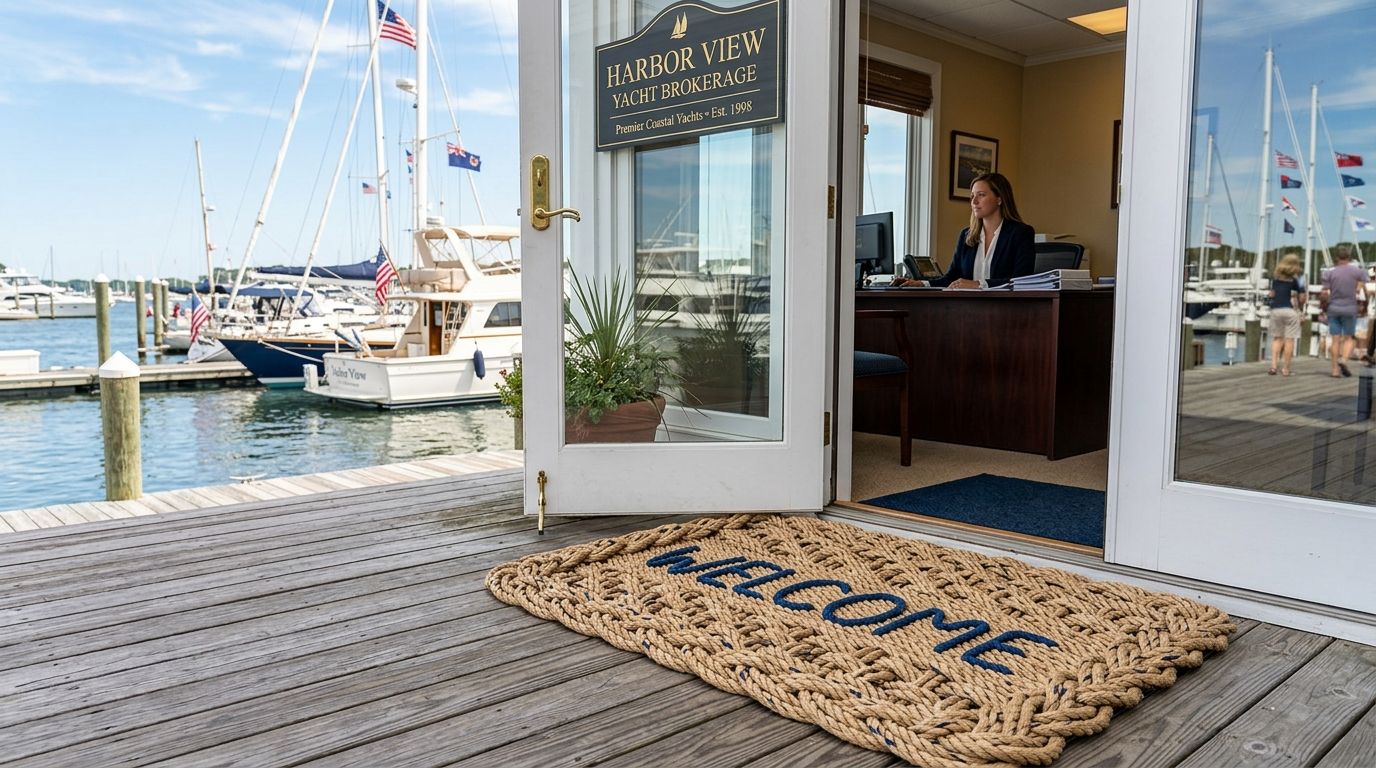
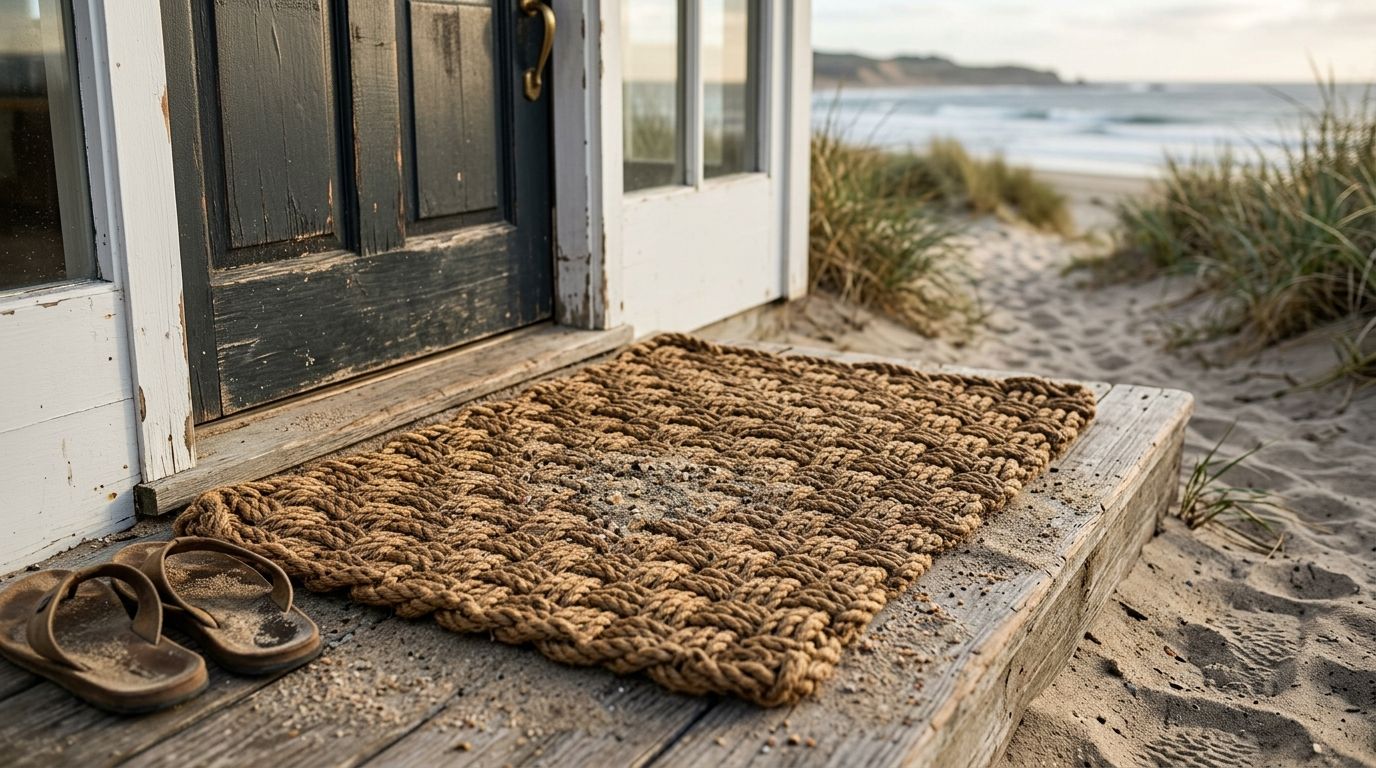
A loose, open weave lets water and sand fall through instead of pooling on top, which matters on a dock where the mat sits flush against boards that stay damp most of the day. Tight coils hold their shape underfoot but a weave that's too dense traps standing water instead of shedding it. Look for a weave described as hand-coiled rather than machine-pressed — the gaps between rope rows are what let lake or bay water drain instead of sitting on the surface.
Standard cotton or jute rope rots within a season near saltwater, and cheap synthetic blends chalk and fade under constant Florida sun. A rope doormat for salt air climates uses rope built to resist both moisture breakdown and UV fade, which is the difference between a mat that looks new in year three and one that's gray and brittle by year one.
Pontoon swim platforms and dock ladders are narrow, so a mat under 18 by 30 inches gets stepped past instead of stepped on. A mat sized closer to 22 by 36 inches or larger catches the full stride of someone climbing off the boat, which is the actual job the mat has to do.
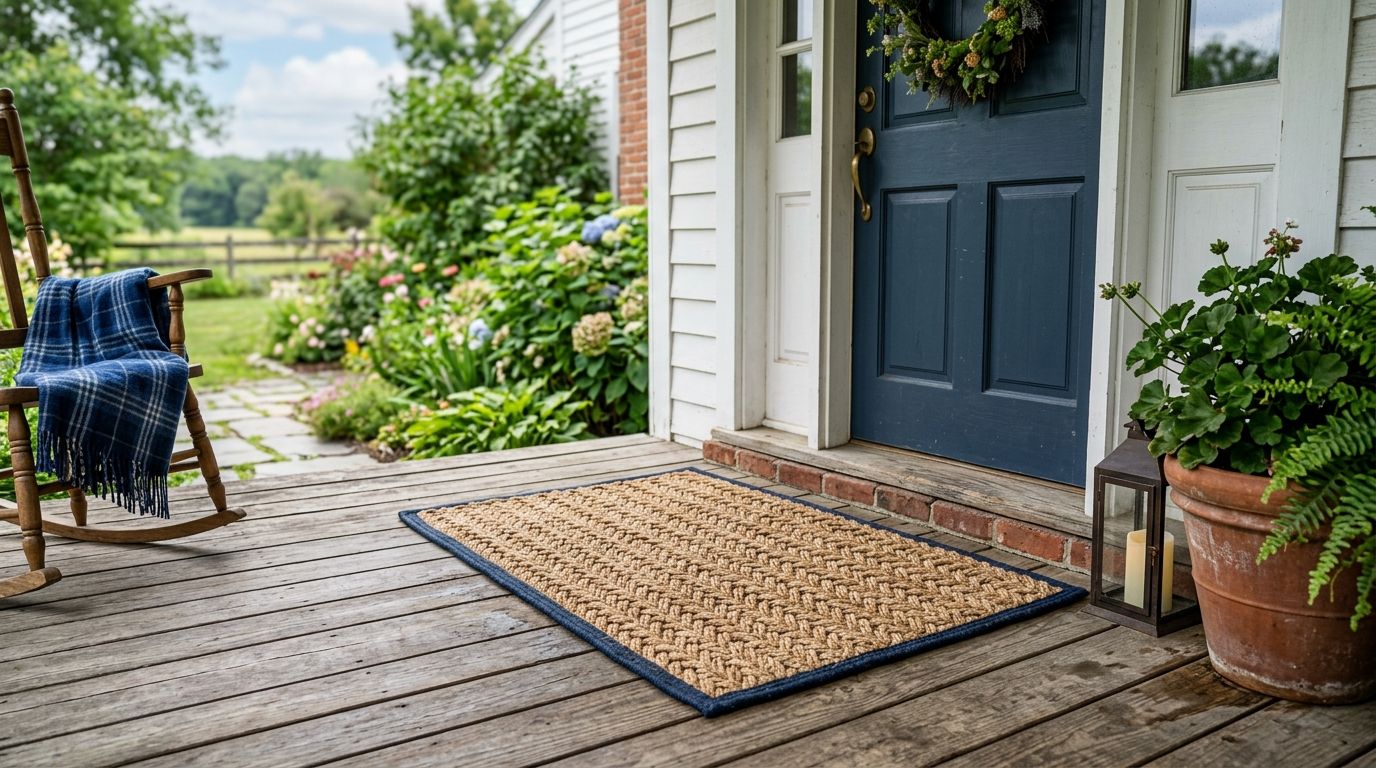
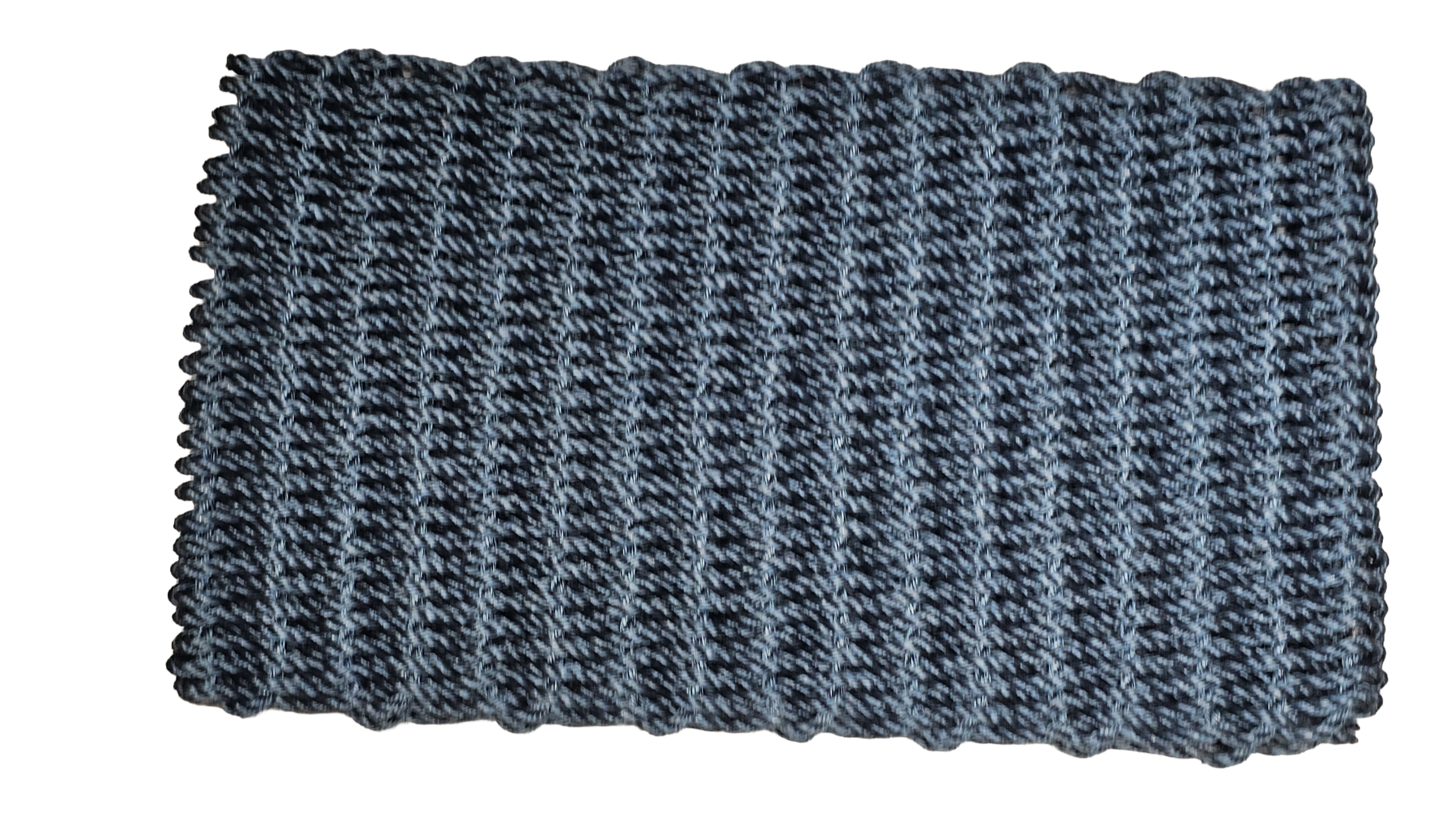
Light tan and seafoam hide dust well indoors but show every grain of dock sand and every streak of rust from a cleat or ladder bolt. Navy, black, and darker stripe combinations hide that residue between rinses, which matters for a mat that only gets a real cleaning once every week or two during boating season.
A mat that shifts underfoot on a wet swim platform is a fall risk, not a decor choice. Rope mats without a rubber backing rely on rope density and mat weight to stay put — thinner, cheaper versions slide around on smooth fiberglass decking in a way that a properly coiled, denser rope mat does not.
A mat living on a dock takes more abuse in one season than a porch mat takes in three. Lobster Rope Doormats carry a 10-year replacement guarantee, which is worth more on a boat dock than almost anywhere else in the house because dock mats fail faster under UV and salt exposure than any indoor equivalent.
Navy — the safe pick. Solid navy hides rust bleed from ladder hardware and dock cleats better than any lighter shade in the lineup. At a listed $69.99, it's priced in line with the rest of the coastal solid line, and the dark tone means weekly rinses instead of daily ones. Buy for a dock that sees heavy fishing gear traffic.
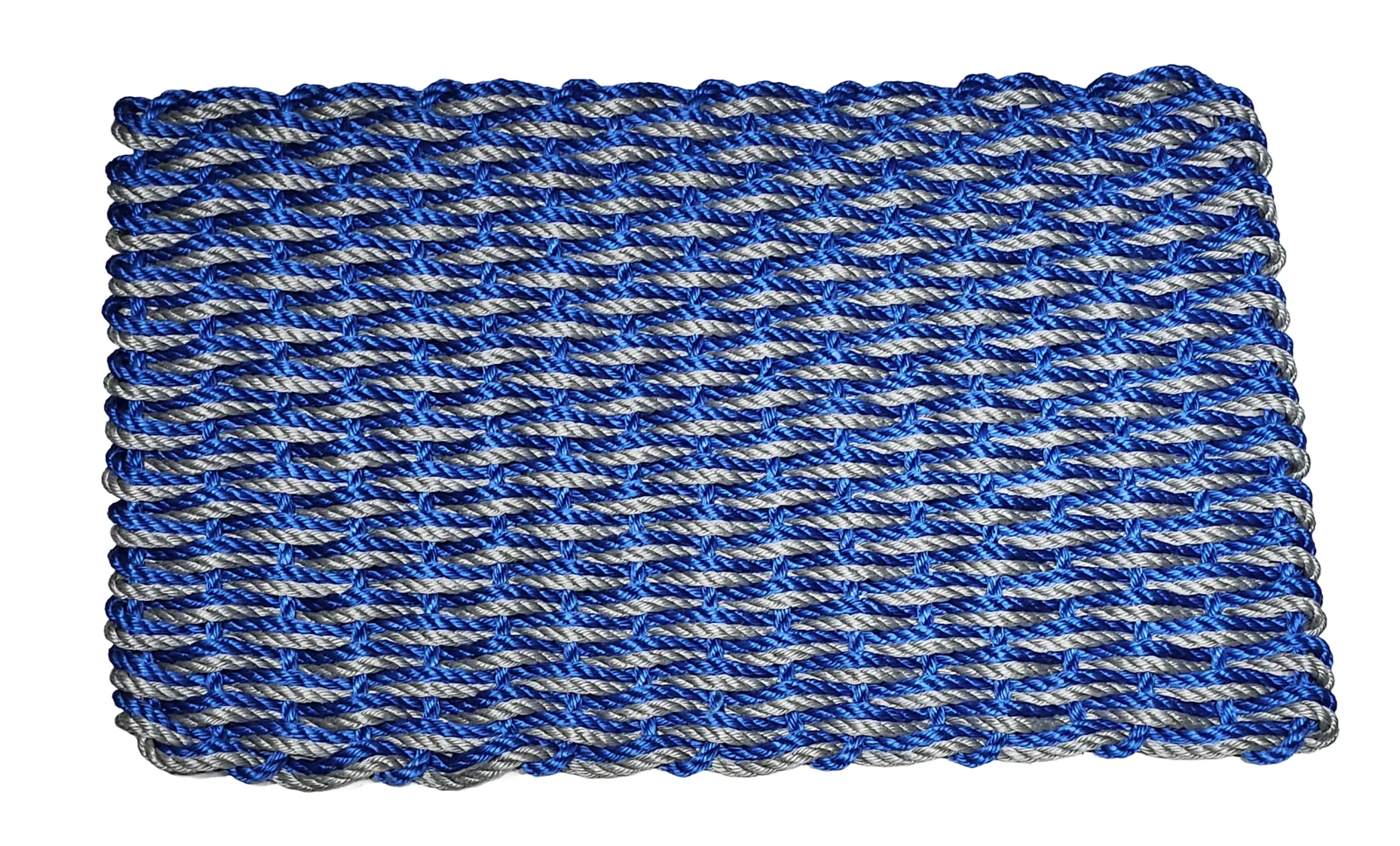
Royal Blue – Gray — the all-weather workhorse. The two-tone stripe splits visual wear between the gray and blue rope, so scuffing from boat shoes and cooler dragging shows less than on a single-color mat. At $69.99, it sits in the mid-range of the coastal stripe collection and holds up to direct afternoon sun on west-facing docks. Buy for docks with no shade cover.
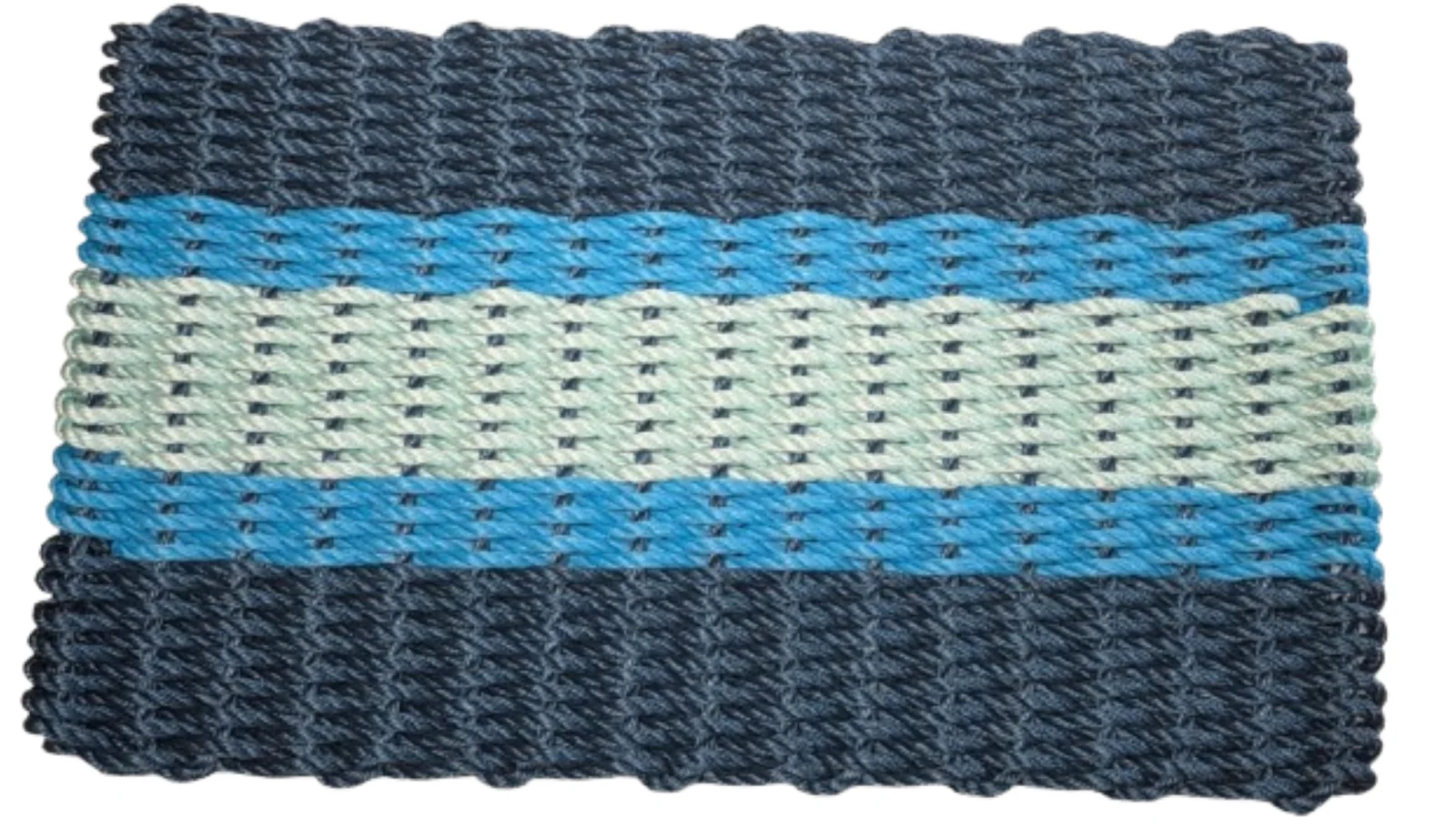
2 Navy 2 Light Blue 1 Seafoam — the wildcard. The five-stripe pattern reads more resort than utility, which works if the pontoon ties up near a lake house patio rather than a working marina. It's the same $69.99 build quality as the solids, just with more color to fade-test against direct sun over multiple summers. Consider if the dock area doubles as a guest entertaining space.
3 Black 2 Green — the low-maintenance option. Dark base colors mean algae tint and lake-bottom mud barely register between cleanings, useful for freshwater lake docks rather than saltwater slips. Listed at $49.99, it's one of the more affordable options in the lineup for owners outfitting more than one landing point. Buy for lake house pontoon lifts specifically.
“If the mat is narrower than your stride off the boat, it’s decor, not a doormat.”
| Mat | Weave | Best for | Price | Verdict |
|---|---|---|---|---|
| Navy | Solid, tight coil | Marinas, ladder hardware | $69.99 | Buy |
| Royal Blue – Gray | Two-tone stripe | Unshaded, sun-heavy docks | $69.99 | Buy |
| 2 Navy 2 Light Blue 1 Seafoam | Five-stripe | Lake house entertaining docks | $69.99 | Consider |
| 3 Black 2 Green | Solid, tight coil | Freshwater lake lifts | $49.99 | Buy |
Before mounting anything permanently, check the steps for installing a rope doormat on a boat dock — placement against the grain of the dock boards changes how fast the mat drains.
What’s the best rope doormat for a pontoon boat dock?
A tightly coiled lobster rope doormat in a dark solid or two-tone stripe, sized at least 22 by 36 inches, works best for pontoon docks in 2026. Darker colors hide rust bleed and sand between rinses better than light tan or seafoam.
Do lobster rope doormats work on boat docks?
Yes, lobster rope doormats are built from rope originally rated for marine use, so they resist salt air, UV fade, and standing water better than cotton or coir mats. They’re a common upgrade for dock landings and swim platforms.
How do you clean a rope doormat that stays on a dock?
Shake out loose sand daily and rinse with a hose weekly during boating season. A full guide on how to clean a lobster rope doormat covers deeper stain removal for salt residue and algae.
What size doormat fits a pontoon boat entry step?
Most pontoon swim platforms and dock ladders need a mat at least 22 by 36 inches to catch a full stride. Anything under 18 inches wide gets stepped past rather than stepped on.
Are rope doormats slip resistant on wet fiberglass?
A densely coiled rope mat with enough weight stays put on wet fiberglass better than a thin, lightweight mat, though no mat replaces a nonslip deck coating for safety-critical areas. Weight and rope density matter more than any backing material.
How long do rope doormats last in salt water?
Marine-rated lobster rope doormats are designed to hold up multiple boating seasons of salt air exposure, backed in this case by a 10-year replacement guarantee. Actual lifespan depends on sun exposure and how often the mat gets rinsed.
Can you leave a rope doormat outside year-round on a dock?
Yes, rope doormats built for outdoor and coastal use are designed to stay outside through all four seasons without needing to be stored. Rinsing off salt buildup periodically extends how the colors hold up.
Is a rope doormat better than a rubber mat for boats?
For dock and deck use, rope mats drain faster and don’t trap moisture against wood the way rubber backing does, which reduces mildew and rot underneath. Rubber mats can outperform rope indoors, but on a wet dock the rope weave wins.
The detail most pontoon owners miss: mat orientation relative to the dock boards changes drainage more than the mat itself. Lay the rope rows perpendicular to the board seams and water runs off between the gaps instead of pooling along a seam line — a five-second adjustment that adds a full season to how long the mat looks new in 2026.