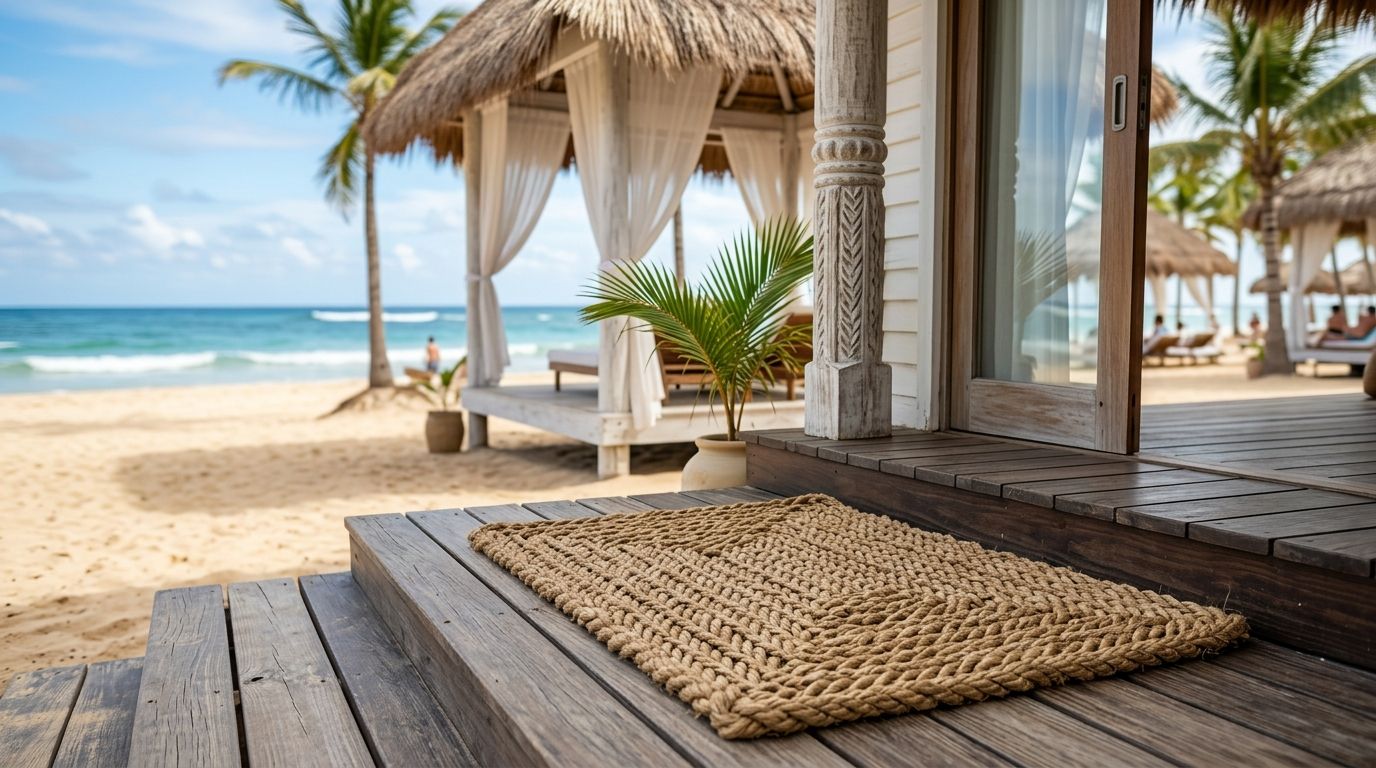
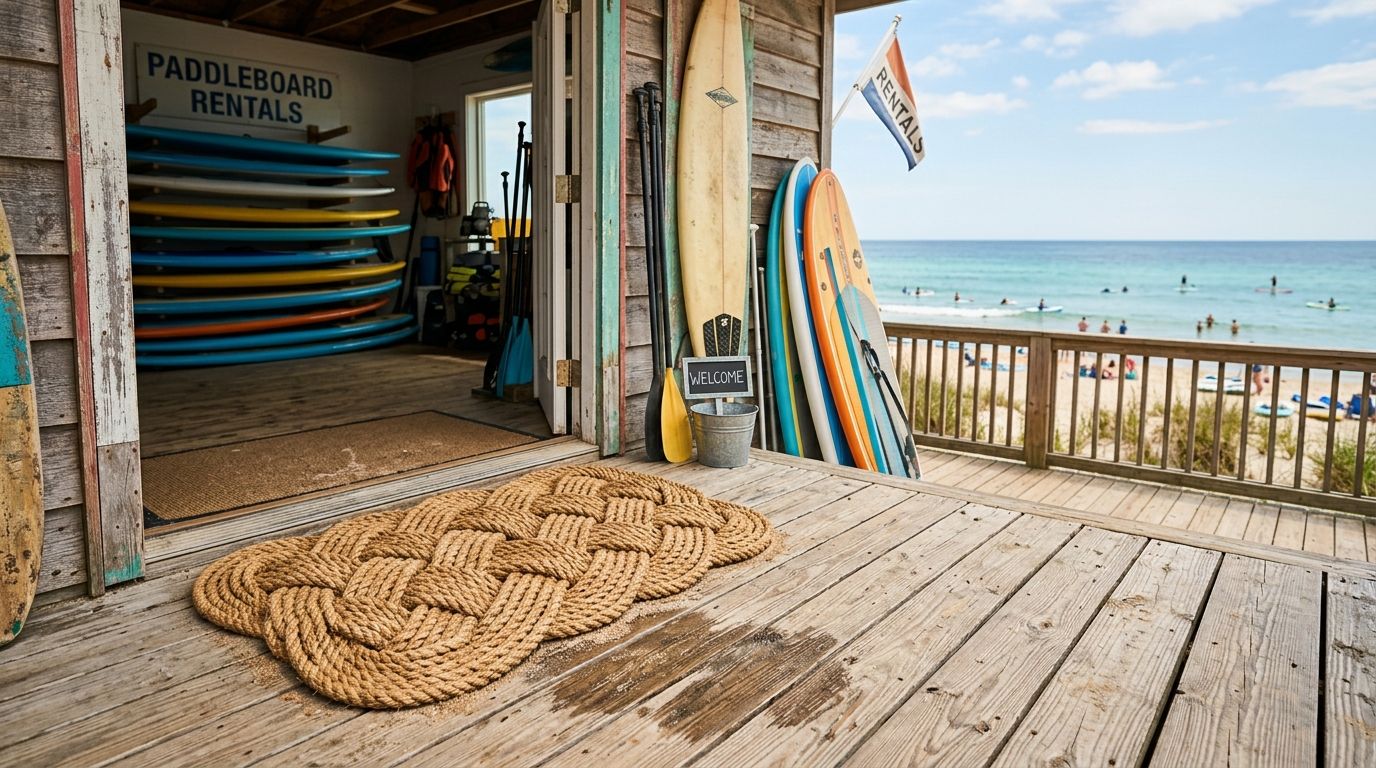
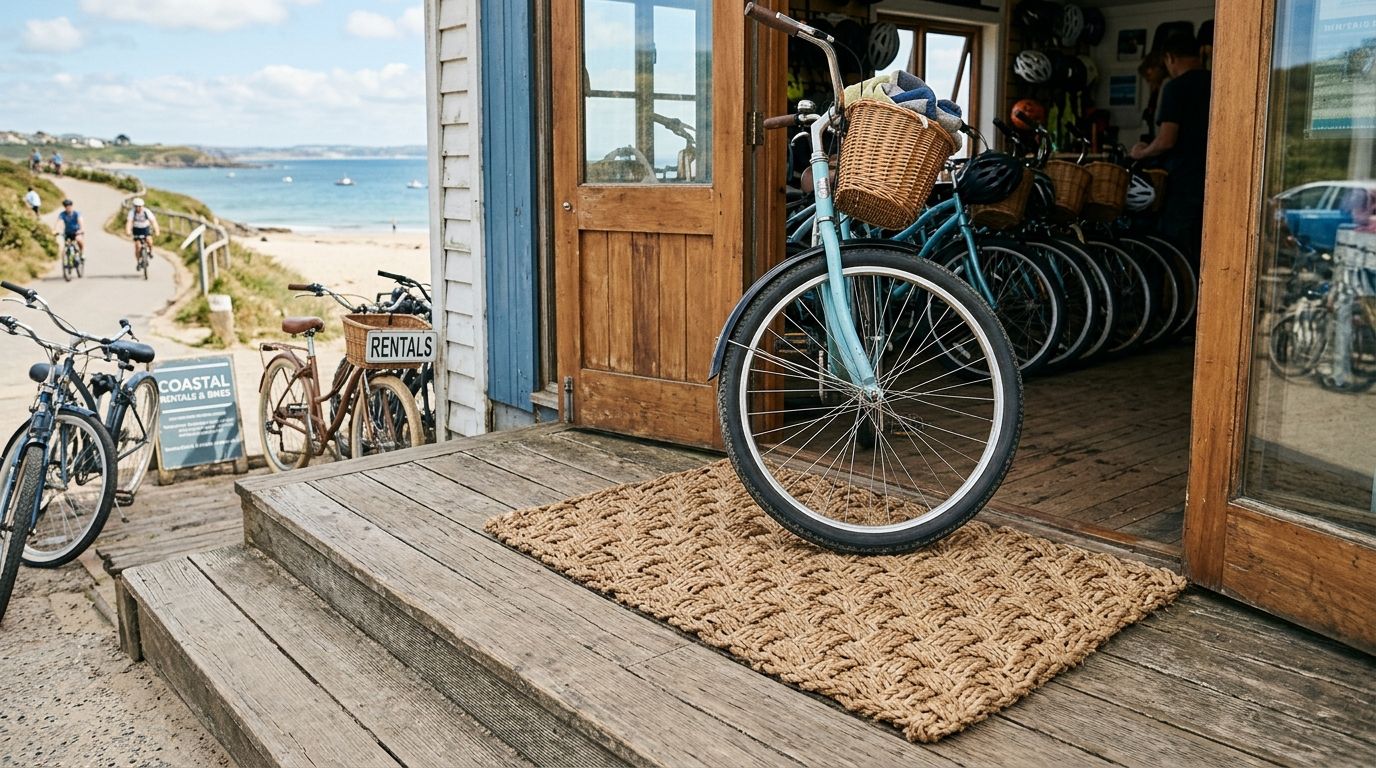
Rope doormats for paddleboard rental shops are handwoven, all-weather mats placed at rental counters and shop entries to pull sand and salt water off bare feet before customers ever step inside. A rental counter isn't a front porch — it takes barefoot traffic every 20 to 30 minutes, dripping wetsuits, and sand that never stops arriving from the beach or launch point.
A rental shop entrance takes a different beating than a house door. Customers arrive barefoot or in wet booties, gear is dripping, and sand rides in on every pair of feet between opening and closing. That traffic pattern repeats dozens of times a day, seven days a week during season.
A flat rubber mat or coir doormat holds water on the surface and turns into a slip hazard within an hour of steady use. An open lobster rope weave built for heavy sand traffic works differently — sand and water fall through the gaps in the weave instead of sitting on top, which is exactly the mechanism a boat rental company counter needs at its front door too.
A rope doormat at a paddleboard rental counter earns its keep by shedding sand and water in one shake, not by looking coastal. That's the whole job description for this location.
Not every rope weave behaves the same way underfoot. A tight, flat weave looks clean but holds grit against the surface. A looser, ridged weave lets sand and water pass through and collect underneath where a quick shake clears it out.
Rental shop doors often see two or three customers crossing at once, one returning a board while another checks in. A narrow mat only catches one person's feet at a time.
Coastal rental shops sit close to salt spray whether they're beachfront or dockside. Cheap synthetic fibers degrade and stiffen under constant UV and salt exposure within a season or two.
A rental shop can't wait until closing to deal with a sand-caked mat. Between morning and afternoon rental waves, a fast reset keeps the entry usable and safe.
Many paddleboard rental shops run with garage-style or open bay doors during business hours. Wind gusts off the water can shift a light mat right off the threshold.
A rope doormat under daily commercial traffic wears faster than one at a home entry. Frayed edges or matted-down sections stop shedding sand and start becoming a trip risk.
Outfit your rental counter entry
Handmade lobster rope mats built for daily barefoot and sandy traffic.
| Option | Best for | Key limitation |
|---|---|---|
| Lobster rope doormat | High-traffic, barefoot, sandy entries | Needs occasional shake-out during peak hours |
| Coir fiber mat | Light residential foot traffic | Breaks down fast under constant water and sand |
| Rubber-backed carpet mat | Indoor lobbies away from salt air | Holds water on the surface, gets slick fast |
| Artificial turf mat | Decorative poolside accents | Traps sand in the fibers instead of shedding it |
Verdict: a lobster rope doormat wins for a paddleboard rental counter because it's the only option in this table built to shed both sand and salt water on repeat, all day, without turning slick.
What’s the best doormat for a paddleboard rental shop entrance?
A handwoven lobster rope doormat with an open, ridged weave is the best fit for a paddleboard rental shop in 2026 because it sheds sand and salt water instead of trapping them underfoot. Flat rubber or coir mats hold moisture on the surface and turn slick within hours of steady barefoot traffic.
How often should a rental shop clean its entry mat?
Shake the mat out every few hours during peak rental waves and hose it down at the end of each business day. A deeper weekly clean keeps salt residue from stiffening the rope over a full season.
Is a rope doormat safe for bare feet at a rental counter?
Yes, a properly woven rope doormat is safe for repeated barefoot contact and is actually gentler on bare skin than a stiff coir mat once it’s broken in. Look for a weave rated for foot traffic rather than a decorative-only style.
How big should a doormat be for a rental shop with double doors?
Measure the full door width including sidelights and add 6 to 12 inches of overlap on each side so two customers can cross at once without stepping off the mat. Custom sizing is worth checking for oversized or double-door entries.
Do rope doormats hold up in salt air?
Lobster rope is built to resist the breakdown that generic synthetic cordage suffers under constant salt spray and UV exposure. Rinsing residue off regularly extends that resistance through a full coastal season.
How long does a rope doormat last at a high-traffic rental shop?
Commercial barefoot traffic wears a rope doormat faster than residential use, so weekly inspection for flattened sections or fraying matters more here. A 10-Year replacement guarantee on Lobster Rope Doormats of Florida mats covers the mat well past a typical rental season’s wear.
Should a rental shop keep a backup mat in rotation?
Yes, rotating two mats lets one dry and rest while the other handles active traffic, which extends the working life of both. This matters most during peak season when the entry sees continuous use from open to close.
The detail most rental shop owners miss isn't the weave or the size — it's the mid-day shake-out. A mat left untouched from open to close packs sand down into a solid layer that stops shedding anything, turning a functional entry mat into decorative flooring by 2 p.m.
If the rope doesn't shed sand in one shake, it's the wrong weave for a rental counter.

Doormats designed to look better, last longer, and clean easier.
Handmade lobster rope doormats crafted for outdoor durability, easy care, and a warm first impression. Designed for porches, patios, entryways, decks, boats, and RVs across the USA
Copyright © 2026 All Rights Reserved.